














🔐 7 best WordPress SSL plugins 2026 (free and paid)
The browser shows "Not secure," and visitors leave without figuring it out. The SSL certificate is already installed, HTTPS is enabled, but Google Search Console keeps throwing warnings. Sound familiar?
One certificate doesn't solve the problem. After installation you need to: force all HTTP traffic to HTTPS, fix mixed content (images, scripts and styles stuck on HTTP) and configure HSTS headers. Plus monitor that the certificate doesn't expire on a Friday night.
The 7 plugins below cover each of these layers: from automatic generation of a free Let's Encrypt certificate directly from WordPress to targeted mixed content fixes on the fly. No manual .htaccess editing, if you don't want to touch it.
💡 Quick overview:
- Determine what exactly you need: certificate generation, forced HTTP→HTTPS redirect or mixed content fix
- Choose one plugin for a specific task (two plugins with redirect will guarantee a redirect loop)
- After activation check your site through SSL Labs or the built-in diagnostics of your chosen plugin
SSL plugin comparison table
Plugin | Main task | Free version | Pro version | Active installations |
|---|---|---|---|---|
Really Simple Security | HTTPS migration + security | Yes | From $49/year | 5M+ |
WP Encryption | SSL generation + redirect | Yes | From $49/year | 5M+ certificates |
WP Force SSL | Forced HTTPS redirect | Yes (basic) | $59 | 90K+ |
SSL Zen | SSL generation + redirect | Yes | From $29 | - |
Easy HTTPS Redirection | HTTP→HTTPS redirect | Yes | $35 | 100K+ |
Auto-Install Free SSL | SSL certificate generation | Yes | From $49 | - |
SSL Insecure Content Fixer | Mixed content fix | Yes | $46 | 100K+ |
1. Really Simple Security
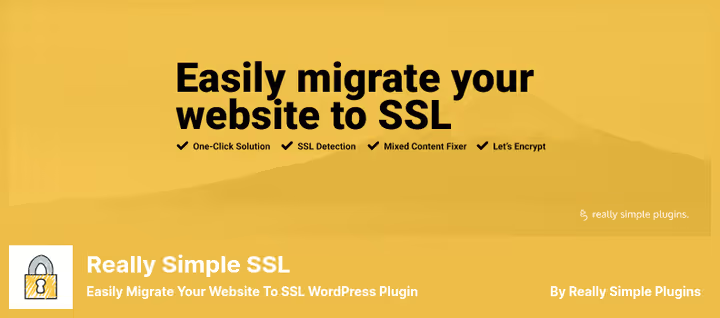
The flagship from Really Simple Plugins, formerly Really Simple SSL. In 2025 it changed its name and grew from an HTTPS migration utility into a full-fledged WordPress security suite.
One click moves your site to HTTPS, fixes mixed content and configures HSTS. The free version adds WordPress hardening: code execution prevention in uploads, XML-RPC disabling, login error hiding. All without noticeable speed impact (modular architecture). The pro version goes further: application-level firewall, two-factor authentication, Content Security Policy and country blocking.
In practice: installed the plugin, went through 5 onboarding steps, site on HTTPS, certificate working, mixed content fixed. Minimal actions.
Pros:
- HTTPS migration in one click
- Built-in Mixed Content Scanner finds and fixes HTTP resources automatically
- Free WordPress hardening without site load
Cons:
- Firewall, 2FA and CSP only in Pro version
- Conflict possible if the server already has a redirect in
.htaccess: audit needed
Price: free / Pro from $49/year
🔗 Really Simple Security on WordPress.org🔗 Really Simple Plugins website
2. WP Encryption
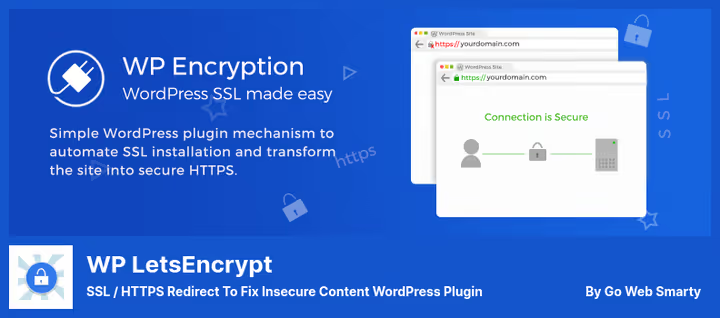
Formerly called WP LetsEncrypt, now WP Encryption. The essence is the same: generates a free Let's Encrypt SSL certificate directly from the WordPress admin, without going to cPanel and manually creating a CSR.
Goes through the whole chain: Let's Encrypt registration, domain verification, certificate generation, key download. The free version gives you the certificate files, you need to install them on the server yourself (instructions included). The pro version does everything automatically: verification, installation and auto-renewal every 90 days.
A separate plus: SSL Health page with a summary of HSTS, security headers, cookies and SSL Labs scoring. There's a built-in vulnerability scanner and Malware Scanner.
Pros:
- Certificate generation in 3 clicks, without cPanel
- Wildcard SSL support (Pro version)
- SSL Health + vulnerability scanner in one plugin
Cons:
- Manual certificate installation in free version requires server access
- Requires Linux hosting with OpenSSL and curl
Price: free / Premium from $49/year
🔗 WP Encryption on WordPress.org🔗 WP Encryption website
3. WP Force SSL
Minimalist plugin from WebFactory with one task: forcibly redirect HTTP to HTTPS. No extra code. Activated, and all traffic goes through HTTPS.
Built-in tester checks 9 parameters: certificate validity, expiration date, redirect operation, HSTS presence, mixed content and .htaccess write availability. Complete diagnostics in 30 seconds. The free version does exactly one thing: redirect. The pro version adds mixed content fix, XSS protection, forced secure cookies and mixed content report.
Pros:
- Extremely simple: activated, works
- Built-in SSL diagnostics (9 checks)
- Doesn't conflict with other security plugins
Cons:
- Free version: redirect only, no content fix
- Mixed content fix only in Pro version
Price: free / Pro $59
🔗 WP Force SSL on WordPress.org🔗 WebFactory website
4. SSL Zen
Step-by-step wizard for Let's Encrypt certificate generation: from accepting terms to uploading files to the server. Suitable for those who are installing SSL for the first time and don't want to dig through documentation.
The free version generates a certificate manually: verification by uploading a file to the server, installation by video instructions. The pro version automates the whole chain: verification, generation, installation and auto-renewal. Plus bot protection and brute force prevention.
Note: the plugin has not been tested with several recent major WordPress releases. There's an official warning on the repository page. It works for most sites, but compatibility should be checked in a test environment before production launch.
Pros:
- The most user-friendly interface: step-by-step wizard with zero guesswork
- Detailed video instructions for installing the certificate on the server
- Pro includes bot protection and brute force prevention
Cons:
- No confirmed compatibility with recent WordPress versions
- Manual process in free version takes more time than competitors
Price: free / Premium from $29
🔗 SSL Zen on WordPress.org🔗 SSL Zen website
5. Easy HTTPS Redirection
Specialized plugin from Tips and Tricks HQ: redirects HTTP traffic to HTTPS and forces static assets (images, CSS, JS) to load via HTTPS URLs.
Setup is trivial: enabled redirect, chose entire site or specific pages, plugin wrote rules to .htaccess itself. Key feature: forced loading of static assets via HTTPS even for files embedded in old posts with HTTP addresses. This saves sites with years of content, where manually changing the URL of each image is unrealistic. Version 2.0 added certificate expiration notifications via email and debug logging.
Pros:
- Automatic
.htaccessediting without manual file modification - Forced loading of static assets via HTTPS (saves old sites)
- Selective redirect: entire site or only specified pages
Cons:
- Redirect only: doesn't generate certificates, doesn't systematically fix mixed content
- Pro version (from $35/year) partially duplicates what free competitors offer
Price: free / Pro $35/year
🔗 Easy HTTPS Redirection on WordPress.org🔗 Tips and Tricks HQ website
6. Auto-Install Free SSL
Plugin with a 4.9 rating and over 380 five-star reviews on WordPress.org. Generates a Let's Encrypt certificate directly from the WordPress admin. The free version gives you certificate and key files, you need to install them on the server manually via video instructions (cPanel or Plesk).
The pro version automates everything: domain verification, generation, server installation and auto-renewal 30 days before expiration. Supports Wildcard SSL (automatic DNS verification via Cloudflare, GoDaddy, Namecheap and cPanel), multisite and mapped domains. The only one in the selection capable of automatically installing a certificate on VPS and dedicated servers without cPanel.
Pros:
- 4.9 stars on WordPress.org: best combination of reliability and simplicity
- Wildcard SSL + auto-renewal in Pro version
- VPS and dedicated server support without cPanel
Cons:
- Requires
allow_url_fopen = Onand OpenSSL on server - Manual installation in free version is inconvenient for beginners
Price: free / Premium on WordPress.org
🔗 Auto-Install Free SSL on WordPress.org
7. SSL Insecure Content Fixer
Lightweight plugin from webaware with one task: fix "mixed content" warnings on HTTPS sites. No extra menus, ads and fancy dashboards.
Five fix levels: from simple (replacing HTTP with HTTPS in URLs) to deep (output buffer interception and on-the-fly link fixing). Suitable for multisites: there's a network panel with default settings for all subsites. The plugin doesn't generate certificates and doesn't configure redirects. Its task is narrow: remove the last reason why the browser shows "Not secure" with HTTPS already working. One image at an old HTTP address in a five-year-old post, and the browser is unhappy again. This plugin closes exactly that.
Pros:
- Extremely lightweight, no bloat code
- 5 fix levels: from conservative to aggressive
- Multisite out of the box
Cons:
- Mixed content only: doesn't generate certificates, doesn't configure redirects
- Deep fix levels can conflict with caching plugins
Price: free / Pro $46
🔗 SSL Insecure Content Fixer on WordPress.org🔗 webaware website
The video below: step-by-step installation of a free Let's Encrypt certificate on a WordPress site. Suitable as a starting point if there's no certificate yet, but you've already chosen a plugin.
⁉️🤔 Frequently asked questions
Do I need an SSL plugin if hosting already provides free Let's Encrypt?
Hosting provides a certificate, but doesn't configure forced redirect from HTTP to HTTPS and doesn't fix mixed content. After activating the certificate on hosting you'll still see "Not secure" if posts have images or scripts on HTTP. Really Simple Security or SSL Insecure Content Fixer close these gaps automatically.
What's the difference between Really Simple Security and WP Encryption?
Really Simple Security: security suite with HTTPS migration, hardening, vulnerability detection and 2FA. WP Encryption is narrowly focused on Let's Encrypt certificate generation and works on any Linux hosting with OpenSSL. If the certificate already exists, take Really Simple Security. No certificate and hosting doesn't support auto-installation: WP Encryption or Auto-Install Free SSL.
Are free plugin versions enough?
For a typical WordPress site, yes. Free versions of Really Simple Security, WP Encryption and SSL Insecure Content Fixer together cover the whole chain: certificate, redirect and content fix. Pro versions are needed when you require auto-renewal without manual intervention, Wildcard SSL, firewall or priority support.
Can I install two SSL plugins at once?
Certificate generation and redirect separately, yes, carefully. For example, Auto-Install Free SSL for getting a certificate and SSL Insecure Content Fixer for content cleanup. Two plugins that both do redirects, almost guaranteed redirect loop. Choose one plugin per function and disable duplicate options.
What to do if the plugin created a redirect loop?
Disable the plugin via FTP: rename the plugin folder in
/wp-content/plugins/. Check.htaccessfor old redirect rules from the previous plugin. Delete duplicate lines, restore access and leave only one plugin with redirect. Really Simple Security and WP Force SSL can detect conflicts before activation.
Why did WC SSL Seal disappear from the list?
The WC SSL Seal plugin was closed by the author in July 2025 and removed from the WordPress.org repository. Modern browsers automatically show a lock icon for any HTTPS site, including WooCommerce checkout pages. A separate plugin for displaying an SSL seal is no longer needed.
What to install in 2026
If the certificate already exists, but the site partially lives on HTTP, start with Really Simple Security. One click moves the site to HTTPS and pulls in basic hardening. Five million active installations speak for themselves.
No certificate, hosting doesn't support auto-installation: take WP Encryption or Auto-Install Free SSL. The first gives more diagnostics (SSL Health page), the second has a 4.9 rating and simpler wizard. Both generate a certificate in 3-5 minutes.
Need only redirect without extra code: WP Force SSL or Easy HTTPS Redirection. WP Force SSL is good for diagnostics (9 built-in checks), Easy HTTPS Redirection saves old sites with lots of static assets on HTTP.
- If you need certificate generation plus everything in one: take Really Simple Security.
- If there's no certificate and hosting without auto-installation: WP Encryption or Auto-Install Free SSL.
- If you need only redirect: WP Force SSL.
- If the browser still shows "Not secure" with ready HTTPS: SSL Insecure Content Fixer.
Finish mixed content via SSL Insecure Content Fixer in any case. No matter how many plugins you install, one forgotten image on HTTP in an old post, and the browser is unhappy again. The plugin weighs pennies and solves the problem once and for all. Which plugin helped you, write in the comments.

A professional team of writers and editors specializing in creating quality content.