













🥠 20 best WordPress themes for food blogs 2026
Launched a food blog on WordPress, and the standard theme buries appetizing photos and step-by-step recipes? A familiar picture. A culinary site rests on three pillars: photos grab attention from the first screen, recipes are readable without horizontal scrolling, and mobile speed keeps visitors from leaving for a competitor. Get the theme wrong, and half your audience leaves before the first ingredient.
We combed through ThemeForest and selected 20 WordPress themes tailored specifically for food: recipe cards with Schema markup, full-screen photos, ratings, and WooCommerce storefronts. Below is an honest breakdown: what actually works in practice, what it costs in 2026, and which theme suits whom.
💡 Quick overview:
- Determine your format: personal blog (TinySalt, Lemon & Limes), recipe magazine (EasyMeals, Good Food), or food shop (Freshio, Organiko). All 20 options are broken down by scenario below.
- Check the table: for each theme, we indicate whether there's a built-in recipe card, WooCommerce, and Elementor out of the box.
- Open the live demo, links to ThemeForest under each block, compare prices, and take the one that fits your content.
Comparison table: 20 themes for food blogs on WordPress
Theme | Price | Demos | Recipe Card | WooCommerce | Elementor |
|---|---|---|---|---|---|
CheerUp | $59 | 14 | ❌ | ✅ | ❌ |
EasyMeals | $75 | 6 | ✅ | ✅ | ✅ |
TinySalt | $54 | 12 | ✅ | ✅ | ✅ |
Lahanna | $69 | 3+ | ✅ | ✅ | ❌ |
Sprout & Spoon | $39 | 3 | ✅ | ❌ | ❌ |
Bizi | $29 | 6 | ❌ | ❌ | ❌ |
Good Food | $59 | 3 | ✅ | ✅ | ❌ |
Pivoo | $59 | 6 | ✅ | ✅ | ✅ |
Becipe | $59 | 3 | ✅ | ❌ | ✅ |
Talisa | $59 | 4 | ✅ | ✅ | ❌ |
Lemon & Limes | $45 | 6 | ✅ | ❌ | ❌ |
FoodMagi | $59 | 3+ | ✅ | ✅ | ❌ |
Bakery | $59 | 5 | ❌ | ✅ | ✅ |
Freshio | $59 | 6 | ❌ | ✅ | ✅ |
Organiko | $59 | 6 | ❌ | ✅ | ❌ |
Braise | $69 | 8 | ✅ | ✅ | ✅ |
Farmco | $59 | 4+ | ❌ | ✅ | ✅ |
Cook&Meal | $59 | 11 | ✅ | ❌ | ✅ |
TheBlogger | $59 | 8 | ✅ | ✅ | ❌ |
Tasty Food | $59 | 3 | ✅ | ✅ | ❌ |
Prices are current as of July 2026 according to ThemeForest (Regular license). "Recipe Card" is a built-in recipe mechanism with Schema markup, portion recalculation, and printing. Even 3 starter layouts, with proper setup, cover most food blogger scenarios.
1. CheerUp, universal all-in-one for magazines and blogs
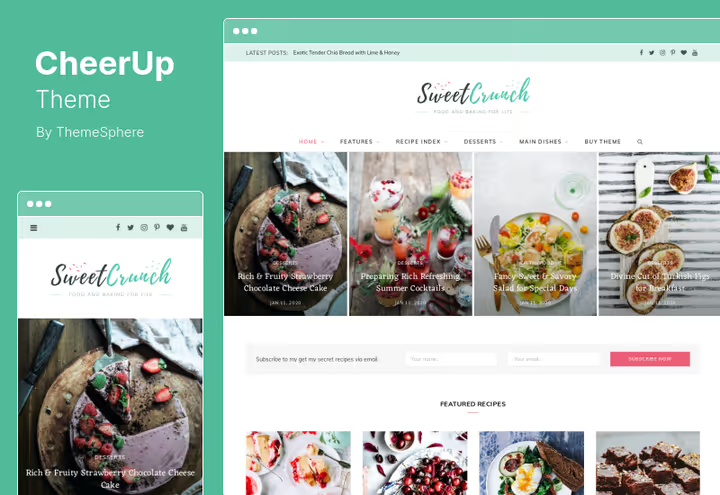
CheerUp is a veteran theme with 14 presets and more than 1000 layouts. Choose a demo, replace the content, and the site is visually indistinguishable from custom markup. Magazine format: large photos, grid-based categories, sticky navigation. WooCommerce and Google AMP included.
One minus: no built-in recipe card. If you publish step-by-step instructions, install WP Recipe Maker or Cooked.
- Pros: numerous presets and layouts; magazine grid with categories and sticky navigation; Google AMP, WooCommerce, HD Retina out of the box.
- Cons: no built-in recipe card, needs a separate plugin; settings panel requires time to learn.
- Price: $59 on ThemeForest, Regular license, auto-updates.
🔗 CheerUp on ThemeForest | 🔗 Live demo
2. EasyMeals, when recipes matter more than design
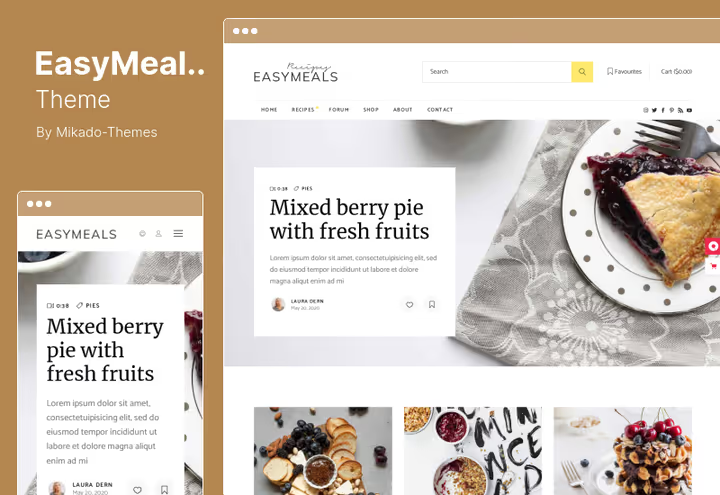
EasyMeals is one of the few themes where the recipe is built into the core, not bolted on with a plugin. The card displays nutritional value, auto-recalculates ingredients per serving, and prints in one click. Six demos, Elementor, WooCommerce. Readers come for recipes, and EasyMeals delivers the tools faster than competitors.
- Pros: built-in recipe card with auto-portion recalculation and printing; nutritional value displayed automatically; Elementor included (ThemeForest).
- Cons: price above average for this list; fewer demos than CheerUp, but enough for food format.
- Price: $75 on ThemeForest, all features, 6 months support, lifetime updates.
🔗 EasyMeals on ThemeForest | 🔗 Live demo
3. TinySalt, personal blog with focus on photos
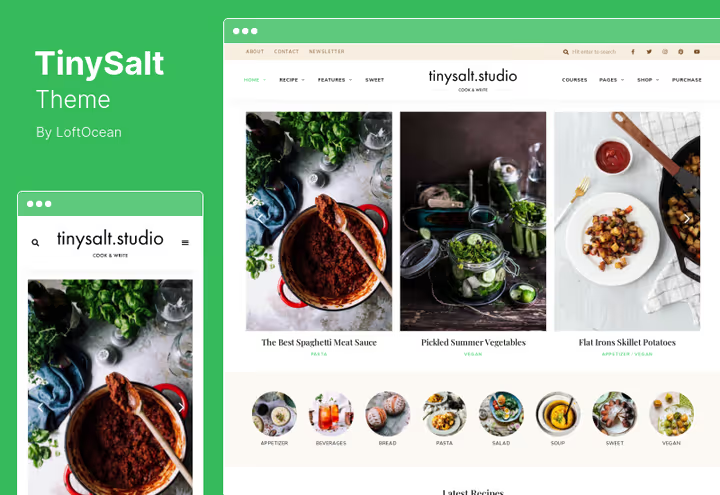
TinySalt is aimed at those who run a personal blog and want food on screen to look expensive. Twelve demos, over 300 options, built-in recipe card with ratings. Main feature: Instant Ajax Search & Filter on the Recipe Index page, readers type a query and get results without reloading. WooCommerce, Contact Form 7, and Mailchimp included.
- Pros: Ajax search and recipe filtering without reloading; over a dozen demos and hundreds of options; built-in ratings, sharing, and Mailchimp (ThemeForest).
- Cons: abundance of settings is confusing at first; price slightly above budget segment.
- Price: $54 on ThemeForest, 6 months support.
🔗 TinySalt on ThemeForest | 🔗 Live demo
4. Lahanna, aesthetics and sliders for beautiful storytelling
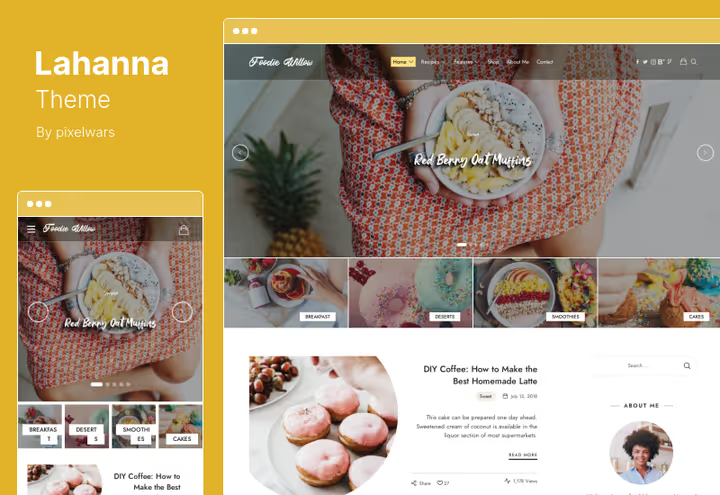
Lahanna bets on visuals: photo and video sliders, round thumbnails for signature dishes, color and font management from the admin panel. Your content, beautiful food shots, the theme presents them to advantage. Suitable for food photographers, pastry chefs, and chefs with portfolios.
Built-in recipe card with ingredient checkboxes, WooCommerce for selling cookbooks or merch. Weak point: no Elementor integration out of the box, visual edits are limited to the standard WordPress customizer.
- Pros: impressive photo and video presentation through sliders; recipe card with ingredient checkboxes; WooCommerce, flexible font and color customization (ThemeForest).
- Cons: without a separate page builder, visual edits are constrained; only a few starter layouts.
- Price: $69 on ThemeForest, 6 months support.
🔗 Lahanna on ThemeForest | 🔗 Live demo
5. Sprout & Spoon, fresh minimalism for $39
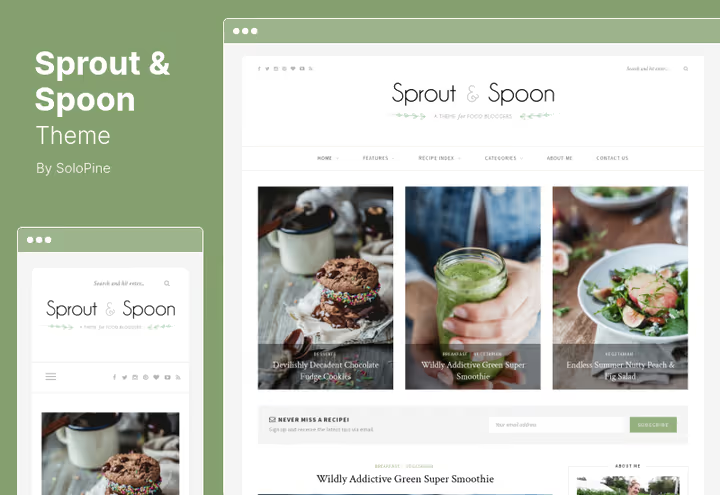
Sprout & Spoon is the most affordable theme with a recipe card in the list. Clean minimalist design, Recipe Index widget, and Stackable Promo block. The theme is not overloaded: no WooCommerce or Elementor out of the box, but the site flies even on budget hosting. A good choice for a beginning food blogger.
- Pros: lowest price among themes with recipe card; built-in Recipe Index and Stackable Promo widget; lightweight, fast (ThemeForest).
- Cons: no WooCommerce or Elementor included; only a few starter layouts.
- Price: $39 on ThemeForest, auto-updates.
🔗 Sprout & Spoon on ThemeForest
6. Bizi, budget all-rounder for $29
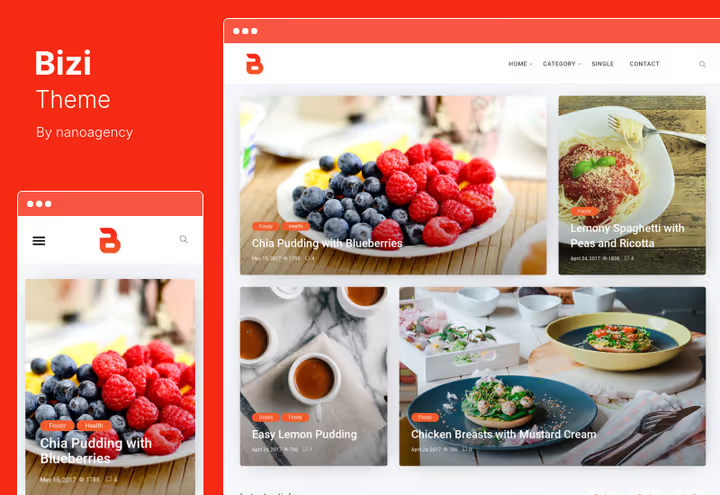
Bizi is the cheapest theme in the list with a visual page builder out of the box. Not Elementor, but its own constructor, but sufficient for basic layout. WPML, Retina, and SEO on level: the theme passes Core Web Vitals without tweaks. No recipe card, a clean blog template for plugins.
- Pros: one of the most affordable themes in the list, lifetime updates; built-in visual constructor; WPML, Retina, SEO out of the box (ThemeForest).
- Cons: no recipe card; proprietary builder inferior to Elementor in flexibility.
- Price: $29 on ThemeForest, lifetime updates and support.
7. Good Food, magazine and recipes in one bottle
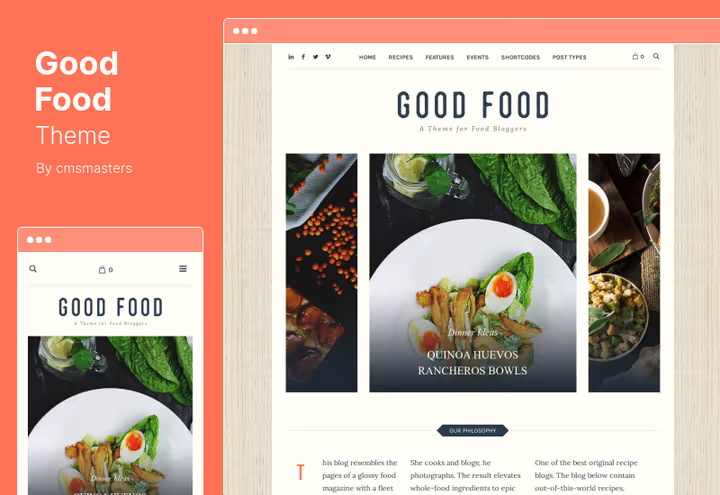
Good Food solves the "I want both a magazine and a recipe database" problem. Custom post type for recipes, magazine grid for articles, customizable widgets, two formats in one install without stitching plugins. Revolution Slider and Layer Slider included, over 99 shortcodes, hundreds of Google fonts. WooCommerce compatible.
- Pros: custom post type for recipes out of the box; magazine grid and recipes without additional plugins; Revolution Slider and around a hundred shortcodes included (ThemeForest).
- Cons: requires time for initial setup; Elementor not included, assembly through customizer.
- Price: $59 on ThemeForest, 6 months support.
8. Pivoo, Elementor and WooCommerce for food stores
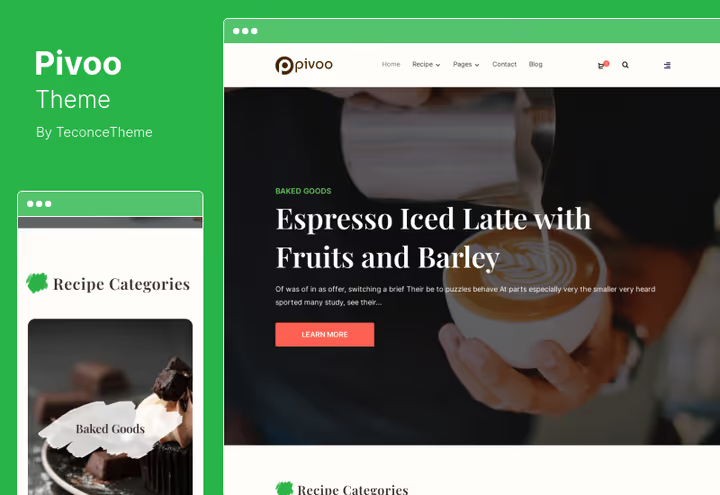
Pivoo is an Elementor + WooCommerce bundle with Header & Footer Builder on board. Selling cookbooks, sauces, merch, or subscriptions, Pivoo gives you a ready-made storefront that can be reassembled by mouse in an evening. Six starter demos, Google Fonts support, Contact Form 7, and custom page templates. No recipe card out of the box: the theme leans toward e-commerce.
- Pros: Elementor and Header & Footer Builder included; WooCommerce compatibility with ready-made grids; fast page assembly without code (ThemeForest).
- Cons: no built-in recipe card; only part of the demos focus on food.
- Price: $59 on ThemeForest, all features and demos.
🔗 Pivoo on ThemeForest | 🔗 Live demo
9. Becipe, recipe blog with drag-and-drop constructor
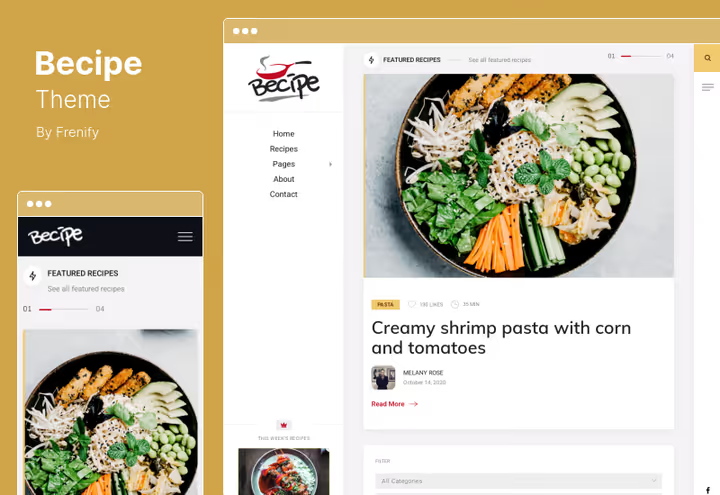
Becipe is a pure recipe blog with drag-and-drop constructor, custom widgets, and demo content in XML for quick start. Three demos cover the main scenarios. The theme is lightweight, relies on typography and readability. On mobile, recipes don't "float." A good choice for a text-centric food blog.
- Pros: drag-and-drop page builder included; XML with demo content, quick start; strong focus on typography and readability (ThemeForest).
- Cons: no WooCommerce; only a few demos.
- Price: $59 on ThemeForest, lifetime updates.
🔗 Becipe on ThemeForest | 🔗 Live demo
10. Talisa, large font and user-generated content
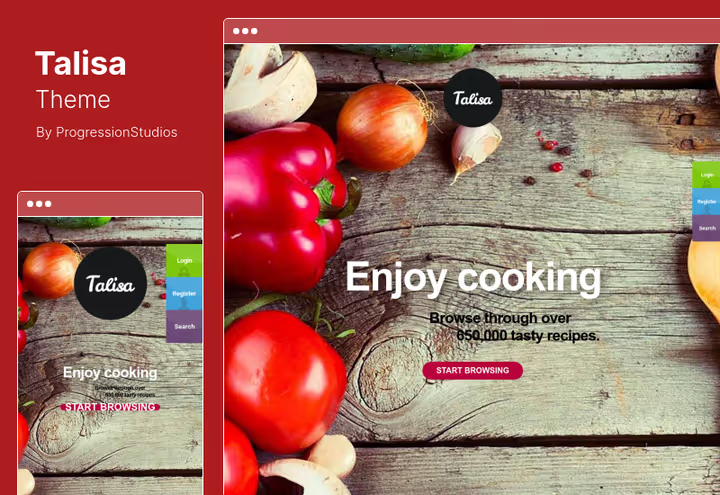
Talisa grabs attention from the first screen: large headline, bold typography, contrasting grid. Main feature: frontend recipe publishing by users. Readers register and post their recipes directly from the site, a ready-made UGC engine for community format. Built-in favorites system, WooCommerce, unlimited color schemes.
- Pros: frontend recipe publishing by users; built-in favorites system; large typography, strong first screen (ThemeForest).
- Cons: no Elementor out of the box; UGC functionality requires moderation.
- Price: $59 on ThemeForest, 6 months support.
🔗 Talisa on ThemeForest | 🔗 Live demo
11. Lemon & Limes, stylish blog for healthy eating
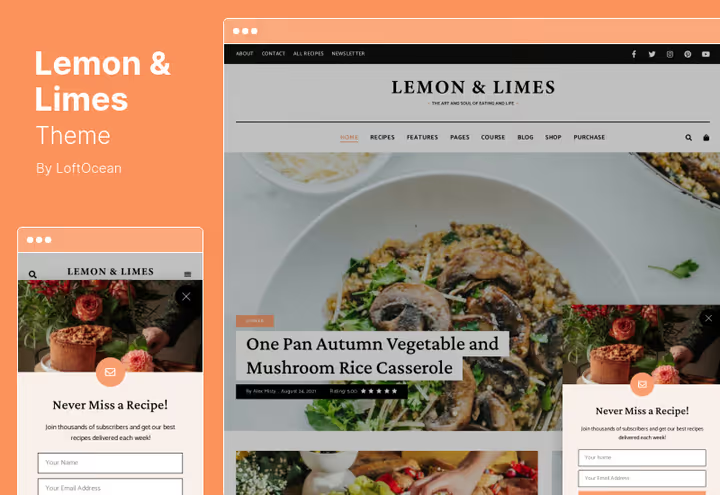
Lemon & Limes is designed for the healthy eating niche. Fresh "green" visuals, Ajax search and filtering on Recipe Index, built-in recipe card with step-by-step photos and print button. Readers rate recipes and share them on social networks. Over 100 shortcodes, custom food menu, and trending widget.
- Pros: Ajax search and recipe filtering; recipe card with step photos and printing; trending widget (ThemeForest).
- Cons: no WooCommerce; healthy eating niche, not universal design.
- Price: $45 on ThemeForest, 6 months support.
🔗 Lemon & Limes on ThemeForest | 🔗 Live demo
12. FoodMagi, membership and bookmarks for gated recipes

FoodMagi is a theme for those building a culinary community with paid access. Built-in membership system, saving recipes to bookmarks, user profiles, and AJAX registration. Recipe cards work through WP Recipe Maker: nutritional value, portion recalculation, printing. Grid layout with infinite scroll, WooCommerce for selling books or subscriptions.
The theme was updated in April 2026, supports the current WordPress version. Six custom widgets, child theme included, translation via.POT file.
- Pros: built-in membership system, unique for food themes; recipe bookmarks and user profiles; WP Recipe Maker, WooCommerce, infinite scroll (ThemeForest).
- Cons: membership requires plugin setup; no Elementor out of the box.
- Price: $59 on ThemeForest, all features and 6 months support.
13. Bakery, for pastry chefs and bakeries
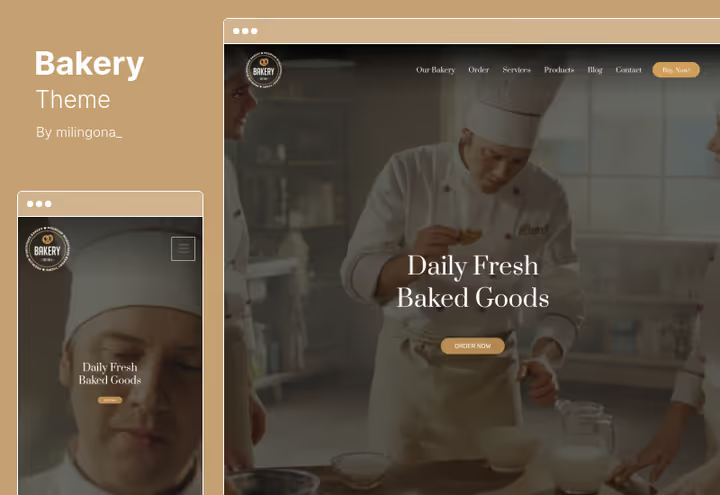
Bakery is a highly specialized theme for bakeries, confectioneries, and cake business. Over 80 page presets, One-Click Demo Import, Revolution Slider, and drag-and-drop builder. WooCommerce compatibility, YITH Catalog Mode (catalog mode without cart), and powerful options panel. The theme is well documented.
- Pros: 80+ page presets, One-Click Demo Import; specialization in bakeries and confectioneries; YITH Catalog Mode for storefront without cart (ThemeForest).
- Cons: narrow niche, not for classic food blog; "confectionery" visual style requires reworking for other formats.
- Price: $59 on ThemeForest, full documentation included.
🔗 Bakery on ThemeForest | 🔗 Live demo
14. Freshio, organic food store on WooCommerce

Freshio is tailored for e-commerce: organic products, farmers' markets, online supermarkets. This is a storefront with a blog module. Six demos, multiple header and footer layouts, Google Reviews widgets, and drag-and-drop constructor. If your food project includes a shop, Freshio gives ready-made catalog and cart structure.
- Pros: ready-made store for organic products; Google Reviews widget and drag-and-drop builder; fast demo import.
- Cons: not for text-centric blog; no recipe card.
- Price: $59 on ThemeForest, 6 months support, all updates.
🔗 Freshio on ThemeForest | 🔗 Live demo
15. Organiko, farm and food business on Bootstrap
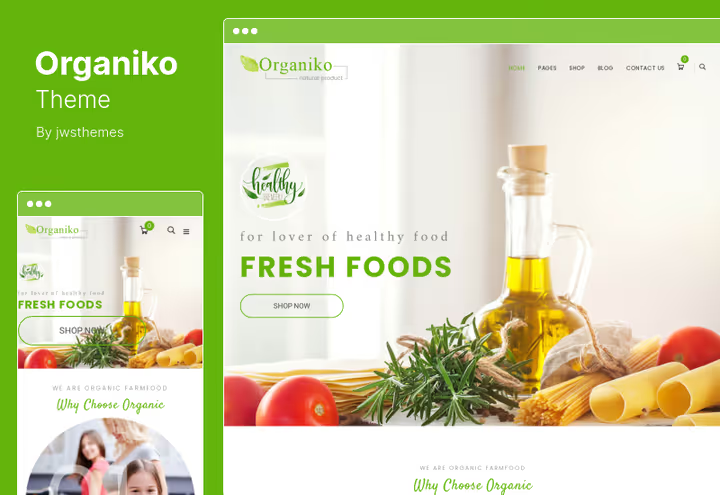
Organiko is built on Bootstrap and tailored for organic farming and food business. Six demos, powerful header constructor, over 20 shortcodes, unlimited colors and fonts. Redux Framework at the core of the admin panel. Timeline component for displaying "from field to table" process, a feature not found in other themes in the list.
- Pros: Bootstrap foundation, Redux Framework, 20+ shortcodes; timeline component for product storytelling; sticky header and unlimited color schemes (ThemeForest).
- Cons: narrow niche (farming and food business); no built-in recipe card.
- Price: $59 on ThemeForest, 6 months support, lifetime updates.
16. Braise, 8 demos for chefs and cookbooks
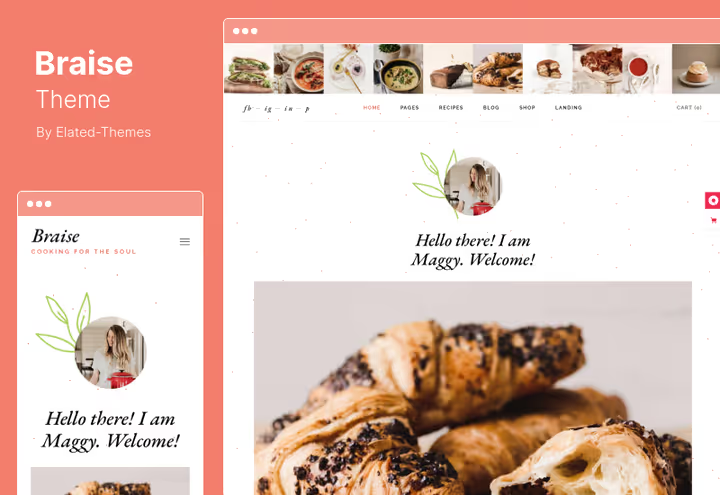
Braise is a theme for those selling cookbooks, courses, or paid subscriptions. Eight demos: from simple blog to professional chef site. Elementor Page Builder, collection of custom shortcodes, including Recipe Category List. WooCommerce compatible, Contact Form 7 on board.
- Pros: Elementor Page Builder included; 8 demos, from blog to chef site; Recipe Category List and custom shortcodes (ThemeForest).
- Cons: price above average for this list; not all demos focus specifically on food.
- Price: $69 on ThemeForest, full documentation.
🔗 Braise on ThemeForest | 🔗 Live demo
17. Farmco, organic farm with Elementor and WooCommerce

Farmco is a modern theme for organic farms, agribusiness, and food production. Elementor for visual assembly, WooCommerce for online sales, ready inner pages: About, Services, Farm Gallery, Blog, Contact. Flexible header and footer styles, retina-ready, SEO-optimized.
Compared to classic "farm" themes, Farmco wins in speed and modern architecture: clean code, without bloated functionality. Suitable for those selling farm products directly.
- Pros: Elementor + WooCommerce out of the box; ready-made pages for agribusiness; clean code, high loading speed (ThemeForest).
- Cons: no built-in recipe card; narrow niche, not for classic food blog.
- Price: $59 on ThemeForest, regular updates.
18. Cook&Meal, 46 blocks for unique homepage
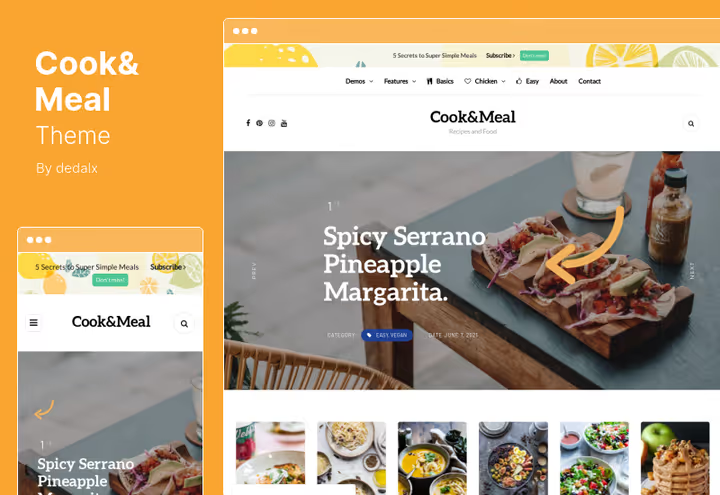
Cook&Meal offers a unique approach to layout: 46 blocks for the homepage that can be dragged and combined, around 400 variations. Each block is used multiple times in different sections. Google Structured Data, 11 blog layouts, and post grouping into categories.
- Pros: 46 blocks and around 400 homepage variations; Google Structured Data, markup out of the box; 11 blog layouts.
- Cons: no WooCommerce; dragging blocks requires time for initial setup.
- Price: $59 on ThemeForest, 6 months support, auto-updates.
🔗 Cook&Meal on ThemeForest | 🔗 Live demo
19. TheBlogger, blog with portfolio and animation
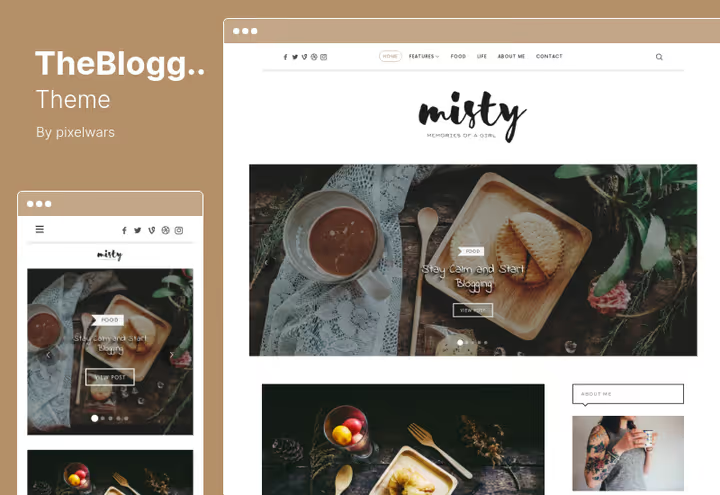
TheBlogger is a theme for bloggers who want to stand out visually: parallax backgrounds, animated intro, built-in portfolio, and WooCommerce. Recipe Maker with ratings and comments, and infinite gallery with drag-and-drop. Instagram and Pinterest integration is thought through: social blocks are embedded in the grid.
- Pros: animated intro and parallax backgrounds; built-in portfolio and Recipe Maker with ratings; tight integration with Instagram and Pinterest (ThemeForest).
- Cons: animations can slow loading on weak hosting; one layout type.
- Price: $59 on ThemeForest, lifetime updates, 6 months support.
🔗 TheBlogger on ThemeForest | 🔗 Live demo
20. Tasty Food, Gutenberg and Schema Markup in core
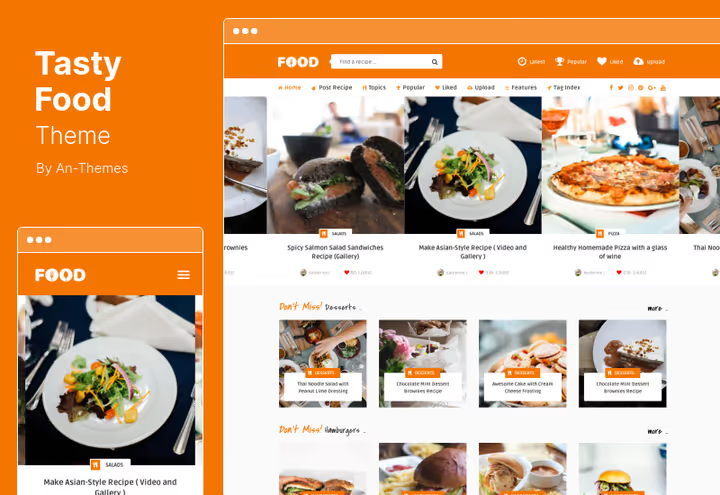
Tasty Food is one of the few themes in the list with full Gutenberg support. Schema Markup for recipes is built into the theme core, not added by plugin, which positively affects snippets in Google. Ajax Live Search, user ratings, and frontend recipe submission. WooCommerce compatible.
- Pros: full Gutenberg support; Schema Markup for recipes in theme core; Ajax Live Search, ratings, and frontend submission (ThemeForest).
- Cons: fewer starter demos than competitors; no Elementor, all assembly through Gutenberg.
- Price: $59 on ThemeForest, auto-updates.
🔗 Tasty Food on ThemeForest | 🔗 Live demo
Before choosing a theme, watch a video overview of nine best options for food blogs on WordPress: the clip below visually shows key differences in interface and grid.
⁉️🤔 Frequently asked questions
Which WordPress theme to choose for food blog in 2026?
Publishing recipes, take EasyMeals: recipe card with auto-portion recalculation is built into the core. For magazine format with merch, CheerUp; for a shop, Freshio. Above is a full breakdown of 20 themes with table, prices, and demos.
Is a recipe card needed in the theme?
Yes, if you publish recipes regularly. A built-in card provides Schema Markup for Google snippets, ingredient recalculation, timer, and printing. In the list, 13 out of 20 themes have a card: EasyMeals, TinySalt, Lahanna, Sprout & Spoon, Good Food, Pivoo, Becipe, Talisa, Lemon & Limes, FoodMagi, Braise, Cook&Meal, TheBlogger, and Tasty Food. The rest need a plugin like WP Recipe Maker.
Which theme is the cheapest?
Bizi for $29 with lifetime updates. Sprout & Spoon with recipe card is a budget option with micromarkup. On a limited budget, look at Lemon & Limes: recipe card, Ajax search, and social buttons.
Do these themes support WooCommerce?
WooCommerce compatible are 14 out of 20 themes: CheerUp, EasyMeals, TinySalt, Lahanna, Good Food, Pivoo, Talisa, Bakery, Freshio, Braise, Farmco, TheBlogger, Tasty Food, and FoodMagi. Leader in e-commerce: Pivoo with Elementor and Header & Footer Builder. For organic products, Freshio with Google Reviews.
Can you change the theme later without losing content?
Yes, posts, recipes, and media files are stored in the WordPress database independently of the theme. Custom post types and theme shortcodes will need to be migrated when switching. Most "portable" options: Tasty Food (Gutenberg + Schema in core) and Elementor-based themes (Pivoo, Braise, Farmco).
Which theme to trust if you need a paid access system for recipes?
FoodMagi is the only theme in the list with built-in membership system and recipe bookmarks. Users register, save favorites, and access premium recipes by subscription. For open community without paywall, Talisa with frontend publishing.
Which theme to install on food blog in 2026: final breakdown
We analyzed 20 WordPress themes for food blogs: prices, features, and live demos. All available on ThemeForest.
Short guide by scenarios:
- Recipes without extras, EasyMeals or Tasty Food: Schema Markup, portion recalculation, printing.
- Blog + merch/books, CheerUp or Braise: magazine grid, WooCommerce, visual builder.
- Organic shop, Freshio or Organiko: ready storefront, catalog.
- Budget start, Bizi or Sprout & Spoon: minimum costs, quick launch.
- Community and UGC, Talisa or FoodMagi: frontend publishing, membership.
- Farm business, Farmco: Elementor + WooCommerce, ready pages for agribusiness.
Choose for your format, not "the most feature-packed." In doubt, open the live demo under each block and click around for 5 minutes: the interface either "fits in hand" or it doesn't.

A professional team of writers and editors specializing in creating quality content.