













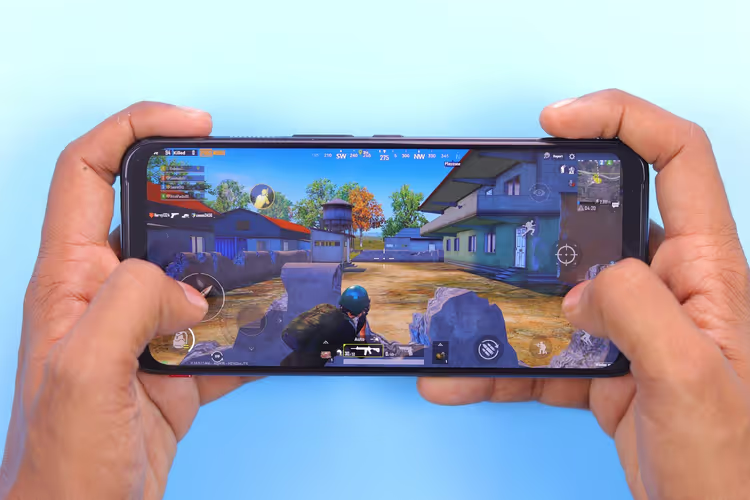
🎮 3 Smartphones for gaming without gamer design: what to buy in 2026
Want to play Genshin Impact at max settings but not ready to lug around a "spaceship" with RGB lighting? We get it. Gaming phones like RedMagic and ROG Phone push 120+ FPS, but they look like they were designed by a teenager on an energy drink: aggressive lines, fake carbon fiber plastic, pop-out trigger buttons.
The good news: in practice, 2025-2026 flagships deliver the same stable 60 FPS in any mobile title while looking understated. Fit for the office, fit for a café. No performance compromises: just a normal phone that also happens to be great for gaming.
We picked three models with top-tier hardware and classic design. OnePlus 13 with record-breaking battery life, iPhone 14 Plus as an affordable entry ticket to iOS gaming, and Galaxy S25+ as an all-rounder built to last for years. No gamer gimmicks, just FPS and a clean look.
💡 Quick overview:
- Compared three smartphones with flagship performance and restrained design: no RGB accents or aggressive lines
- OnePlus 13: the best Android for gaming, Snapdragon 8 Elite, 6000 mAh, 100 W charging, 6-7 hours of gaming session
- iPhone 14 Plus: a large Apple screen with excellent game optimization at a mid-range price in 2026
- Galaxy S25+: Samsung's universal flagship, 120 Hz AMOLED, 7 years of updates, Game Booster
- For each model we broke down the pros, cons, and current price; the summary includes a decision matrix for your use case
Model | Processor | Display | Battery | Charging | Best for |
|---|---|---|---|---|---|
OnePlus 13 | Snapdragon 8 Elite | 6.82" LTPO AMOLED, 120 Hz | 6000 mAh | 100 W | Maximum battery life and charging speed |
iPhone 14 Plus | Apple A15 Bionic | 6.7" OLED, 60 Hz | 4323 mAh | 20 W | Apple ecosystem and game optimization |
Galaxy S25+ | Snapdragon 8 Elite for Galaxy | 6.7" AMOLED, 120 Hz | 4900 mAh | 45 W | Versatility: gaming, camera, AI |
When selecting, we kept three criteria in mind. First: the processor must handle Genshin Impact, Call of Duty Warzone Mobile, and Honkai: Star Rail at max settings with stable 60 FPS. Second: no RGB, no "carbon fiber" accents, no pop-out trigger buttons; the phone should look appropriate in a meeting room and a coffee shop alike. Third: all three models are actually available to buy in 2026 at a reasonable price, no gray market imports or auctions.
1. OnePlus 13: a gaming flagship with record-breaking battery life

The OnePlus 13 settles the question of "which Android to get for gaming" with zero compromises. No glowing strips or turbo modes with pop-out triggers. Just powerful hardware in a clean, understated body.
The heart of the smartphone: Snapdragon 8 Elite, Qualcomm's top-tier chip for 2025-2026. In Genshin Impact at maximum settings it holds a stable 60 FPS for the first 30 minutes without throttling. After that, adaptive cooling kicks in, but the frame rate never drops below 55. That is on par with dedicated gaming devices, just without their flashy design.
The OnePlus 13's main trump card: a 6000 mAh battery (per GSMArena specs). A record for a conventional flagship. In practice, it lasts 6-7 hours of continuous gaming. The 100 W charging hits 50% in 10 minutes and a full 100% in 35. You can forget about carrying a power bank.
The display here is a 6.82-inch LTPO AMOLED with adaptive 1-120 Hz refresh rate and a peak brightness of 4500 nits. Stereo speakers with Dolby Atmos deliver spatial audio without headphones: in shooters you can hear which direction the enemy is creeping up from.
- Pros: Snapdragon 8 Elite without throttling, 6000 mAh (best battery life in its class), 100 W charging (50% in 10 minutes), stereo speakers with Dolby Atmos
- Cons: size (6.82" is not for small hands), no wireless charging in the base configuration
- Price: from $899 for the 12/256 GB version
- Buy: 🔗 OnePlus 13 on the official website
2. IPhone 14 Plus: a large Apple screen at a mid-range price

The iPhone 14 Plus in 2026: an entry ticket to iOS gaming with a large screen, without the premium markup of the Pro lineup. It didn't get Dynamic Island or 120 Hz. But the Apple A15 Bionic chip still handles any game from the App Store without a hitch.
iOS optimization matters more than gigahertz. Genshin Impact runs smoother on the iPhone 14 Plus than on many Android flagships with more powerful hardware on paper. The reason is simple: developers tailor games to Apple's fixed device pool, not to the zoo of hundreds of Android models.
The 6.7-inch OLED and 4323 mAh battery deliver 4-5 hours of gaming. Less than the OnePlus, but more than enough for an evening session. The 20 W charging is slow by modern standards: budget an hour for a full cycle.
Ecosystem: the second argument for iPhone after optimization. Progress syncs across iPhone, iPad, and Mac via Game Center. Apple Arcade with exclusive titles free of ads and microtransactions is also a plus if you are tired of pay-to-win in every other game.
A 512 GB storage configuration, such as Apple iPhone 14 Plus 512GB Yellow, holds your entire game library with room to spare for years ahead. Genshin Impact with full resource download takes 30+ GB, Call of Duty Mobile takes 15+ GB, Honkai: Star Rail another 20+ GB. Three titles like that, and 128 GB is already packed to the brim.
- Pros: excellent game optimization for iOS, Apple ecosystem (Game Center, iCloud sync), stereo sound with spatial audio, price lower than current Pro models
- Cons: 60 Hz display (competitors have 120 Hz), 20 W charging is slow by modern standards, A15 trails Snapdragon 8 Elite in raw power
- Price: from $699 for the 128 GB version (refurbished or from retailers, 2026)
- Buy: 🔗 Apple iPhone 14 Plus on the official website
3. Samsung Galaxy S25+: a no-compromise universal flagship

The Galaxy S25+ is for those who need more than just a gaming phone: a universal flagship for every occasion. Samsung put the Snapdragon 8 Elite for Galaxy here: an overclocked version of the same chip found in the OnePlus 13, with the performance core clocked 0.1 GHz higher.
In games, the difference from the regular 8 Elite is minimal. But the vapor chamber cooling provides headroom for long sessions: the phone heats up less and throttles less often. During a one-hour Genshin Impact session the body is warm but not scorching, and FPS stays stable.
The 6.7-inch Dynamic AMOLED with 120 Hz refresh rate and 2600 nits peak brightness: one of the best displays on the market. HDR10+ works in supported games, and Vision Booster adapts color rendering to ambient lighting. The screen stays readable in sunlight and doesn't sear your eyes in the dark.
The built-in Game Booster blocks notifications, records gameplay, and adjusts performance on the fly for each specific game. Seven years of Android updates mean the smartphone will receive fresh gaming optimizations through 2032. No competitor offers that kind of support horizon.
- Pros: bright 120 Hz AMOLED with HDR10+, Snapdragon 8 Elite for Galaxy with headroom for years, 7 years of Android updates, Game Booster with fine-tuned controls
- Cons: 45 W charging trails OnePlus (100 W), launch price higher than competitors
- Price: from $999 for the 12/256 GB version
- Buy: 🔗 Galaxy S25+ on the official website
Check out the direct comparison of the OnePlus 13 and Galaxy S25+ from Android Police: a hands-on performance test in real games with FPS and body temperature measurements.
⁉️🤔 Frequently asked questions
Do you need a dedicated gaming phone in 2026?
Most users don't. Flagships with Snapdragon 8 Elite and Apple A15/A16 deliver 60 FPS in any mobile game at max settings. Specialized gaming models (RedMagic, Asus ROG Phone) only make sense for esports players, streamers, and those who game for 4+ hours straight: they need active cooling and 144+ Hz refresh rates. For regular gaming, a conventional flagship performs just as well and looks appropriate in the office and the café alike.
iPhone or Android for gaming: which is better?
Each camp has its own trump cards. iOS wins on optimization: games often launch earlier and run smoother on less powerful hardware. The App Store filters out junk more aggressively, and Apple Arcade offers ad-free exclusives. Android wins on variety: emulators, custom graphics settings, sideloading mods. On hardware, Android flagships with Snapdragon 8 Elite surpass current iPhones in raw performance, but the difference is only noticeable in synthetic benchmarks. In real games, both camps are on the same level.
Is the iPhone 14 Plus worth buying in 2026 for gaming?
As an entry point to iOS gaming with a large screen, yes. Especially refurbished or on sale. The A15 Bionic handles 2026 games, and the 6.7" display gives comfortable controls. The main limitation: 60 Hz. If you are used to 120 Hz on Android, the difference is noticeable. But for those switching from an iPhone XR/11 or buying their first iPhone for gaming, it's a great option for the price.
How much storage should I get for a gaming phone?
At least 256 GB. Genshin Impact with full resource download takes 30+ GB, Call of Duty Mobile 15+ GB, Honkai: Star Rail 20+ GB. Three such titles plus the system and photos/videos, and 128 GB is already full. If you plan to keep a library of 5+ heavy games: get 512 GB. Flagships no longer have MicroSD, so you can't expand storage later.
Does fast charging affect battery wear when gaming?
There's no need to fear fast charging. Enable adaptive overnight charging if it's available in settings. During the day, charge however is convenient. The only recommendation: don't game and charge at the same time. If you run down to zero, let the phone cool for 5 minutes, then 10-15 minutes of fast charging will give you half a battery, and you can keep going.
What to buy in 2026: the final breakdown
All three models are full-fledged gaming devices with no design compromises. The choice comes down to ecosystem and priorities.
If maximum battery life and charging speed matter most to you, get the OnePlus 13. 6000 mAh and 100 W in a classic body. No competitor offers this combination. The ideal choice for those who game in long sessions of 3-5 hours a day and don't want to be tethered to an outlet.
If you are in the Apple ecosystem and want a large screen without the Pro markup, your choice is the iPhone 14 Plus. For 2026, this is the best entry ticket to iOS gaming with 512 GB of storage for your full library. The screen refresh rate compromise (60 Hz) is justified by the price: you save several hundred dollars compared to the iPhone 15 Plus with a comparable gaming experience.
If you need a universal flagship built to last for years, get the Galaxy S25+. The best display in this roundup, 7 years of updates, and hardware that will handle games through 2028 and beyond. Choose it if your smartphone is not just a gaming console but also your primary tool for photos, document work, and daily tasks.
Pick based on your ecosystem and use case. Any of the three smartphones will deliver stable FPS without the gamer aesthetic. There is no universal winner here: the OnePlus 13 wins on battery life, the iPhone 14 Plus on price-to-optimization ratio, and the Galaxy S25+ on versatility and long-term support.

A professional team of writers and editors specializing in creating quality content.