













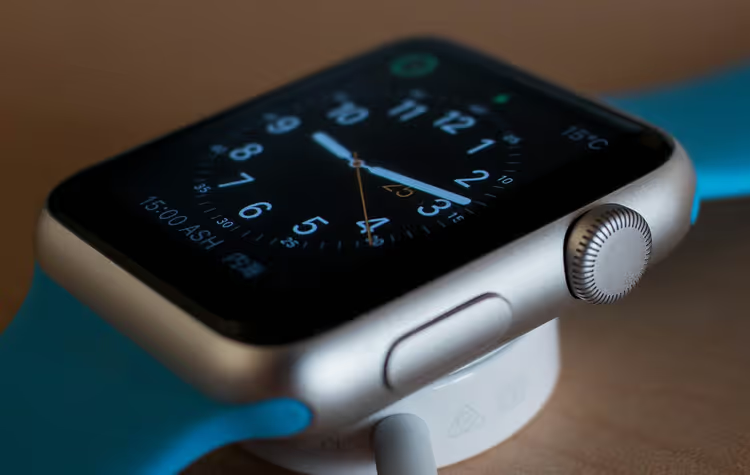
⌚ Apple Watch repair in Kyiv: what to do if your watch breaks
Apple Watch won't turn on after a fall, or the screen cracked after an unlucky bump against a door frame. It's an unpleasant situation, but not unique: you wear the watch on your wrist every day, and contact with hard surfaces is inevitable.
The good news is that most Apple Watch failures are repairable. Replacing the glass, battery, or speaker is a routine task for a service center with experience working on Apple devices. The bad news: one wrong move during a DIY disassembly can finish the device off for good. In this article, we cover which failures happen most often, when you should head to a service center immediately, and how to choose a repair shop that won't make things worse.
💡 Quick overview:
- Identify the type of failure: cracked glass, swollen battery, moisture ingress, or mechanical damage to the case; each problem has its own repair scenario
- Do not attempt to open the watch yourself: a heated separator, a plastic spudger, and knowledge of the disassembly layout are needed even just to replace the glass; without them, the risk of damaging the flex cables and the display module is nearly one hundred percent
- Choose a service center with free diagnostics and a warranty on the work: a reputable shop will first identify the cause, quote the cost and turnaround time, and only then proceed with the repair
- After the repair, check the seal integrity and that all functions work: display, touchscreen, speaker, microphone, haptic feedback, and water resistance (if the model supports it)
Which Apple Watch failures happen most often
Apple builds its watches from quality components, but physics is unforgiving: daily wear + glass + battery = three points of failure. According to repair shops that specialize in Apple devices, four types of failures account for the vast majority of service visits.
Cracked glass or shattered display
The most common reason for a service visit. Even the sapphire crystal on higher-end models (Stainless Steel and Ultra) cannot withstand a direct impact against a table corner or asphalt. On aluminum models, the glass is less scratch-resistant but absorbs impact better, though at the cost of a crack.
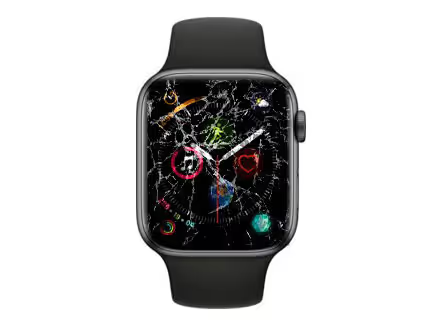
The problem is not just cosmetic. Dust and moisture enter the case through the crack; even a drop of rain can short the contacts on the display module. What follows is loss of touchscreen sensitivity, lines on the screen, and eventually complete display failure.
Replacing the glass on an Apple Watch is fundamentally more difficult than on an iPhone: the display module is glued to the case with adhesive sealant, and separating it without a separator (a device with heating and a suction cup) is practically impossible. After separation, the technician carefully removes the remaining adhesive, replaces the glass, and re-seals the case.
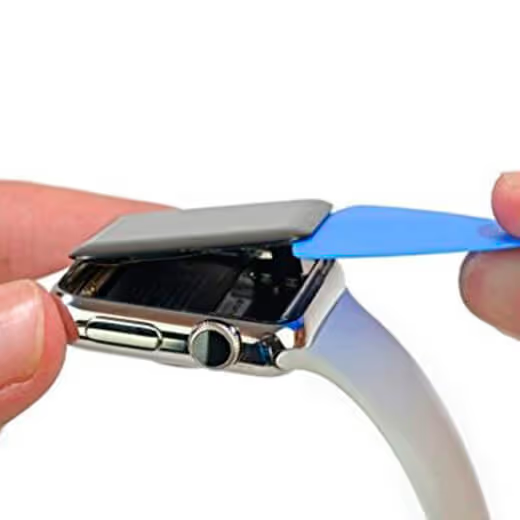
Apple Watch repair with glass replacement takes from 1 to 3 hours depending on the model. After the repair, you should immediately check the seal integrity: the watch has no moisture sensor, and the only way to confirm the adhesive seam is even is a water-resistance test at the service center.
Swollen battery
The lithium-ion battery inside an Apple Watch is designed for roughly 2 to 3 years of active use. After that period, it either loses capacity (the watch dies by lunchtime) or, in the worst case, swells.
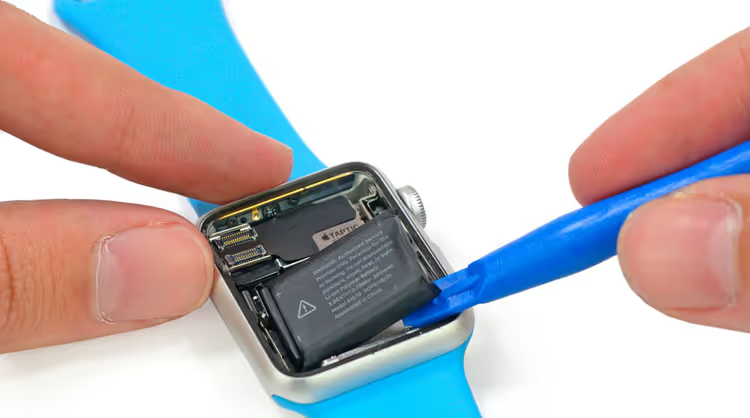
A swollen battery presses against the display module from the inside. The first sign is the screen lifting away from the case on one side; a gap appears between the glass and the aluminum. At this point, it is important not to press the display back down: compressing a deformed battery can cause it to ignite.
What to do:
- immediately turn off the watch and do not charge it again;
- take it to a service center; an Apple Watch battery replacement costs less than a display replacement, and if addressed promptly, the display module usually remains undamaged;
- if the watch is under warranty or covered by AppleCare+, contact an official Apple service provider; battery replacement may be free under the terms of Apple's service program.
Scratches, chips, and mechanical damage to the case
The Apple Watch case, made of aluminum, stainless steel, or titanium (Ultra), is fairly durable but not indestructible. Scratches on the case are cosmetic, something you can live with. A chip on the edge where the glass sits, however, is dangerous: it creates a stress point, and the next impact will crack the glass exactly along that line.
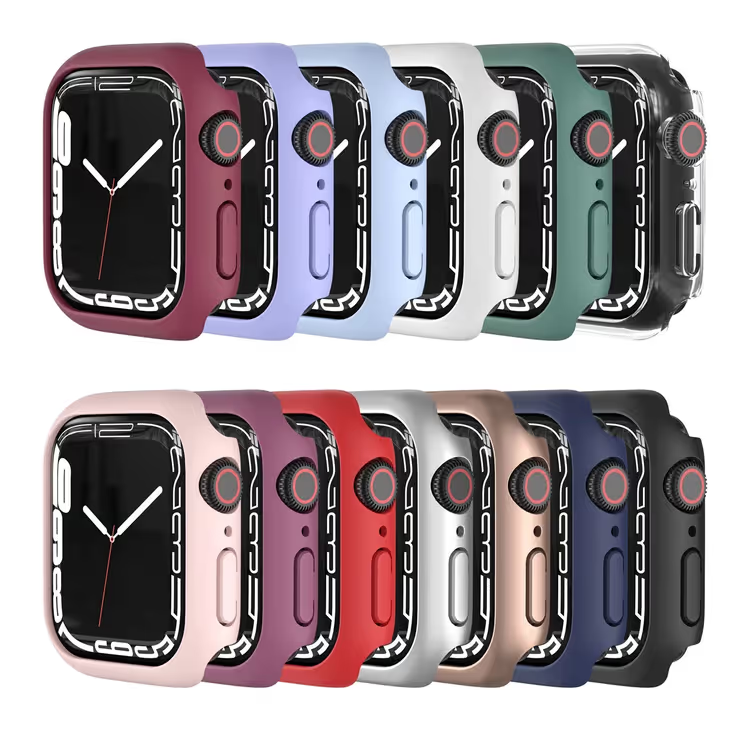
Protective accessories, bumpers and screen protectors, solve the problem preventively, but they are not for everyone: a watch in a case looks bulky, and an extra layer of glass adds glare. If appearance matters more, wear it without protection, but be aware of the risk. With serious case damage (a dent, a crack), replacing the glass is no longer enough; a full case replacement is needed, and here the price approaches the cost of a new watch.
Moisture ingress
Apple Watch models starting with Series 2 have water resistance (WR50 for Series 2-6 and SE; WR100 for Ultra). But this protection only works with an intact case and an undamaged adhesive seam. A micro-crack after a fall + a shower = water inside. The result is contact oxidation, speaker failure, and Taptic Engine failure.
An important nuance: water resistance degrades over time. The adhesive layer that holds the glass and seals the case loses elasticity after 2 to 3 years. If your watch is more than two years old, do not intentionally test its water resistance. If you suspect moisture ingress (fogging on the inside of the glass, crackling speaker), go to a service center immediately. DIY drying with a hairdryer or in rice will not help and can worsen the corrosion.
Official Apple service or independent repair shop: what to choose
Each option has its advantages and limitations.
Apple Store and authorized service providers use original parts and offer a 90-day warranty on the work. But the price is steep: according to Apple Support data, replacing the glass on an Apple Watch Series 8 without AppleCare+ costs roughly $299 to $399 depending on the region, and a battery replacement is about $79 to $99. For comparison, a new watch of the same model starts at $399. Plus, there are turnaround times: shipping to Apple takes 5 to 7 business days, and in some regions, an authorized service provider may not be available at all.
Independent repair shops win on price and speed: most jobs are done within the day, and the cost of glass replacement is noticeably lower than the official price. But here it is critically important to choose a shop with experience specifically with Apple Watch; the watch has disassembly and soldering specifics that iPhones and iPads do not have. A good indicator: the shop should offer a warranty on the work (at least 30 days) and perform free diagnostics before starting the repair.
A compromise approach: if under warranty or AppleCare+, go only to an official service provider. Out of warranty and without insurance, choose an independent shop with a proven reputation and a warranty. In any case: repairing the watch is cheaper than buying a new one, provided the case and logic board are intact.
What to do immediately after a failure: a checklist
Simple steps to avoid making the situation worse before your service visit:
- Turn off the watch. Do not charge it, do not restart it repeatedly. With cracked glass or suspected moisture, charging poses a short-circuit risk.
- Do not attempt to glue or tape it up. This creates a greenhouse effect and accelerates corrosion if moisture is inside. Plus, adhesive residue from tape will remain on the case and complicate disassembly.
- Remove the band and place the watch on a dry surface. Screen down if the glass is intact. If the glass is shattered, screen up so that fragments do not embed themselves into the display matrix.
- Make a backup if the watch still turns on. Apple Watch syncs with the iPhone Watch app automatically, but before turning it off, make sure the last sync completed; open the Watch app on the phone and check the date of the last backup.
- Call or message a service center. Describe the model, the nature of the failure, and how it happened. This way, the technician can tell you whether they work on that model and which parts are in stock, before you spend time traveling.
⁉️🤔 Frequent questions
Is it worth repairing an Apple Watch, or is it easier to buy a new one?
If only the display or battery is damaged, repair is definitely more cost-effective. Glass replacement at an independent shop costs substantially less than a new watch, and a battery replacement is even more advantageous. Buying a new one only makes sense with serious damage to the logic board or case (a dent that distorts the geometry); then the repair cost approaches the price of a new watch, and guaranteeing water resistance after a case replacement is more difficult.
Can you replace the glass on an Apple Watch yourself?
Technically, yes, but without a separator, spudger, hot-melt adhesive, and experience disassembling small electronics, the result is almost guaranteed to be poor. The display module is connected to the board by several flex cables 2 to 3 mm wide, which are easy to tear when separating the glass. Plus, after replacement, you need to roll the adhesive and check the seal integrity. The risk of completely destroying the device outweighs any savings.
Replacing Apple Watch glass at home without equipment and experience almost always ends with a non-working display or a damaged flex cable; after that, only a full module replacement will help, which is comparable to the price of a new watch.
How can I check if moisture has gotten inside the watch?
There are no direct moisture indicators in the Apple Watch (unlike the iPhone, which has an LCI sticker in the SIM tray). Indirect signs include: fogging on the inside of the glass when moving from cold to warm environments, a muffled or crackling speaker, and spontaneous screen presses (ghost touches). Any of these symptoms is a reason for diagnostics.
How long does an Apple Watch repair take at a service center?
Glass or battery replacement: 1 to 3 hours if parts are in stock. Speaker or Taptic Engine replacement: up to 1 hour. Full diagnostics with disassembly: 20 to 30 minutes. Most independent shops complete work same-day; official Apple service takes 5 to 7 business days including shipping.
Is water resistance preserved after glass replacement?
It depends on the service center. With careful replacement using the original adhesive compound and proper rolling, water resistance is restored to the factory level. But some shops skimp on adhesive, and then the watch is vulnerable even to splashes. Before the repair, ask whether the shop guarantees seal integrity. And as a first step after the repair, request a water-resistance check using a dedicated tester.
What if the watch is under warranty, but the damage is clearly mechanical?
The standard one-year Apple warranty does not cover mechanical damage (shattered glass, dents, scratches). But AppleCare+ does cover it, with a fixed deductible for screen damage and other damage; exact amounts depend on the region and are listed on Apple's website. If you have AppleCare+, contact Apple. Without AppleCare+, compare the price of an official repair and an independent shop: for serious damage, an independent service provider is often more cost-effective.
What to do if your Apple Watch is broken: the final verdict
If the watch is shattered, do not panic and do not try to fix it with makeshift tools. Turn off the device, assess the nature of the damage, and find a service center with free diagnostics and a warranty. Glass and battery replacement are well-established procedures that take a few hours and cost noticeably less than a new watch.
For failures under warranty or with AppleCare+, go to an official service provider. Out of warranty, look for an independent shop with experience specifically with Apple Watch: having a separator, hot-melt adhesive, and a water-resistance tester in their toolkit is a good sign. And most importantly: do not delay. A crack in the glass today means contact corrosion a week from now.

A professional team of writers and editors specializing in creating quality content.