













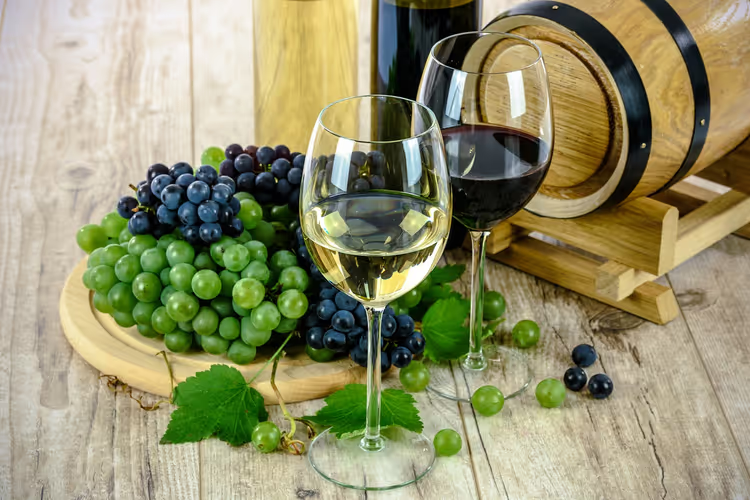
🍷 Dishes that become tastier with the addition of wine
Ordinary stew and a festive dinner are separated by a single ingredient. Wine.
Add a glass of red to the sauce, and the chicken stops being "just chicken." Pour white into risotto, and the side dish comes alive with fruity notes. Yet most home cooks steer clear of wine: either they're afraid of ruining the dish, or they don't know where to start.
Below, proven "wine + dish" pairings and rules that work in any kitchen. No complicated sauces from restaurant menus: only what you can realistically replicate at home.
💡 Quick overview:
- Dishes made with red wine: pasta, chicken, meat stew, and stuffed peppers, each recipe broken down step by step.
- White wine in the kitchen: marinated turkey, tomato soup, risotto, and seafood, what it pairs with best.
- Desserts with wine: rich baked goods, mousses, and baked fruit, an unexpected but effective technique.
- Three reasons to cook with wine: flavor, aroma, and texture, not just "for looks."
- How to choose wine for cooking: the main rule is simpler than it seems.
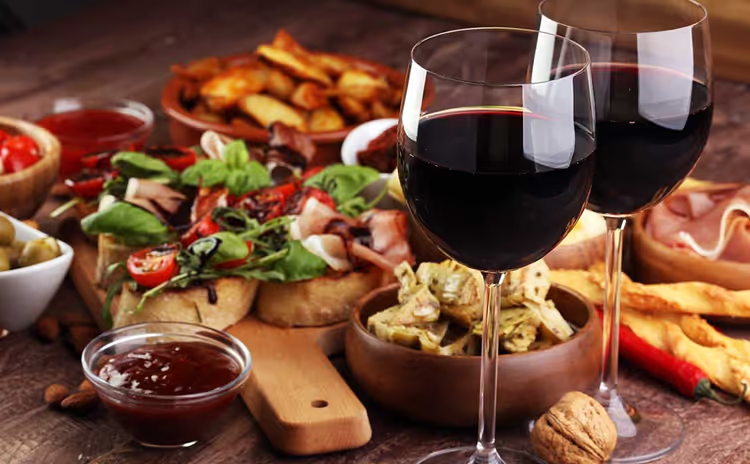
Dishes made with red wine
Red wine works as a flavor enhancer in meat and tomato dishes. Tannins bind with proteins, making the texture richer, while acidity softens the fibers. The rule is simple: dry red for braising and sauces, semi-sweet for dessert experiments.
Red wine pasta
The most striking technique: cook spaghetti directly in red wine. Yes, replace the water entirely with wine. The pasta absorbs the color and turns a deep burgundy, while the flavor becomes profound, with a slight tang.
Boil spaghetti to al dente in a mixture of water and dry red wine (3:1 ratio). In a pan, sauté minced garlic in olive oil, then add butter. Toss with the pasta, sprinkle with grated Parmesan and pine nuts. Black pepper is essential: it grounds the wine flavor.
A glass of the same wine at the table transforms this dish from "interesting to try" to "I'll make this for guests."
Chicken in red wine sauce
A classic that needs no overcomplicating. Heat olive oil with garlic in a pan, just until lightly golden. Sear the chicken fillet for 10 minutes on each side. Drain the remaining oil.
Now, the sauce: one tablespoon each of brown sugar and paprika, 200 ml of dry red wine, salt, pepper. Bring to a boil, cover, and simmer over low heat until done. The sauce will thicken on its own, the sugar will caramelize, and the wine will reduce to a rich glaze.
Works with any neutral side: rice, mashed potatoes, green beans.
Bolognese-style stuffed bell peppers
An Italian classic with a wine accent. Sauté minced celery root and carrot in olive oil for 5 minutes. Add ground beef (125 g) and diced pancetta. Cook until crumbly.
Pour in 60 ml of red wine and the same amount of marinara sauce. Simmer for 10 minutes, then stir in 80 ml of cream, 60 g of grated Parmesan, and 120 g of cooked rice. Keep on the heat for another 5 minutes.
Fill the peppers with the mixture, place on a greased baking sheet, and sprinkle with Parmesan. Oven: 190 °C, 30 minutes. A cheese crust on top and a juicy filling inside, a dish that looks like restaurant presentation.
What to cook with white wine
White wine is lighter and more acidic than red. It doesn't overpower delicate meat and seafood but accentuates them. Dry and off-dry options work for cooking: Sauvignon Blanc, Pinot Grigio, unoaked Chardonnay.
Turkey marinated in white wine
A whole bird marinated in white wine is a proven way to get juicy meat without extra fuss. Pour dry white wine over the turkey so the liquid covers at least half of the bird. Rub with softened butter, wrap tightly in foil.
Oven: 175 °C, 3.5 to 4 hours depending on weight. Check doneness with a thermometer (75 °C in the thickest part of the breast). After turning off the oven, let the meat rest inside for 30 minutes without unwrapping the foil; the juices will redistribute evenly. Unwrap and serve: the meat falls off the bone, and the skin is crispy.
Tomato soup with white wine
An unexpected twist on a familiar dish. White wine is added to tomato soup at the vegetable sautéing stage; the wine's acidity highlights the sweetness of ripe tomatoes. The base: fresh tomatoes (or canned in their own juice), white beans for heartiness, onion, celery, carrot, garlic.
Sauté the vegetables in olive oil until soft, pour in 100 ml of dry white wine, and let it evaporate for a minute. Add broth, tomatoes, and beans, and simmer for 20 minutes. Blend until smooth. Serve with croutons and a drizzle of olive oil on top. A summer version that also works in winter with canned tomatoes.
Desserts: an unexpected twist
Wine in desserts is a technique used by pastry chefs worldwide, yet home cooks avoid it. Unjustifiably so. The fruity notes of wine (cherry, blackberry, citrus) naturally fit into baked goods and creams.
Rich baked goods with wine. Replace a quarter of the liquid in the batter with semi-sweet red; muffins and sponge cakes gain a subtle berry undertone without artificial flavorings.
Mousses and jellies. Gelatin + wine + berry puree = a dessert with 10 minutes of active work. White sparkling with raspberry, red with cherry, the combinations are intuitive.
Baked fruit. Pears or peaches gently poached in white wine with sugar and cinnamon: the simplest dessert that looks expensive. Serve with a scoop of vanilla ice cream.
Quality wine is essential here: you can't mask a dessert's flavor with spices. Koblevo wine in the online store is one option where the selection lets you pick a bottle for both sauce and dessert without overpaying for the brand.
Why wine works: three reasons to add it to your cooking
Flavor. Wine contains dozens of aromatic compounds that are released when heated. These same compounds exist in fruits, herbs, and spices, which is why wine "gathers" a dish's flavor into a cohesive whole rather than simply adding an alcoholic note. This is especially noticeable in long-braised dishes.
Texture. The acid in wine breaks down meat's connective tissues, the very effect for which meat is marinated for hours. In cheese fondue, wine prevents the cheese from seizing into a lump: ethanol interferes with casein forming a dense network.
Aroma. When heated, some of the alcohol evaporates, but the aromatic molecules remain. The dish smells more complex and appetizing, even if you haven't added a single spice. It's not magic, it's chemistry, but to your guests, there's no difference.
An important point: alcohol does not evaporate completely. Even after half an hour of simmering, a significant portion of ethanol remains in the dish, and after an hour of cooking, roughly a quarter of the original volume is left. For most recipes, this is not enough to feel intoxicated, but keep it in mind if you're cooking for children or anyone who completely excludes alcohol.
How to choose wine for cooking: a rule that works
The main rule is simpler than what cookbooks suggest: cook with wine you're willing to drink. "Cooking wine" from the supermarket with added salt and preservatives will ruin even the most precise recipe.
For red: choose a young dry wine, Merlot, Cabernet Sauvignon, Pinot Noir. Without oak aging (oak bitterness intensifies when reduced). Don't overpay for top-shelf bottles: the subtle nuances of the bouquet will disappear with heat anyway. Pick a young, drinkable wine with no flaws, and spend your budget on the main ingredients.
For white: dry Sauvignon Blanc or Pinot Grigio. Chardonnay only if unoaked. Avoid sweet and semi-sweet wines for main dishes: sugar caramelization yields a burnt taste. For desserts, conversely, use semi-sweet or dessert wine.
For desserts and baking: semi-sweet red, Muscat, Port. The wine's sweetness acts as part of the sugar in the recipe; slightly reduce the added sugar.
In this short video, chef Charles Smith shows the basic principles: how to choose wine for cooking, what to do with leftover wine, and why "cooking wine" from the supermarket is a bad idea.
⁉️🤔 Frequent questions
Can you substitute red wine with white in a recipe?
No, that changes the entire flavor profile. Red provides depth and tannins, white provides acidity and fruitiness. As a last resort, replace red wine with a mixture of broth and a teaspoon of balsamic vinegar, and white with broth and lemon juice. But it will be a different dish.
How much wine should you add to a dish?
For a sauce serving 2 to 3, 150 to 200 ml is enough. For a marinade, enough liquid to cover the product at least halfway. For risotto, one standard glass (150 ml) at the stage after toasting the rice. The rule: it's better to add too little and pour in more than to overpour and end up with wine soup.
Is it true that alcohol completely evaporates during cooking?
No. Even after half an hour of boiling, a significant portion of alcohol remains; after an hour, roughly a quarter. Near-complete evaporation requires 2 to 3 hours of active boiling. In most recipes (pasta, sauces, risotto), the cooking time is shorter; keep this in mind if you're cooking for people who must avoid alcohol.
What wine should you absolutely never use for cooking?
"Cooking wine" from the supermarket with added salt and preservatives. Soured or old wine that has already turned to vinegar. Sweet fortified wines for meat dishes; they yield a burnt taste when reduced. Everything else is a matter of recipe and taste.
Is it worth buying expensive wine for cooking?
No. Top-shelf wine for cooking is a waste of money: the subtle nuances of the bouquet are destroyed by heat. Pick a young, drinkable wine with no flaws, and spend your budget on the dish's main ingredients.
Cooking with wine: the bottom line
Wine in the kitchen works as a universal enhancer: it unlocks the flavor of meat, gathers aromas in a sauce, and turns simple ingredients into a memorable dish. And you don't need culinary courses to do it.
If you've never cooked with wine, start with pasta. Cooking spaghetti in red wine is only one step more involved than in water: choosing a bottle. After that, it's business as usual. The result: a deep color and flavor that guests will mistake for restaurant quality.
If you've already tried it, expand your arsenal. White wine in tomato soup, red in stuffed peppers, sparkling in jelly. The rule "cook with what you drink" works, not expensive culinary reference books.
What wine dish has become your signature? Tell us in the comments.

A professional team of writers and editors specializing in creating quality content.