













🚘 Paint protection film on a car: how it works, how much it costs and when it pays off
A pebble from the highway, a supermarket parking lot, winter road salt, and now there's a chip down to bare metal on your hood. Sound familiar? Repainting a single panel costs hundreds of dollars, and six months later a new chip appears in the same spot. Paint protection film solves this problem at the root. Let's break down how it works, what it costs, and when it pays off.
💡 Quick overview:
- Assess your car's risk zones: the front bumper and hood take the brunt of chips on highways and in the city
- Choose the film type: TPU lasts 5-10 years with scratch self-healing, PVC yellows in 2-3 years and does not self-heal
- Compare prices at two or three detailing shops, check the film brand and the workmanship warranty (minimum 3 years)
🛡️ What is paint protection film and how it works
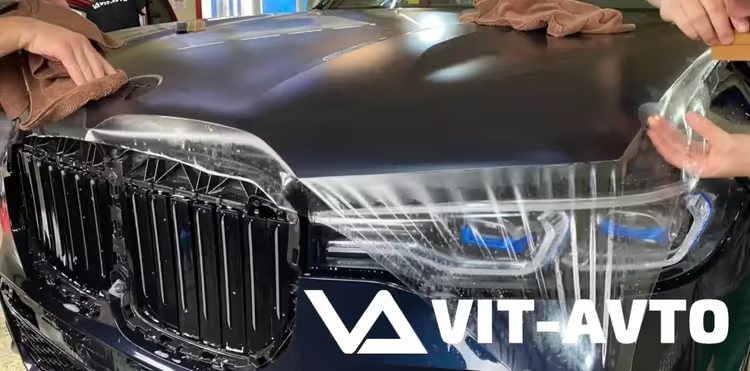
Paint protection film (PPF) is a transparent polyurethane film 150-200 microns thick that is applied to the body to protect the paint finish. The technology came from military aviation: polyurethane films were originally developed to protect helicopter blades from abrasive wear during the Vietnam War. Today it is the standard detailing protection for those who don't want to repaint the hood after every long trip.
Modern PPF consists of three layers. The top layer is self-healing: when heated (sun, heat gun, or hot water), minor scratches and scuffs disappear on their own. The middle layer is impact-resistant polyurethane that absorbs stones or gravel. The bottom layer is adhesive, ensuring a tight fit without bubbles. The result: the film works like invisible armor, preserving the factory color and gloss of the body.
In practice, paint protection film protects against three main enemies of the body: road gravel and sandblasting on highways, winter salt and chemicals, as well as branches and door dings in parking lots. Unlike a ceramic coating, which provides hydrophobicity and gloss but does not save you from chips, PPF absorbs mechanical impact directly. They are often applied together: first the film on risk zones, then ceramic on top for gloss and water beading.
📊 Coverage options: from bumper to full body
The coverage area determines both the level of protection and the budget. You should choose based on the actual risk zones of your specific car, not "all or nothing."
Coverage zone | What it protects | Who it's relevant for | Estimated price |
|---|---|---|---|
Front bumper | Main gravel impact on highways | City cars with occasional out-of-town trips | From 16,000 UAH |
Hood and front fenders | Sandblasting, oncoming stones | Cars with regular highway mileage | From 18,400 UAH |
Full body | Entire surface, including doors and sills | New premium cars to preserve residual value | From 23,800 UAH |
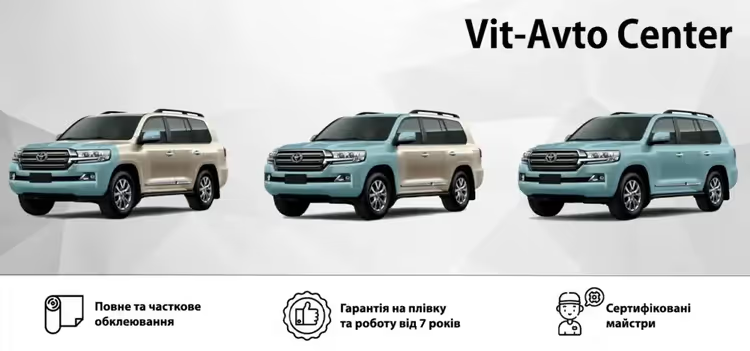
Partial coverage (front bumper, hood, mirrors) covers most real-world risks and costs two to three times less than full coverage. Full body is justified for new premium cars: it preserves residual value at resale and protects against minor things like rings on door handles. Think about where your car gets the most chips and cover exactly those zones.
💰 What makes up the price of paint protection film
The cost of film application depends not only on the area but also on three key factors.
Car make and model. The more complex the body geometry, the more time the installer needs for fitting. A BMW X3 with a relatively flat hood is faster to film than an Audi Q5 with aggressive bumper curves. The difference can be 2-3 hours of work on the front end alone.
Film type. Budget PVC-based films yellow after a couple of years and lack self-healing. Top-tier TPU films (thermoplastic polyurethane) last 7-10 years, self-heal scratches, and do not change color. The price difference for the material can reach two to three times, but the service life is proportional.
Installer qualification. Film is a material, and the result largely depends on the hands of the installer. An experienced installer applies the film without bubbles, folds, or seams in visible areas. Saving on installation often results in reapplication six months later.
A concrete example. The front bumper and hood of a BMW X3: about 2 hours of work, the cost starts from a couple of hundred dollars. The same zone on an Audi Q5 with a more complex bumper: up to 4 hours and almost twice as expensive. The final price is made up of the material cost, the installer's labor hours, and the complexity of the geometry. Before booking, always clarify which brand of film you are being offered and how many years of warranty the shop provides on the work and the material.
🏭 Materials and brands: what detailing shops apply
The paint protection film market is divided among several global manufacturers. XPEL (USA), the industry standard: high self-healing speed, an extensive library of patterns for laser cutting, up to a 10-year warranty. LLumar and SunTek (both Eastman Chemical) offer excellent optical clarity and resistance to insect stains. STEK (Korea) offers a hydrophobic top layer "out of the box," without mandatory ceramic on top. 3M Scotchgard Pro, a time-tested option with the largest network of certified installers worldwide.
In Ukrainian detailing shops, you can also find local brands like CliffDesign, which position themselves as manufacturers of new-generation polyurethane films. When choosing, look not at the name but at three parameters: the claimed service life (from 5 years), the presence of a self-healing layer (top coat), and the installer's workmanship warranty. A good shop always provides a written warranty against peeling and yellowing, for a minimum of 3 years.
It is worth mentioning colored and matte films separately. This is the same TPU material with pigment or a matte finish. They protect just as well as transparent ones but change the car's appearance. If you want a matte hood or a "wet asphalt" colored body without repainting, colored PPF solves both tasks at once.
🎬 What paint protection film installation looks like: the process from start to finish
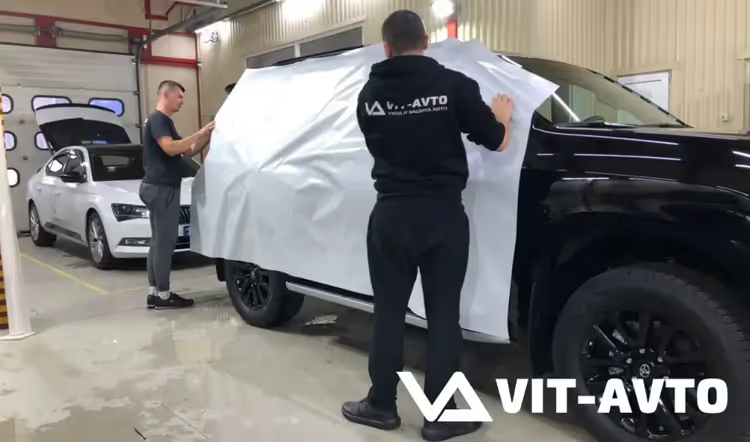
To understand what happens to the car in a detailing shop, watch this video. In it, the installer shows the full cycle of front-end film application, from degreasing the body to final curing.
⁉️🤔 Frequent questions
- How long does paint protection film last?
The service life of a quality TPU film is from 5 to 10 years, depending on the brand, operating conditions, and maintenance. Budget PVC films yellow and lose transparency after just 2-3 years. Garage storage extends the life of the top layer; constant parking in the sun accelerates wear.
- Can the film be removed without damaging the paint?
Yes, professionally installed PPF is removed without a trace. The installer heats the film with a heat gun and carefully pulls it off. The factory paint underneath remains in the same condition as on the day of application. That is exactly why film is recommended for new cars immediately after purchase.
- Does a car with film require special maintenance?
No, standard touchless washing once every 1-2 weeks is sufficient. The only restriction: do not direct a high-pressure washer at the seams and edges of the film in the first 48 hours after installation. After full curing (3-7 days), there are no restrictions. You can apply ceramic or wax over the film.
- Which is better: paint protection film or ceramic coating?
These are products with different tasks. PPF protects against mechanical damage (chips, scratches, sandblasting). Ceramic provides hydrophobicity, gloss, and chemical protection but does not save you from a stone on the highway. The optimal scenario for a new car: PPF on risk zones (front end, hood), ceramic on the entire body.
- Does paint protection film pay off when reselling the car?
Yes. A car without chips and with factory paint is worth noticeably more on the secondary market than counterparts with repainted panels. Repainting one element (hood or bumper) costs hundreds of dollars, which is comparable to the price of filming the front end. Plus, the buyer sees that the car was cared for.
- Can I film only part of the car?
Yes, partial coverage is the most popular option. Usually, the front bumper, hood, front fenders, and mirrors are filmed, these zones take the majority of chips. The rest of the body is protected with ceramic, and this is the optimal price/protection scenario.
- Does the film yellow over time?
Quality TPU film does not yellow. Modern top coat layers contain UV inhibitors that block ultraviolet degradation of the polyurethane. It is budget PVC and TPH films that are prone to yellowing after 2-3 years. A guideline: if the manufacturer provides a warranty against yellowing, the film will not yellow.
Paint protection film: when you really need it and when you don't
Paint protection film is not a cheap pleasure. But every chip it prevents saves you hundreds of dollars on repainting a single panel. For a new car you plan to sell in 3-5 years, PPF is a direct way to preserve the factory paint and residual value. For a used car in good condition, it's protection against further wear on the most vulnerable zones.
If the budget is limited, start with the front end: bumper, hood, mirrors. Choose a TPU film from a well-known brand and an installer with a portfolio and warranty. Don't chase the lowest price: crooked installation or cheap film will cost more than having no protection at all.
Find out the current price of paint protection film for a car in Kyiv at specialized detailing shops, where they will also give you a preliminary estimate for your specific model and help you choose a film that fits your budget.

A professional team of writers and editors specializing in creating quality content.