













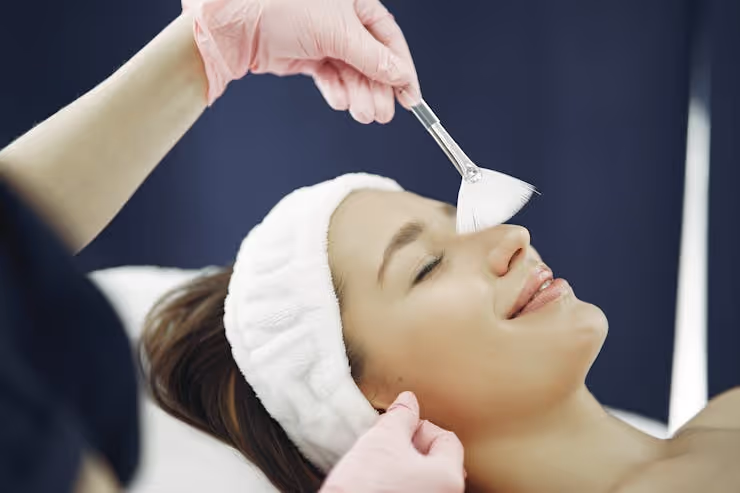
💡 Facial skincare for teenage girls: where to start and which products to choose
Adolescence turns everything upside down. Mood swings wildly, the body changes, and facial skin suddenly starts living its own life: oily shine one day, breakouts the next, then dry patches. Hormonal storms hit the epidermis first, and if you don't build a proper routine in time, the consequences can stretch on for years.
The problem is that most teenage girls either don't take care of their face at all or, conversely, attack it with aggressive mass-market products that only make things worse. Alcohol-based toners, harsh scrubs, heavy foundation creams, and before you know it, mild breakouts turn into full-blown acne with scarring.
The good news: teenage skin doesn't need an arsenal of ten bottles. Three basic steps, properly matched to your skin type, plus a few simple habits are enough. Let's break down each stage from start to finish.
💡 Quick overview:
- Determine your skin type (oily, dry, combination, normal, sensitive), the entire routine depends on this
- Build a foundation of three steps: cleansing, toning, moisturizing, twice a day, no skipping
- Add SPF protection every morning, teenage skin is especially vulnerable to ultraviolet light
- Introduce targeted treatments as needed: salicylic acid for acne, a gentle scrub once a week, a nourishing serum
- Adjust your lifestyle: 8+ hours of sleep, a clean pillowcase every 3 days, minimal sugar and fast food in your diet
Step 1. Determine your skin type
Before buying gels and creams, you need to understand what kind of skin you're dealing with. Dermatologists identify five main types, and each has its own needs:
Dry, thin, tight after washing, with flaky patches. Reacts to cold and wind with redness.
Oily, porous, with a greasy shine in the T-zone, prone to breakouts and blackheads.
Normal, smooth, with an even texture and natural tone. Rare, especially during puberty.
Combination, oily on the forehead, nose, and chin, but dry or normal on the cheeks. The most common type among teenagers.
Sensitive, flushes instantly, reacts sharply to temperature changes, hard water, and decorative cosmetics.
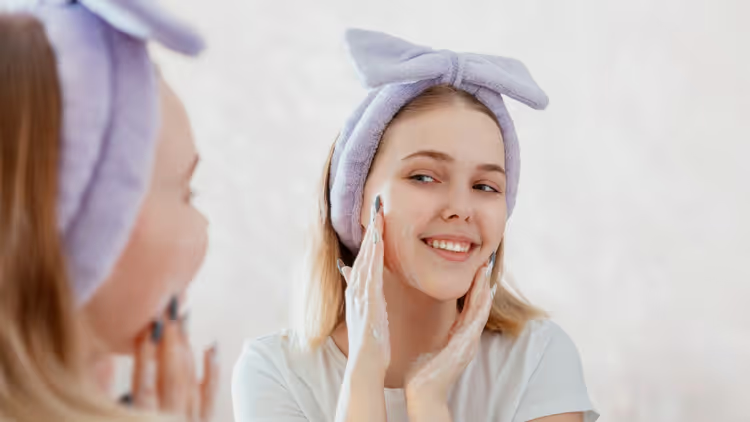
Most girls aged 12-16 are diagnosed with combination or oily skin. This is normal: active testosterone revs up the sebaceous glands, hence the shine and breakouts. By age 17-18, the hormonal background usually stabilizes, and the skin settles into a calmer state, provided it has been properly cared for.
Step 2. Cleansing, the foundation without which everything else is useless
All daily care begins and ends with cleansing. Over the course of a day, dust, sebum, makeup residue, and bacteria settle on the face. If you don't wash this layer off before bed, pores get clogged, and by morning you have a fresh inflammation.
Dermatologists agree on one thing: teenagers need a gentle gel or foam cleanser without alcohol and sulfates. Harsh "squeaky-clean" formulas strip away the protective hydrolipidic barrier, and the skin responds by producing even more oil, a vicious cycle.
The proper cleansing technique in 3 steps:
- Wet your face with lukewarm water. Hot water dries and irritates, cold water doesn't open pores.
- Squeeze a drop of gel onto your fingers, lather it up, and go over your entire face with gentle circular motions, from the center outward, including the neck and hairline.
- Rinse thoroughly and pat your face dry with a soft towel. Don't rub, that causes microtrauma.
Wash twice a day: morning and evening, plus after a workout or heavy sweating. More often is unnecessary, you'll over-dry.
Step 3. Toning and moisturizing
Immediately after cleansing, the skin loses some moisture and its pH balance shifts. This is where toner comes in, but only alcohol-free. Alcohol in a toner for a teenager equals disaster: it burns, dehydrates, and triggers a compensatory overproduction of sebum.
A good toner contains panthenol, chamomile or aloe extract, niacinamide. Apply it to a cotton pad and sweep it over your face with light dabbing motions, don't stretch the skin.
Next comes moisturizer. Yes, even if your skin is oily and shiny. The logic of "oily skin doesn't need moisturizing" is one of the most harmful myths of teenage skincare. Dehydrated skin compensates by producing more sebum, and the cycle continues. Look for non-comedogenic and oil-free on the label, such a cream won't clog pores.
Application technique: squeeze out a pea-sized amount, spread it over your face from the center outward, don't rub it in. Treat the eye area especially delicately, using your ring finger.
Step 4. Sun protection and additional products
Sunscreen is not a beauty blogger whim, it's a dermatologist-proven necessity. According to the American Academy of Dermatology, up to 80% of visible skin aging signs are caused by ultraviolet exposure, and the accumulation begins precisely in adolescence. A light fluid cream with SPF 30 every morning on top of moisturizer, a habit that will pay off tenfold by age 30.
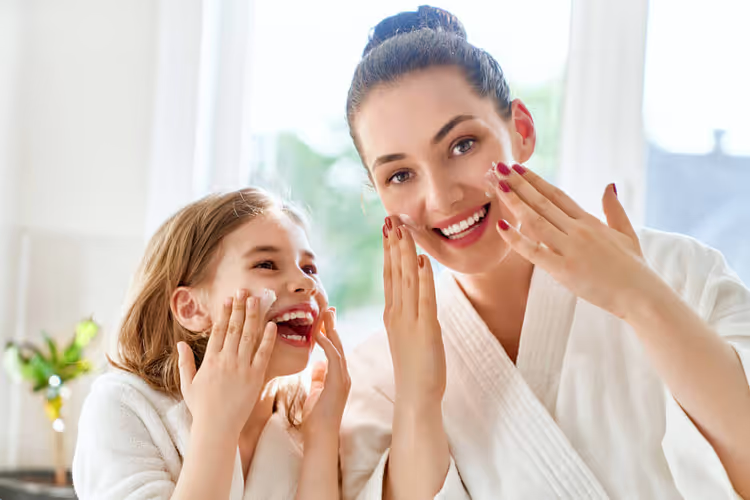
What else might be useful on the shelf:
A gentle scrub or enzyme peel, once every 5-7 days, not more often. Removes the dead skin layer and blackheads without causing trauma.
Salicylic acid, applied directly on inflammations. A standard over-the-counter anti-acne ingredient, it dries out pimples and reduces redness overnight.
A nourishing serum with hyaluronic acid, for dry and combination areas, especially in winter.
A hygienic lip balm, without fragrances and menthol, which dries lips out.
For light makeup, a teenager needs the bare minimum: children's cosmetics for girls, cream eyeshadows, colored mascara, and lip gloss. Heavy foundations and concealers are better postponed until an older age, they clog pores and create a "mask-like" effect on young skin.
Step 5. Nutrition, sleep, and hygiene
No cream can save you if there's a constant internal bombardment of sugar, trans fats, and sleep deprivation. The "food → skin" connection is direct and proven: high-glycemic-index foods (chips, soda, milk chocolate, fast food) trigger insulin spikes, which in turn trigger inflammatory cascades in the epidermis.
What to add to your diet: fresh vegetables and fruits, leafy greens, legumes, whole grains, fatty fish. Omega-3 fatty acids from fish reduce systemic inflammation and directly improve skin texture, this was confirmed by a 2023 meta-analysis in the Journal of Clinical Medicine.
Three ironclad hygiene rules:
- Change your pillowcase every 3 days. Bacteria, sebum, and skincare product residue accumulate on the fabric, and all of this touches your face for 7-8 hours straight.
- Don't touch your face with your hands during the day. On your fingers is a mix of dust, germs, and everything you've touched. Every touch brings a new pimple closer.
- Always remove makeup before bed. No exceptions and no excuses. Makeup left on overnight guarantees clogged pores and a dull complexion.
Sleep, at least 8 hours in a cool, well-ventilated room. It's during sleep that the skin recovers most actively: cell renewal accelerates, collagen production normalizes.
Video: teenage skincare in 10 minutes
In this video, dermatologist Dr. Nivedita Dadu breaks down a basic routine for teenagers, common mistakes, and myths about youthful skin:
⁉️🤔 Frequently asked questions
At what age should you start taking care of your facial skin?
Dermatologists recommend starting basic care at age 10-12, when the first signs of hormonal changes appear. At this age, gentle cleansing and light moisturizing are enough. A full routine (cleansing + toner + cream + SPF) makes sense to introduce around age 13-14, when sebaceous glands become more active.
Is it okay to squeeze pimples?
No. Squeezing pushes bacteria deeper into the dermis, expands the inflammation zone, and almost guaranteed leaves post-inflammatory hyperpigmentation or a scar. Instead, apply a spot treatment with salicylic acid or benzoyl peroxide and let the pimple mature and resolve on its own. If acne is severe, see a dermatologist, not a beautician at the mall.
How often can I use a scrub?
No more than once every 5-7 days. More frequent scrubbing damages the protective barrier and causes irritation. For teenage skin, it's better to choose enzyme peels or gentle scrubs with fine granules, no ground nutshells or large abrasives.
Is toner necessary if my skin is already oily?
Yes. An alcohol-free toner restores the pH balance after washing and prepares the skin for cream application. Oily skin is often dehydrated: the sebaceous glands work overtime, but the epidermis lacks moisture. Toner evens out this imbalance.
What if nothing seems to help?
The first step is a visit to a dermatologist, not continuing to experiment with the store shelf. A doctor will determine what exactly you're dealing with: hormonal acne, rosacea, allergic dermatitis, or a bacterial infection. The treatment for each of these conditions is different, and the budget spent on guessing can be wasted over months.
Where to start tomorrow morning?
The most common question from parents of teenagers: "where to start if nothing has been done at all up to now?" The answer is simpler than it seems: buy three products matched to your child's skin type, a gentle cleansing gel, an alcohol-free toner, and a light moisturizer. For the first week, use only those, morning and evening. No scrubs, masks, or serums. Let the skin get used to the basic routine.
After a week, add morning SPF. After another two weeks, evaluate the result. If the skin reacts calmly, introduce targeted treatments as needed: salicylic acid on inflammations, a scrub once a week. Don't chase the number of bottles, in teenage skincare, "less" almost always means "better."
Beautiful skin at 20 and 30 is built on habits formed at 13-16. And it's not a survival marathon with aggressive chemicals, but a calm, predictable three-step routine that's realistic to follow every day.

A professional team of writers and editors specializing in creating quality content.