













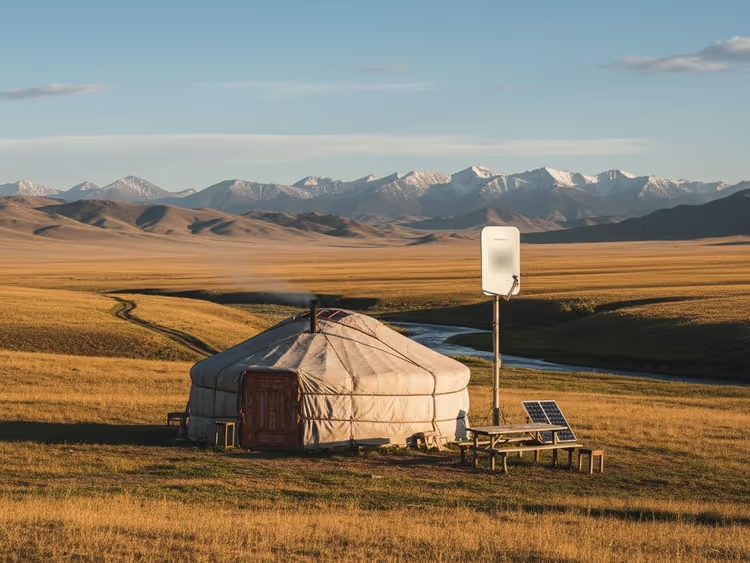
 AIIllustrative image: AI-generated
🛰 How Starlink is changing ecotourism in Kazakhstan: internet for eco-lodges and rural entrepreneurs
The turquoise lakes of Burabay, the canyons of Altyn-Emel, the endless steppe. Kazakhstan is a top destination for those seeking nature, not resort noise. But there is a catch.
An eco-lodge a hundred kilometers from the nearest town cannot accept online bookings. A yurt camp does not respond to a tourist from Europe because the nearest cell tower is far away and no one has run fiber optic cable out there. For such places, the outside world simply does not exist in digital form. Until 2025, that was a death sentence for rural tourism.
The situation changed on August 13, 2025: Starlink Kazakhstan officially launched commercial service in the country. SpaceX's low-earth-orbit satellites closed the gap between wild nature and the digital economy. Here is how satellite internet is reshaping ecotourism in Kazakhstan, and why LEO connectivity beats traditional infrastructure where nature matters more than asphalt.
💡 Quick overview:
- Starlink satellite internet closes the digital divide in remote regions of Kazakhstan without laying cables or building towers
- LEO terminals run off a power source and mount on a roof: the environmental footprint is minimal, the landscape stays untouched
- Rural entrepreneurs gain access to global booking platforms, online payments, and marketing
- The technology simultaneously addresses business needs, tourist safety, and conservation of natural areas
Digital isolation: why an eco-lodge without internet is a non-starter
Sustainable tourism rests on two pillars: nature conservation and the economy of local communities. The absence of connectivity hits both.
A small yurt-camp operator in a national park without internet is invisible to Booking.com and Airbnb. Their market is tourists with cash who somehow ended up nearby. They do not update a website, run social media, or respond to inquiries from foreigners within an hour. Even routine tasks, ordering supplies, coordinating staff, arranging transfers, turn into a logistical quest that eats up time and profit.
From the tourist's side, the picture is no better. A person who combines work and travel simply will not go where there is no stable internet. In an emergency, injury, fire, losing one's bearings, traditional radio and old satellite phones work only intermittently. Digital maps, online guides, and interactive materials about the region's ecology remain inaccessible. Tourists vote with their feet: they pick a place with Wi-Fi, not a canyon view.
Starlink: satellite internet without harm to nature
LEO (Low Earth Orbit) technology works differently than the geostationary satellites of the past. Starlink satellites orbit at an altitude of about 550 km, which is 65 times closer than traditional geostationary spacecraft. The result: signal latency of 25-50 ms versus 600+ ms with old satellite internet. Video calls, cloud services, and online bookings work without stuttering.
For national parks and nature reserves, the environmental footprint of infrastructure is critical. Laying fiber optic cable means kilometers of trenches through protected land. Building towers means concrete, metal, and access roads. A Starlink terminal requires only an antenna the size of a large laptop and a power source. It is installed on the roof of a guest house or visitor center. The landscape remains untouched.
Another plus is mobility. The eco-lodge moved? A temporary research station on the steppe? The equipment packs up in 15 minutes and deploys at the new location. No dismantling, no new permits.
According to Telecom Observer as of April 2026, the Starlink constellation numbers 6,371 satellites in low orbit. The service operates in 130 countries and serves over 4 million subscribers. Kazakhstan was among the first in Central Asia to join that list.
How rural entrepreneurs earn with Starlink
The commercial launch on August 13, 2025, following a regulatory agreement with the Ministry of Digital Development, opened up the global market to the rural economy. High-speed, low-latency internet turned out to be exactly what scattered and hard-to-reach regions were missing.
Eco-lodges and yurt camps: from cash to online bookings
A small operator in the Almaty region can now connect with clients from Europe, North America, and Asia through familiar booking platforms. They manage the availability calendar, accept online payments, and communicate with guests in different languages via messengers. At the same time, they monitor energy consumption, order supplies, and coordinate transfers, from horseback rides to jeep safaris.
The cash-flow gap and dependence on cash disappear, while a professional booking service boosts the trust of foreign tourists.
Agritourism and rural business
Agritourism in Kazakhstan is supported by government initiatives and is becoming a notable source of income for farms. Farmers sell honey, dairy products, and handicrafts directly to tourists, both before and after the visit, through online channels.
Starlink provides access to agronomic data, weather forecasts, and modern farming methods. The rise in agricultural efficiency and tourism service strengthens the entire local economy. When residents earn directly from ecotourism, they become the most reliable stewards of nature: a territory that feeds you gets protected not by decree, but by self-interest.
 AIIllustrative image: AI-generated
Tourist safety and conservation of natural areas
Beyond business, satellite connectivity is changing the management of national parks and nature reserves. Rangers and conservation staff get constant voice and video communication over vast distances, with no dead zones.
Three scenarios where Starlink becomes critical infrastructure:
Anti-poaching. Images from camera traps and data from IoT sensors are transmitted to headquarters in real time. The response to illegal activity takes minutes, not days.
Environmental monitoring. Researchers track animal movements, climate change, and water quality through a network of sensors. Starlink serves as a data transmission channel that does not depend on ground infrastructure.
Emergency situations. During a fire or a search for missing tourists, rescuers coordinate actions via stable communication regardless of remoteness. Coordinates, drone photos, and voice instructions arrive instantly.
Reliable connectivity helps regulate visitor flows: park administration sees zone occupancy in real time and prevents ecosystem overload.
Video: how Starlink was deployed in Kazakhstan
A short overview of the satellite service launch from a Kazakh news channel, covering equipment, timelines, and initial connection results in rural areas:
The role of local partners: who to trust with integration
Deploying LEO connectivity in Kazakhstan requires local expertise. You need specialists who will ensure regulatory compliance, on-site technical support, and adaptation of the solution to specific needs, from a yurt camp to a nature reserve.
Satellite service providers such as IEC Telecom act as key partners in this process. They integrate Starlink for land-based use and provide additional services: network resource management, cybersecurity, and bandwidth allocation between guests and staff. For a small entrepreneur without an in-house IT department, such support means the internet just works, rather than becoming yet another headache.
The digital future of Kazakhstan's wild nature
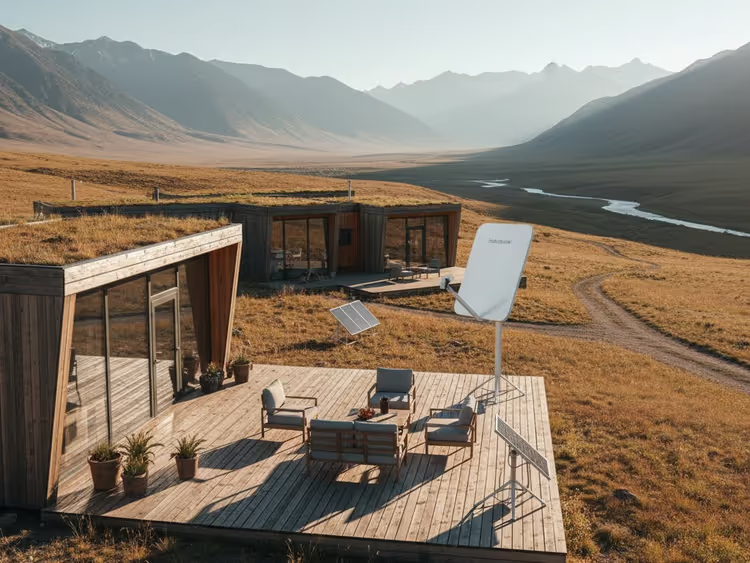 AIIllustrative image: AI-generated
Kazakhstan is moving toward leadership in the global ecotourism industry. The balance between nature conservation and economic development is the core equation, and Starlink offers a way to solve it without environmental compromises.
High-speed, low-latency internet without heavy infrastructure directly empowers rural entrepreneurs. Eco-lodges enter the global market, tourists gain safety and connectivity, and conservation authorities gain modern monitoring and response tools.
Satellite internet in the mountains is not just Wi-Fi with a nice view. It is the digital foundation on which Kazakhstan's natural heritage builds a prosperous, connected, and responsible local economy for generations to come.
⁉️🤔 Frequently asked questions
Does Starlink work in rain and snow?
Yes, the Starlink terminal is designed for operation in temperatures from -30 to +50 °C and features an automatic snow-melt function. A heavy downpour may temporarily reduce speed, but the connection does not drop. In practice, users in the mountainous regions of Kazakhstan get through winter without interruptions.
Do I need a permit to install a terminal in a national park?
Formally, a Starlink terminal does not require construction work; it mounts onto an existing structure (roof, pole). However, special regulations apply on the territory of Kazakhstan's national parks and reserves. Before installation, it is worth coordinating the placement with the park administration. Partners like IEC Telecom assist with the paperwork.
What speed does Starlink provide in Kazakhstan?
Users in Kazakhstan get from 50 to 200 Mbps download with latency of 25-50 ms. The specific speed depends on network load in the region and a clear view of the sky. This is more than enough for video calls, cloud services, online bookings, and streaming video.
Can one terminal be connected to several buildings?
Yes, the signal is distributed to neighboring buildings via a standard Wi-Fi network within a radius of up to 30-50 meters (depending on walls and terrain). To cover an entire eco-resort consisting of several structures, a mesh system or additional access points connected to the Starlink router are used.
How much does the equipment and plan cost for a legal entity in Kazakhstan?
Prices and plans depend on the tier: Residential, Business, or Roam. As of August 2025, the equipment cost for the business plan was about 400,000 tenge, with a monthly fee starting from 35,000 tenge. Check with local distributors for current figures: plans are updated periodically.
What Starlink means for ecotourism in Kazakhstan right now
Satellite internet is no longer an exotic option for the few. For Kazakh ecotourism, it has become the missing link between wild nature and the global market. An eco-lodge with a terminal on the roof is not just a hotel with Wi-Fi. It is a business that is visible to the world, accepts bookings from anywhere on the planet, and pays taxes on real, not shadow, turnover.
If you manage an eco-lodge, a yurt camp, or an agritourism project in a rural area, take a closer look at satellite internet. Local integrators will help you choose a plan, install the equipment, and configure the network for your needs. Nature should not be a sentence for your business; it should be its greatest asset.

A professional team of writers and editors specializing in creating quality content.