













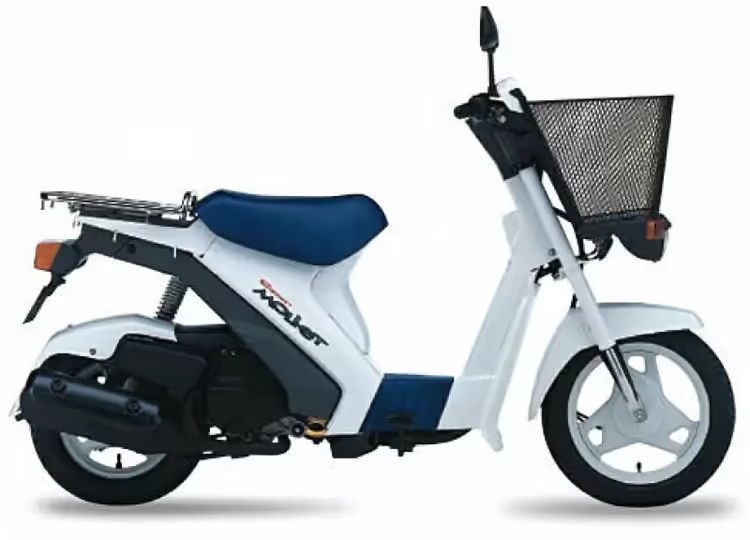
🚀 Scooter with increased load capacity: how to choose in 2026
Picked a scooter, and it can barely pull you and a grocery bag? Or worse, the battery drains twice as fast as advertised because the rider's weight turned out to be right at the limit.
Load capacity is a spec people often skip over while getting excited about motor power and design. That's a mistake. It directly determines how long the frame will last, how stable braking will be, and whether every bump turns into a torture test for the suspension.
Below, a breakdown of the key criteria for choosing a scooter by load capacity: from the numbers to specific brands and places where you can get a proven model without overpaying.
💡 Quick overview:
- Determine your weight including cargo and a possible passenger: that's your starting point for picking a model
- Compare the load capacity margin: 100 kg is enough for the city; for riding two-up or a heavy rider, 150 to 200 kg
- Evaluate the wheels and suspension: the higher the load, the more wheel diameter and combined shock absorption matter
- Check the brand and warranty: well-known manufacturers offer up to 3 years instead of the standard 12 months
- Look at used options: for the same money you can get a class above
A scooter with increased load capacity: what it is and who needs it
A scooter's load capacity is the maximum weight the manufacturer guarantees as safe for the frame, motor, and braking system. The specs state the total load: rider plus cargo, and for two-seat models, a passenger as well.
In practice, the needs break down like this:
Up to 100 kg, sufficient for city riding without heavy cargo. Works for most adult riders of average weight. Models in this class are the most mass-produced and affordable.
120-150 kg, the choice for those weighing 90-120 kg or regularly carrying bags, a backpack, tools. The safety margin here is already tangible: the frame is stiffer, the motor pulls more confidently on inclines.
From 150 to 200 kg, for heavy riders and riding two-up. These scooters come with a reinforced frame, a more powerful motor, and a high-capacity battery; otherwise the range drops catastrophically.
Exceeding the stated load capacity is not advisable. On an overloaded scooter, speed drops and, more importantly, so does range. The manufacturer promises 50-60 km on a single charge, but in reality with an overload you get 30-40 km. Battery life suffers too: deep discharge under high load accelerates cell degradation.
The scooter's own weight also matters. Standard non-folding models weigh 40-100 kg, which is stable but inconvenient for storage. Folding scooters average up to 20 kg: you can actually carry them into an apartment or put them in a car trunk, something women and teenagers especially value. The trade-off is that the folding mechanism adds play, and the maximum load capacity of such models is usually lower.
Wheel diameter and suspension: how they affect the ride
Wheel diameter is directly linked to ride quality and comfort, and the higher the load on the scooter, the more critical this parameter becomes.
10-12 inches, the standard for city scooters with a load capacity up to 100 kg. More than enough for smooth asphalt. These wheels are fitted to most models in the mid-price segment.
7.1-10 inches, kids' and teen models. Small wheels mean slower acceleration and sensitivity to potholes. For an adult rider weighing over 70 kg, this diameter is already a compromise.
Up to 16 inches, "off-road" scooters for uneven roads and rough terrain. A large wheel rolls over obstacles more easily and holds speed better on dirt roads. If you plan to ride outside the city or on broken pavement, go for a larger diameter.
Note: if the front and rear wheels are different sizes, the manufacturer lists the larger value in the specs.
Suspension is the second most important factor after wheels. The best option for a heavy rider is combined: springs plus hydraulic shock absorbers. The spring holds the weight, the shock absorber dampens vibration. Cheap models often fit only springs; tolerable at low loads, but with weight over 100 kg every bump goes straight to your spine.
The number of wheels also matters. The standard is two wheels. Three-wheeled scooters are a rarity, but they offer a gain in road stability and safety, especially on wet surfaces. The trade-off is greater weight and less compact dimensions.
Manufacturers, prices, and where to buy
A scooter brand is not just a logo on the frame. It means parts availability, a real warranty period, and a chance of finding a service center in your city.
Among the manufacturers experienced riders look to: CityCoco, massive models with wide wheels, good for heavy adults; Vespa, Italian classic, electric versions retain the style and get modern internals; EL-Sport and Like.Bike, budget and mid-range segments with a decent price-to-spec ratio; Maxxter, MYBRO and Doohan, niche brands with their own features: folding mechanisms, reinforced frames, off-road modifications.
The warranty is an indicator of the manufacturer's confidence in its product. For well-known brands it reaches 3 years, while the standard for most is 12 months. A difference of two to three years of coverage speaks for itself.
The downside of branded models is obvious: price. A new scooter from a renowned manufacturer can cost as much as a used car. The solution is a trusted used market: you can buy a used scooter in "like new" condition, with minimal battery wear and without losing warranty coverage if the model is still within its warranty period. For the same money you get a class above what you'd get buying a new no-name brand.
Before buying a used scooter, pay attention to three key points: remaining battery capacity (ask for a full charge and a short test ride), play in the folding mechanism (if it has one), and the condition of the brake pads. Five minutes of inspection at the selection stage saves budget and nerves down the road.
⁉️🤔 Frequent questions
How do I find out the real load capacity of a scooter if it's not in the specs?
Go by the motor power and frame size. Models with a 350-500 W motor are usually rated for 100-120 kg. 500 W and above, for 120-150 kg. Dual-motor scooters and models with a reinforced frame can handle up to 200 kg. If in doubt, look for reviews and tests of the specific model: riders often state their own weight and riding impressions.
Is it worth getting a folding scooter if I weigh over 100 kg?
It is, if portability is critical, but with a caveat. The folding mechanism is an extra joint that develops play over time. With a rider weight over 100 kg, wear accelerates. Choose models where the hinge is made of steel, not an aluminum alloy. And check the rated load capacity: not all folding scooters are designed for 120+ kg.
How long does the battery last at maximum load?
Range drops noticeably at full load. If the spec says 60 km, with a rider weight of 120 kg and hilly roads you'll realistically get about a third less. Factor this in when choosing: pick a model with a range reserve of at least one and a half times your typical distance.
Which brands offer a warranty longer than a year?
CityCoco, Vespa and Doohan offer up to 2-3 years on the frame and motor, provided servicing is done at a certified center. EL-Sport and Like.Bike offer 12-18 months. Check the terms with the seller: sometimes the extended warranty is included in the price, sometimes it's purchased separately.
Which scooter to get: the final breakdown
In short: pick a scooter for your weight with a 20-30 kg margin. That's a universal rule that saves both the battery and your nerves.
For a city rider up to 80 kg without cargo, any quality model with a 100-120 kg load capacity and 10-12 inch wheels will do. Weight over 100 kg or riding two-up: look at 150-200 kg, a reinforced frame, and combined suspension. And if the budget is tight, the used market opens up access to branded models for reasonable money. The key is to check the battery and mechanics before buying, not after.
Here is a visual video guide to choosing a scooter, covering the main categories and budgets:

A professional team of writers and editors specializing in creating quality content.