













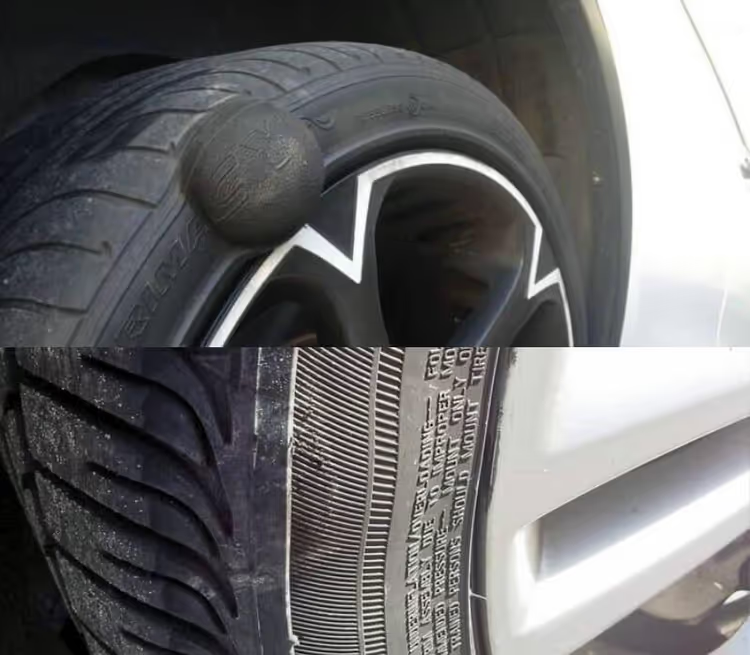
🚗 Tire bulge: what to do and why it is dangerous
You hit a pothole, and a bulge appeared on the tire sidewall. A couple of days later it became more noticeable, and the steering wheel started to shake at speed. Sound familiar?
A bubble on a tire is not a cosmetic defect. It's a signal: the tire's internal carcass is damaged, and air pressure is pushing the rubber outward at a weak spot. One more pothole or a sharp turn, and the tire blows out while driving.
Below, without panic or guesswork: what to do about a bubble right now, how to get to a shop if you don't have a spare, and whether this can even be repaired. And to avoid weak sidewalls in the future, choose tires from trusted brands through https://ascania-shina.com/shiny: direct import to Ukraine, certified factory batches, not gray-market stock.
💡 Quick overview:
- Assess the size and location of the sidewall bubble
- Reduce speed to 60-70 km/h and lower tire pressure by 0.2-0.3 bar
- Replace the tire at the earliest opportunity: a bubble cannot be repaired
- Move the damaged wheel to the rear axle to maintain steering control
What a tire bubble is and where it comes from
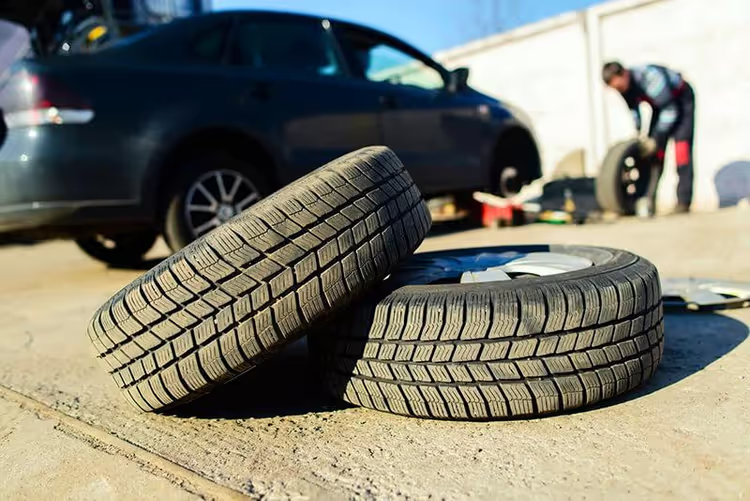
A modern radial tire is a layered construction. Inside, a textile or steel cord: load-bearing threads that hold the shape and contain the pressure. Outside, a rubber compound. When the wheel hits a deep pothole or strikes a curb at speed, the cord threads tear or separate from the rubber.
At the point where the cord breaks, the sidewall can no longer contain the pressure. Air begins to push out the weakened area, creating the characteristic bulge, "bubble" or "goose egg." On the outside, just a blister. On the inside, the carcass has come apart, and with every kilometer the damaged zone expands.
Bubbles most often appear:
- After hitting potholes, tram tracks, and bridge expansion joints at speed
- When parking with a sidewall impact against a curb
- On an overloaded vehicle, when standard pressure cannot cope
- Due to a manufacturing defect: uneven sidewall thickness, blisters already present at the vulcanization stage
A separate case is a "thumping" tire after a long period of sitting without moving. That is not a bubble, but a temporary deformation from the vehicle's weight. It goes away after 10-15 minutes of driving. A real bubble is one that does not disappear after warming up.
Can you drive with a bubble on the tire
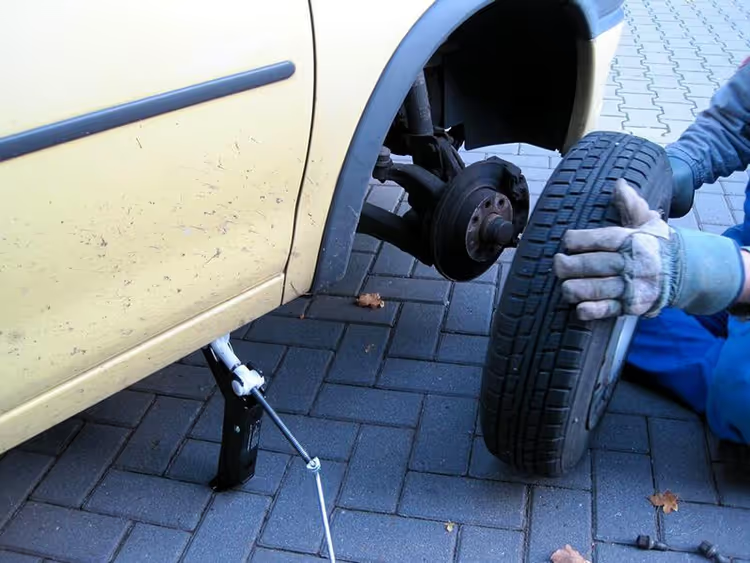
Short answer: you can drive, but only to the tire shop. And only under strict limitations.
A bubble is a time bomb. With every wheel rotation, the weakened area compresses and expands under the vehicle's weight. The cord threads separate further. When heated up on the highway, the process accelerates dramatically.
What you risk:
- A blowout while driving. The most obvious and frightening outcome. At 90+ km/h, a burst front tire practically guarantees loss of control. With a rear tire, the chance of catching the car is higher, but the skid is still abrupt.
- Steering wheel shake. Even a small bubble disrupts balance. At 60-80 km/h, vibration appears, which destroys the wheel bearing and tie-rod ends.
- Overheating. A weakened sidewall heats up more than the neighboring wheels. In hot weather or under full load, the temperature reaches critical levels, and the cord delaminates rapidly.
- Uneven wear on the remaining wheels. The car pulls toward the damaged wheel, and the suspension works under misalignment.
Size matters too. A bulge the size of a coin or smaller, with no cracks, is a moderate risk. A bubble the size of a chicken egg, with a web of micro-cracks around it, means replace immediately: even 5 km to the tire shop is better covered on a tow truck.
How to get to a shop if replacement is impossible right now
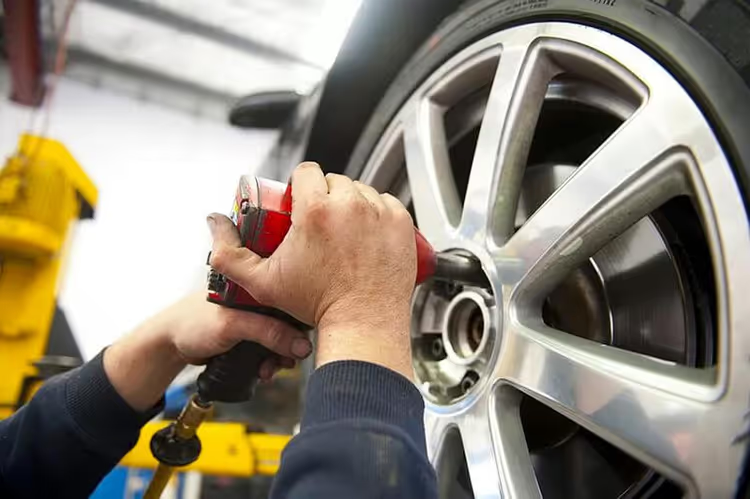
The ideal scenario: you see a bubble, put on the full-size spare or space-saver spare, and drive to the tire shop. But a spare may not be available (run-flat set, a repair kit with sealant instead of a wheel, or you might simply have forgotten it). In that case, do the following:
Reduce speed. No faster than 60-70 km/h. The higher the speed, the more often the wheel compresses at the bubble zone. At 60 km/h, the risk is manageable. At 100, it is not.
Slightly deflate the tire. Lower the pressure by 0.2-0.3 bar below the norm: this reduces the force pushing the bubble from inside. But do not overdo it: an underinflated tire heats up faster.
Lighten the vehicle. Let passengers out at the nearest stop. Remove heavy items from the trunk. Every 50 kg of load removed is an extra chance to make it without a blowout.
Move the wheel to the rear. If the bubble is on the front, swap it to the rear axle. If a rear tire bursts, the car remains steerable. If a front tire bursts, the steering wheel is ripped from your hands.
Avoid all potholes and sudden moves. Steer around even small joints. Brake smoothly, turn gently. Any impact on the weakened sidewall, and you are on the shoulder.
Stop every 20-30 km. Check: is the bubble growing? Have cracks appeared? Is the wheel hotter than the neighboring ones? If the answer to any of these is "yes," turn off the engine and call a tow truck.
Can a bubble be repaired
No. A bubble cannot be repaired in principle. Everything offered as a "bubble repair" is a temporary crutch to get you to the shop for a new tire. You do not drive on such a wheel for weeks or months.
What a back-alley shop might offer:
- An internal reinforced patch. A reinforced patch with a cord layer is applied from the inside. It holds the shape while you drive 30-50 km to a proper tire shop. It is not designed for longer mileage and delaminates from heat.
- Stitching with nylon threads and vulcanization. The damaged area is stitched and sealed with uncured rubber. It holds the geometry, but the carcass strength is not restored: the threads are not bonded to the rest of the cord.
- Installing an inner tube. A tube is placed inside the tubeless tire to take the pressure. The sidewall stops bulging. But the tube rubs against the inner surface, heats up, and wears through. Mileage is at most 200-300 km before it chafes through.
None of these methods restores the sidewall's original strength. After a "repair," the wheel remains unsafe. The only safe solution is a new tire.
⁉️🤔 Frequent questions
Can you inflate a tire with a bubble to the standard pressure?
No. Standard pressure pushes the bubble harder, and it grows faster. To get to a shop, it is better to slightly reduce the pressure, 0.2-0.3 bar below the specified value. But after replacing the tire, be sure to return it to the norm.
The bubble appeared on a new tire: is this a warranty case?
Most often yes, if the mileage is low and there are no signs of impact. Manufacturers cover manufacturing defects: cord separation, blisters, uneven sidewall thickness. But if the rim shows a dent or the rubber shows a puncture mark, the warranty will be denied. Keep the receipt and contact the point of sale.
Which is more dangerous, a bubble on the front or on the rear wheel?
On the front. When a front tire bursts, the steering wheel instantly jerks to the side, and catching the car at speed is practically impossible. When a rear tire bursts, the car pulls, but the steering wheel stays in your hands, and the chance of holding the trajectory is higher.
Are there tires that are not afraid of bubbles?
Yes, run-flat (RFT) tires. They have reinforced sidewalls that support the vehicle's weight even with a complete loss of pressure. After a puncture on run-flats, you can drive 80-100 km at speeds up to 80 km/h. But they are heavier, stiffer, and more expensive than standard tires. Fit them if you frequently drive on broken roads.
Does a bubble always mean replacing the whole set?
No. If the other three tires have a normal amount of remaining tread, you replace only the damaged wheel. But get the same model and size. Different tires on the same axle mean different friction coefficients, and on a wet road, that is a direct path to a skid.
Replace the wheel and sleep soundly
A bubble does not go away on its own, does not "wear in," and cannot be cured. The longer you drive, the larger the delaminated area becomes, and the closer the moment when the sidewall will fail.
If you are facing a choice, here is the straightforward breakdown:
- Bubble under 2 cm, no cracks, vehicle empty, 10 km to the shop → lower pressure to 1.9 bar, keep to 60 km/h, you will make it
- Bubble is growing, cracks have appeared, wheel is heating up → tow truck, do not risk it
- You need a new tire with a reinforced sidewall and a warranty: buy from an official importer with direct supply chains, less chance of running into gray-market stock or mixed inventory
And make it a rule: every couple of months, when you inflate the tires, inspect the sidewalls. A crack or a suspicious bulge caught at an early stage means a 15-minute replacement, not a tow truck from the highway in the middle of the night.
What was your most unexpected breakdown on the road? Share in the comments: maybe your experience will save someone else.

A professional team of writers and editors specializing in creating quality content.