














🥤 Why energy drinks taste so good: what's hidden in the ingredients
A can of cold energy drink hisses, smells like the tropics and tastes like liquid gummy bears. Few people stop to think why these drinks are so pleasant-tasting in the first place. And that is a missed opportunity: behind every sip is a calculated combination of ingredients, where the bitterness of caffeine is neutralized by sugar, and acidity by bubbles.
The problem is that most explanations online boil down to "there is a lot of sugar" and "they add flavorings." The reality is more interesting: the taste of an energy drink is the result of a chemical balance of five or six components, each pulling in its own direction. Break down this balance, and it becomes clear why some brands drink like juice while others taste like a pharmacy.
Below is a complete breakdown of the composition: from caffeine to carbon dioxide bubbles. No marketing slogans, just the facts.
💡 Quick overview:
- Which ingredients shape the taste of an energy drink: caffeine, sugar, sweeteners, B vitamins, flavorings, and plant extracts
- Why carbonation is not just "bubbles for fun" but a tool for managing taste perception
- How acidity (citric acid) balances sweetness and makes the drink refreshing
What lies at the core of the taste: a breakdown of key ingredients
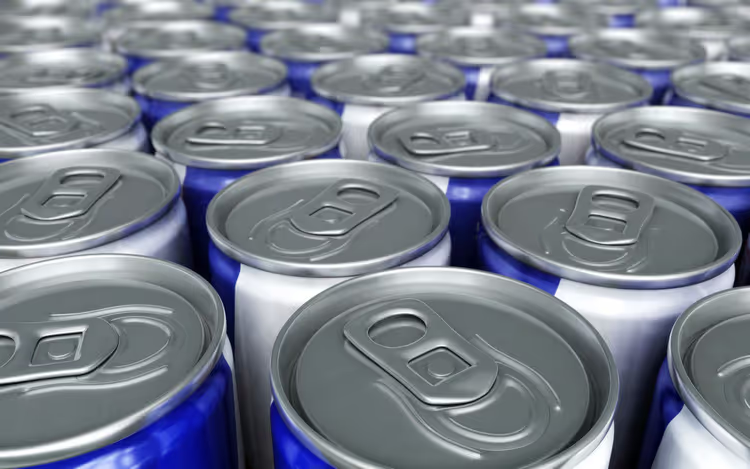
The formula of a typical energy drink is simple: caffeine for alertness, sugar for energy and taste, plus additives for character. But each of these components affects the taste in its own way, and manufacturers have been refining the proportions for years.
Caffeine is the main active component and, at the same time, a problem for the taste. By itself, it is bitter, and quite noticeably so. A 250 ml can usually contains 80 mg of caffeine, roughly the same as a cup of coffee. To keep this bitterness from coming through, it is masked with sugar and flavorings. An interesting point: without caffeine, an energy drink would just be a sweet soda; it is precisely the bitter note that gives the drink an "adult," non-cloying profile.
Sugar and sweeteners do the heavy lifting for the taste. A standard can has 25-30 g of sugar, which is about 6 teaspoons. Sugar does not just sweeten: it smooths out acidic and bitter peaks, creating a rounded, "full" taste. In Sugar Free versions, aspartame and acesulfame potassium do the job instead; they are 200 times sweeter than sugar, so a microscopic amount is needed. Hence the characteristic "chemical" aftertaste of zero versions: the sweetener provides sweetness but does not provide the body and density that sugar has.
B vitamins, B3 (niacin), B6, and B12, are added not so much for taste as for marketing ("energy complex"). They have a minimal effect on taste but play a part in shaping the overall aromatic profile. Their real job is participation in energy metabolism: B vitamins help the body convert carbohydrates into usable energy. In other words, the boost from an energy drink is caffeine plus sugar, and the vitamins accelerate the absorption of the latter.
Flavorings are what make one brand a "tropical mix" and another "forest berries." Modern energy drinks use complex taste profiles made up of dozens of compounds: fruit esters, vanillin, citrus oils. It is the flavorings that mask the specific aftertaste of the vitamin blend and sweeteners. Without them, even a sweet energy drink would smell like pharmacy multivitamins.
Plant extracts, guarana and ginseng, work on two fronts. Guarana adds a light chocolate-nutty note (it is a relative of cocoa) and contains its own caffeine, enhancing the stimulating effect. Ginseng provides a barely perceptible spiciness and earthiness; in the right dose, this adds depth, while in excess, it turns the drink into a medicinal mixture. A good example of balance is Burn energy drink, where the plant extracts do not overpower the main taste.
How carbonation changes taste perception
Carbon dioxide in energy drinks is not just "bubbles for fun." Carbonation directly affects how we perceive the taste of the drink.
When CO₂ bubbles burst on the tongue, they activate the same receptors that respond to spicy food, the very same TRP channels. This creates a slight tingling and a sensation of "freshness," even if the drink is at room temperature. At the same time, carbon dioxide, dissolving in saliva, forms a weak carbonic acid solution, that very same sourish nuance we perceive in any carbonated drink.
But most importantly, carbonation changes the balance of sweetness. The bubbles physically "dilute" the contact of the sweet liquid with the tongue's receptors, and the drink is perceived as less cloying than it actually is. This is exactly why non-carbonated versions of energy drinks often seem excessively sweet: remove the bubbles, and 25 grams of sugar suddenly become obvious.
There is also a reverse effect: carbonation enhances the perception of acidity. Citric acid plus CO₂ bubbles deliver that very "sharp," invigorating hit to the receptors that many people call the taste of an energy drink. Without the gas, it would just be a sourish-sweet liquid.
Acidity: why lemon and lime are top sellers
If you look at the composition of practically any energy drink, citric acid will be in the top three ingredients after water and sugar. And this is no accident.
Acid solves three problems at once. First, it is a preservative: a pH of around 3.0-3.5 prevents bacteria from multiplying and extends the shelf life to 12-18 months. Second, it is a taste balancer: acid "cuts" the peak of sweetness, preventing the sugar from becoming cloying. Third, the sour taste itself is associated with "refreshing," think of lemonade.
The most popular energy drink flavors, lemon, lime, and citrus mixes, are popular precisely for this reason. The acid in them is not an additive but the foundation of the profile: citric acid plus natural citrus oils create a clean, sharp taste without a chemical aftertaste. Brands like Red Bull and Monster have kept their citrus lines at the top of sales for decades, and this is not marketing, it is food chemistry.
Interestingly, malic acid (the second most popular acidulant) provides a softer, "fruitier" sour nuance. It is more often used in berry and tropical flavored versions, where sharp citric acid would overpower the delicate aromatic notes.
⁉️🤔 Frequent questions
How much caffeine is in a can of energy drink and how does it affect the taste?
A standard 250 ml can has 80 mg of caffeine, roughly the same as a cup of coffee. Caffeine itself is bitter, so manufacturers mask it with sugar (25-30 g per can) and flavorings. Interestingly, without this bitterness, an energy drink would be perceived as too cloying; the bitter note balances the sweetness and creates an "adult" taste that distinguishes an energy drink from a regular soda.
Why do Sugar Free energy drinks taste different from regular ones?
Sweeteners (aspartame, acesulfame potassium) provide pure sweetness but do not provide "body," that density and roundness of taste that sugar provides. Moreover, sweeteners have their own aftertaste, which flavorings have to mask additionally. The result: a zero version feels more "chemical" and less rich, even with an identical flavoring.
Why are B vitamins added to energy drinks if they do not affect the taste?
The main role is metabolic: B3, B6, and B12 are involved in converting carbohydrates into energy. Without them, the sugar from the drink would be absorbed more slowly, and the "energizing effect" would be less pronounced. The marketing role is also important: a "B vitamin complex" on the label is a signal that "the product is not just sweet water." The vitamins have a minimal effect on taste, but in combination with other components, they play a part in shaping the overall aromatic profile.
Is the carbon dioxide in energy drinks harmful to the stomach?
The carbon dioxide in an energy drink forms a weak carbonic acid solution (pH around 3-3.5), which is comparable to orange juice. For a healthy stomach, this is safe. However, for people with gastritis, reflux, or a sensitive stomach, carbonated versions can indeed cause discomfort; in such cases, it is worth choosing non-carbonated options, which are also available on the market, albeit in a smaller range.
How can you tell a quality energy drink taste from a cheap one by the composition?
Look at the flavorings in the composition: "natural flavorings" (citrus oils, extracts) provide a clean taste without a chemical trail. "Nature-identical" ones are also fine, but the line between "well-balanced" and "tastes chemical" is thin here. A second marker is sweeteners in non-Sugar Free versions: if a regular (not zero) energy drink contains both sugar and sweeteners, the manufacturer is cutting costs, and the taste will be a compromise.
Is it worth understanding the composition, or just grab whatever tastes good?
The taste of an energy drink is not magic or chance. It is the result of a precise balance: the bitterness of caffeine against the sweetness of sugar, the acidity of lemon against the density of syrup, the gas bubbles against cloyingness. The better you understand this mechanism, the more informed your choice at the store shelf.
If you want a clean, sharp taste without compromises, go for citrus versions with a minimum of components: lemon, lime, grapefruit. If you want to experiment, tropical and berry mixes are the way, but be prepared for a more "chemical" aftertaste due to complex aromatic compositions. And most importantly: read the composition. Sugar or sweeteners, natural flavoring or "nature-identical," citric acid or malic acid, three lines that say more about the taste than all the marketing on the can.

A professional team of writers and editors specializing in creating quality content.