














🏷 How to buy or sell a WordPress site: complete 2026 guide
Your WordPress site is not generating revenue and you have no time to work on it? Or the opposite: you need a ready project by tomorrow and cannot spend six months building one. The market for buying and selling websites left the gray zone long ago. In 2026, thousands of deals go through transparent platforms every month, complete with escrow protection, verified traffic, and valuation calculators based on real data.
The scale speaks for itself. The largest platform, Flippa, has processed transactions worth over $400 million since 2009, and deal volume keeps growing: in 2025, transaction value increased by 36%, while deals over $100,000 accelerated by 30%. WordPress holds a special place here. According to W3Techs data from June 2026, 41.9% of all websites on the internet run on this CMS. The selection of assets is enormous: from content sites for $2,000 to SaaS products with seven-figure price tags.
By the end of this guide, you will know where to find a site to buy, how to evaluate its real value, which platforms work in 2026, and how to conduct a transaction safely whether you are buying or selling.
💡 Quick overview:
- Understand why buying a ready-made site beats building from scratch.
- Learn seller motivations: why owners part with profitable projects.
- Compare platforms: Flippa, Empire Flippers, Motion Invest, Acquire.com, and others.
- Master the site valuation formula and the step-by-step process for a safe transaction.
Want to see how this works in practice? Here is a video breakdown of the buying and reselling process from an experienced entrepreneur:
Why buy a WordPress site
Buying a ready-made site is not cheating or the lazy path. It is a rational business decision in three specific situations. You get an asset with a working structure, SEO foundation, and audience instead of an empty field that yields no returns for months.
Saving months on launch
Setting up hosting, choosing a theme, designing pages, selecting plugins, debugging the mobile version. An experienced developer spends 4 to 8 weeks launching a quality site. Without experience, that timeline easily doubles.
Buying eliminates this entire phase. You get an asset with a configured theme, connected plugins, and finished pages. All that remains is cosmetics: updating fonts, replacing stock images, tweaking copy. You are not building a house in the middle of the forest; you are moving into a finished one. It needs a fresh coat of paint, not a foundation.
SEO foundation instead of an empty field
Organic traffic is the lifeblood of any site. But search engine optimization takes time. Even with perfect content and competent SEO, reaching stable Google rankings takes 6 to 18 months. Backlinks do not appear instantly; they are earned over months.
When you buy a site with history, you acquire the domain age (a ranking factor), inbound backlinks, existing keyword positions, and established organic traffic. You do not start from zero. You take an asset that is already warmed up and scale it further.
Instantly bypassing competitors
Business moves fast in 2026. While you build a site from scratch, competitors collect your audience. A ready-made site gives you immediate presence: existing traffic, an email subscriber base, working sales funnels.
Instead of writing 100 articles, you get them ready-made. You only need to audit and update the outdated ones.
Why sell a WordPress site

The question "why sell" comes up more often than "why buy." Logic suggests: if a site makes money, why get rid of it? In practice, sellers have three main motivations. Understanding each helps buyers negotiate.
Large investments require liquid cash
Serial entrepreneurs constantly seek the next opportunity. Sometimes entering a new project requires a large down payment for a house, for starting a company, or for acquiring a larger asset.
The website market lets you convert an income stream into a lump sum. Content and e-commerce projects on WordPress sell at a multiple of 24 to 40 monthly net profits. A site earning a thousand dollars in net profit per month sells for amounts in the range of two to three years of revenue. That is money here and now for an investment that matters more than a regular but small income stream.
Passive income is a myth
The term "passive income" in the context of websites is misleading. Yes, a set-up site can run on autopilot and bring in a few hundred dollars from AdSense. But without oversight, profit declines month after month. Content becomes outdated, plugins require updates, competitors write fresher articles.
Owners who launched a site as a side project alongside their main job often discover there is no time for both projects, and the smaller one drags down the larger. Selling it and watching a new owner extract maximum value is more rational than watching a dying asset.
Losing interest is not a reason to lose capital
A project into which you poured months or years of your life eventually stops sparking joy. That is normal. What is not normal is abandoning the site and watching traffic and revenue slide downward.
Selling at peak metrics is a smart exit. The buyer gets an asset with a growth history; the seller locks in profit and frees up time for whatever truly interests them right now.
Where to buy or sell a site: platforms in 2026
The market for buying and selling websites has become notably more structured over the past five years. According to ExitBid data from April 2026, the landscape has evolved: from a two-player market (Flippa and Empire Flippers), it has become an ecosystem with curated platforms, niche brokers, and auction sites. Choose based on your specific task and deal size, not brand recognition.
Comparison table
Platform | Asset types | Price range | Seller commission | Asset vetting | Time to close |
|---|---|---|---|---|---|
Flippa | Sites, stores, SaaS, domains | $1,000 - $10M+ | $49-$499 listing + 5-10% | Optional | 30-90 days |
Empire Flippers | Sites, businesses | $100,000 - $15M+ | 15% | Mandatory | 45-120 days |
Motion Invest | Content sites | $1,000 - $100,000 | ~15% or direct buyout | Mandatory | 7-30 days |
Acquire.com | SaaS, startups | $50,000 - $30M | Free (buyer pays) | Basic | 30-120 days |
FE International | SaaS, e-commerce | $500,000 - $50M+ | 10-15% | Full service | 90-180 days |
ExitBid | Sites, SaaS, businesses | $5,000 - $5M | Listing only (0% commission) | Basic | 5-14 days |
Flippa: the universal marketplace
Flippa is the largest and oldest platform, operating since 2009. It has processed transactions worth over $400 million. According to 2025 results, transaction volume grew by 36%, and deals over $100,000 accelerated by 30%. The main advantage is scale: from $1,000 for a content site to seven-figure sums for SaaS products.
What sells: content sites, online stores, SaaS, apps, domain portfolios. They accept nearly any digital assets.
Commission: listing from $49 to $499 plus 5-10% of the deal amount on successful sale. Built-in escrow service through Escrow.com protects both parties.
Tools: valuation calculator based on real market data, financial verification, AI-powered valuation. According to Flippa's Q2 2026 report, the median profit multiple is 2.02×, while deals over $1 million trade at a 45% premium compared to smaller assets (2.43× versus 1.68×).
Downside: variable quality. Diamonds sit next to clearly weak projects. Due diligence falls entirely on the buyer. Serious listings compete for attention with hundreds of others, and many sellers inflate their metrics.
Flippa is the best starting point for your first deal. Low barrier to entry, maximum selection, and built-in valuation tools outweigh the risk of encountering a weak asset if you approach verification seriously.
Empire Flippers: the premium segment
Empire Flippers works with sites and businesses priced above $100,000. The model is full-service brokerage: every asset undergoes internal verification of traffic, financials, and revenue sources before publication. Each seller is assigned a personal advisor who manages the deal from listing to close. According to ExitBid data, only 5% of applications pass through the platform's filters.
Strengths: mandatory vetting gives buyers confidence. Verified financial data is available before negotiations begin. The quality of the buyer pool is noticeably higher than on open marketplaces.
Downsides: 15% commission on the sale price and a lengthy process. From application submission to deal close takes one and a half to four months, and asset verification alone before listing takes several weeks. Not suitable for urgent sales.
A good option for a mature asset starting at $200,000 when you are willing to pay for professional support.
Motion Invest: turnkey content sites
Motion Invest specializes in content sites with established monetization, primarily through display advertising and affiliate programs. Price range: $1,000 to $100,000. The platform approves 18 to 25% of applications, filtering out projects with declining traffic, thin content, and questionable link profiles.
Unique feature: Motion Invest not only lists sites for sale but also buys them directly into its own portfolio. This provides the fastest path to a deal, though direct buyout prices are usually below market rate. Multiples for direct purchase range from 32× to 35× monthly profit versus 35× to 40× at auction.
A good starting point for your first experience. Deals here close in an average of 7 to 30 days.
Acquire.com: SaaS and tech startups
Acquire.com (formerly MicroAcquire) has become the main platform for buying and selling SaaS products since 2020. The model differs from open marketplaces: listings undergo verification before publication, and buyers either pay a subscription or pay a commission of about 4% at deal close.
Curation attracts a serious buyer pool: founders, funds, private investors. The platform offers built-in NDA management, financial metric verification, and an LOI process for structuring deals.
Limitation: narrow specialization. Content sites, service businesses, and projects without a clear MRR metric receive little attention or are not accepted at all. For assets below $50,000, the platform is ineffective.
The optimal choice for a SaaS founder with stable MRR in the five figures who needs access to a qualified tech pool without listing fees.
Other players
FE International is an M&A advisor for deals starting at half a million dollars. Full service includes buyer search, structuring, due diligence, and post-sale support. For seven-figure deals involving earn-outs, seller financing, and complex structures.
ExitBid offers an auction model with zero commission for sellers (only a listing fee). Deals from $5,000 to $5 million close in one to two weeks. A good option for founders who prioritize speed and retaining the full sale price.
Investors Club is a closed club with pre-moderated assets. Focus on quality over quantity of listings. For buyers who want filtered options without manually sifting through hundreds of ads.
How to evaluate a site before a deal
Site valuation is not fortune-telling. The market has developed a working formula that all major platforms use.
Basic formula: net monthly profit × multiple (24 to 40).
Net profit equals revenue minus all expenses: hosting, plugins, content, links, service subscriptions. The multiple depends on risk factors. The more stable the asset, the closer to 40.
Traffic sources. Organic search is valued higher than paid and social. It is more stable and does not depend on an advertising budget.
Site age. Stable traffic over 2 or more years yields a multiple closer to 36 to 40. Young sites with 6 to 12 months of history trade closer to 24 to 28.
Revenue diversification. Three sources (AdSense plus affiliates plus info products) are better than one. Revenue from a single affiliate program that could change its terms tomorrow is a risk that lowers the multiple.
Niche. Evergreen niches (health, finance, education) are valued higher than seasonal and trending ones. According to Flippa analytics for Q2 2026, content sites showed a 37% decline in transaction volume following search algorithm updates, while SaaS deals grew by 73.5%.
Technical condition. Load speed, mobile responsiveness, broken links, WordPress and plugin versions. Every issue subtracts from the price.
Sample calculation. A content site about WordPress earns a couple thousand dollars net per month. Traffic is primarily organic, the site is several years old, and revenue comes from display advertising and two affiliate programs. Multiple around 35. Approximate sale price: in the range of three years of profit.
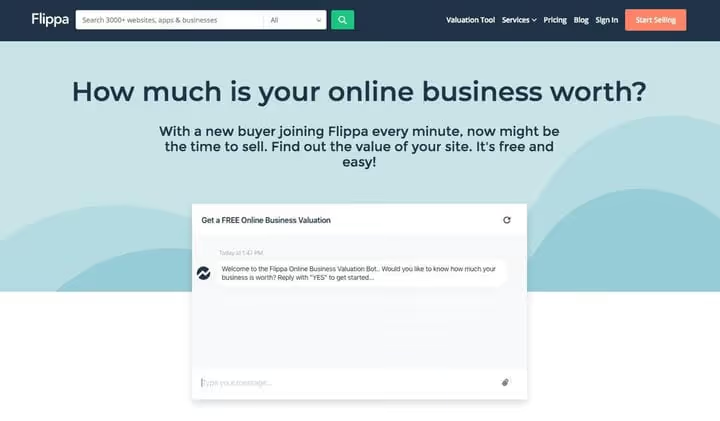
Most platforms offer built-in calculators. Flippa's tool delivers a valuation in a couple of minutes based on real market data without manually selecting a multiple.
How to sell a site: the 5-step process
Selling a site is not "list it and wait." Proper preparation noticeably increases the final price and cuts exposure time in half.
Step 1. Prepare the asset for sale. Update the WordPress core and all plugins. Fix broken links; run the site through Screaming Frog or a similar tool. Clean up the design: small fixes you have been putting off for months are critical now. Gather analytics for 12 or more months: Google Analytics, Search Console, financial reports, revenue sources. The more transparent the picture, the higher the trust and the final price.
Step 2. Set the price. Use the platforms' built-in calculators as a starting point and compare the result with similar active listings. Do not overprice. Sites with unrealistic prices sit on platforms for months and scare off serious buyers.
Step 3. Create a quality listing. Treat this like selling real estate. Detailed description of the niche, traffic sources, and revenue. Screenshots of Google Analytics, Search Console, revenue reports. An honest list of what needs improvement paradoxically increases trust. Buyers value transparency more than glossy promises.
Step 4. Stay responsive. Serious buyers ask questions, sometimes dozens. Quick and substantive responses in the first days after publication directly affect the final price. Platforms like Empire Flippers and FE International handle communication for you. That is part of their commission.
Step 5. Prepare the handover. Gather into one folder: access credentials for hosting, domain, Google Analytics, Search Console, social media. Document subroutines, cron jobs, regular updates, theme specifics. The easier it is for the buyer to take over management, the higher the chance of closing the deal without last-minute haggling.
How to buy a site without losing money: security checklist
Buying a site without verification is like buying a car without an inspection. Seven points that save you from a fatal mistake.
1. Check traffic history. Request access to Google Analytics (at least view-only) for 12 or more months. A sharp traffic spike a month ago and a plateau before that is a red flag: possible manipulation. A traffic drop after a Google algorithm update is grounds for negotiation or walking away.
2. Examine revenue sources. Affiliate programs, AdSense, direct sales, subscriptions. Verify each source separately. Revenue from a single affiliate that could change its terms tomorrow is a risk. Three sources mean stability. Request screenshots or view-only access to affiliate dashboards.
3. Conduct a technical audit. Load speed (Google PageSpeed Insights), mobile responsiveness, broken links, WordPress and plugin versions. A WordPress site on version 4.x with a dozen unsupported plugins is not an asset; it is a headache. Check whether the site is on cheap shared hosting with regular downtime.
4. Check backlinks. Tools like Ahrefs or SEMrush will show the inbound link profile. Spammy PBN networks, sharp growth in link mass, links from off-topic sites: all of this lowers the price and carries sanction risks.
5. Verify the content. Some articles may be low-quality AI-generated or copied. Randomly run a few pages through a uniqueness checker. Content that violates copyright becomes your legal problem after purchase.
6. Evaluate the niche and competitors. A growing niche with low competition is the ideal scenario. A declining niche, even with good current metrics, is a bad investment. Look at Google Trends: a three-year downward trend cannot be offset by any deal price.
7. Use escrow. Never transfer money directly. All major platforms (Flippa, Empire Flippers, Acquire.com) offer built-in escrow: funds are frozen during asset verification and transferred to the seller only after your confirmation. For direct deals outside platforms, use Escrow.com. Saving on platform commission is not worth it.
⁉️🤔 Frequently asked questions
How much does a WordPress site actually cost?
Most content sites sell at a multiple of 24× to 40× monthly net profit. A site earning $500 per month will go for $12,000 to $20,000. One earning $2,000 per month will fetch $48,000 to $80,000. The final figure depends on age, traffic sources, and revenue diversification. According to Flippa market data for Q2 2026, the median multiple is 2.02× annual profit, and deals over $1 million trade at a 45% premium (2.43× versus 1.68× for assets under $100K).
Which platform is best for a first deal?
Flippa is the best starting point. Low barrier to entry, maximum selection of assets at any size, and built-in valuation tools. Empire Flippers and Motion Invest require a more serious check size but offer pre-filtered assets. A good option for second and subsequent deals. Flippa's main risk is variable listing quality. This is offset by thorough independent verification of each candidate before buying.
Is using escrow mandatory?
Yes. Escrow protects both parties: the buyer's money is frozen until confirmation of asset receipt; the seller is guaranteed payment after transfer. Flippa and Empire Flippers offer built-in escrow service. For direct deals outside platforms, use Escrow.com. The risks of transferring money "on trust" do not justify the savings.
Can you sell a site without profit?
You can, but the price will be minimal. Essentially, you are selling the domain and the ready structure. Such deals close in the range of a few hundred dollars. If the site has a unique design, quality content, or an aged domain with a good history, the price can reach a couple thousand. But without traffic and revenue, the multiple does not apply. The buyer evaluates the asset "by eye."
How long does selling a site take?
Average exposure time depends on the platform: on Motion Invest 7 to 30 days, on Flippa 30 to 90 days, on Empire Flippers 45 to 120 days, according to ExitBid data from April 2026. Sites with transparent analytics, stable revenue, and realistic pricing sell closer to the lower end. Niche projects may sit for months not because of asset defects but because of a narrow pool of potential buyers.
Buying or selling a WordPress site in 2026: the choice is yours
The WordPress site buying and selling market in 2026 is mature and structured. It is not for the elite and not a gray zone. Tens of thousands of deals pass through transparent platforms with escrow protection and verification every year. The key rule for both sides is the same: transparency and verification.
If you are buying: Flippa is the universal start. Look for sites at least 2 years old with primarily organic traffic. Verify each revenue source separately. Do not chase perfection. A site with small problems you know how to fix offers better returns than a "perfect" asset at an inflated price.
If you are selling: prepare your analytics, update the core, clean up the design. A quality listing with an honest description pays off with a noticeable price premium. Transparent listings close faster and for more money. Do not expect an instant sale. 4 to 8 weeks is normal. Selling at peak metrics is more profitable than trying to squeeze the last drops from a project before it declines.
- If your budget is below six figures and you need maximum selection, go with Flippa.
- If your asset is six figures or more and you want professional support, Empire Flippers.
- If you are selling a small content site and speed matters, Motion Invest.
- If you have a SaaS with verified MRR, Acquire.com.
Start with Flippa's free calculator. It will show a realistic price range in two minutes. This is the first step that both buyers and sellers should take. What is your experience with website marketplaces? Share in the comments.

A professional team of writers and editors specializing in creating quality content.