













 AIIllustrative image: AI-generated
🎙️ 11 best podcast hosting sites: 5 free plans in 2026
Recording a podcast is only half the battle. The other half, which beginners often forget: where to store audio files, how to deliver them to listeners, and where to get analytics for each episode. A website on regular hosting won't handle this task: a few episodes in good quality will quickly eat up both disk quota and bandwidth.
In 2026, the market offers about fifteen platforms, from free solutions for test launches to professional services with detailed analytics, monetization, and video podcast support. The range of prices and features is so wide that without comparison it's easy to overpay for unnecessary features or, conversely, hit limits in the very first month.
We tested and compared 11 paid platforms and 5 free tiers so you don't have to spend weeks choosing. Below is an honest breakdown: what each service actually offers, how much it costs in 2026, and which one fits your specific needs.

💡 Quick overview:
- Determine your budget and podcast format: weekly show or occasional episodes, audio or video
- Compare platforms using the table below and shortlist 2-3 candidates within your budget
- Test the free tier or trial of your chosen platform on 2-3 episodes
- Evaluate analytics, interface usability, and limits, then choose your final plan
Comparison table: 11 platforms in 30 seconds
Platform | Starting price (per month) | Free tier | Storage at start | Video podcasts | Key feature |
|---|---|---|---|---|---|
Buzzsprout | $12 | 90 days | 3 h / month | No | Ease of use and transcription |
PodBean | $0 / $14 | Unlimited (5 h) | Unlimited (paid) | Yes | Unlimited on all tiers |
Captivate | $19 | No | 12,000 downloads | No | Marketing CTAs |
Transistor | $19 | 14 days | Unlimited | No | Multiple shows in one |
SimpleCast | $15 | 14 days | Unlimited | No | IAB-certified analytics |
Castos | $19 | 14 days | Unlimited | Yes (YouTube) | WordPress integration |
Audioboom | $9.99 | No | Unlimited | No | Ad network from 10K downloads |
Fusebox | $7.50 | Unlimited (limited) | 2 episodes (Free) | No | Embeddable player + email capture |
Blubrry | $12 | No | 100 MB / month | No | PowerPress plugin for WP |
Libsyn | $7 | No | 162 MB / month | Yes (on Pro) | Oldest player on the market |
ZenCast | $12 | 14 days | Unlimited | No | Guest profiles in player |
Prices shown are for monthly billing as of June 2026, verified on official service websites. Most offer discounts for annual subscriptions.
1. Buzzsprout: best choice for launching
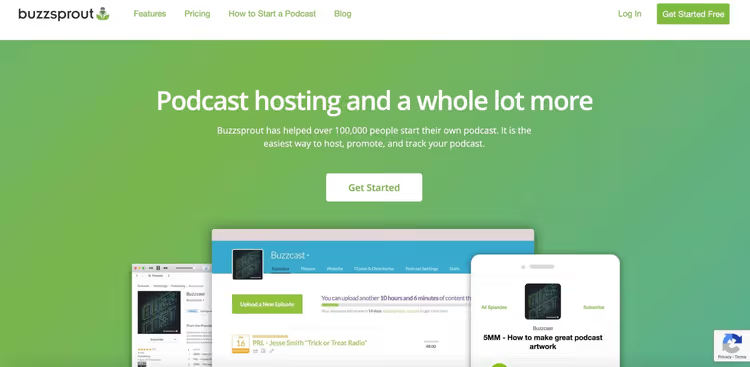
Buzzsprout has been operating since 2009 and remains the benchmark for beginner-friendly podcasting. In practice, your first episode publishes in 15 minutes: upload the file, fill in the description, click "Publish." The platform automatically optimizes audio, adds ID3 tags, and distributes the episode to Apple Podcasts, Spotify, and a dozen other directories.
What sets Buzzsprout apart from competitors: built-in episode transcription (helps with accessibility and SEO), a visual editor for audio snippets for social media, and the Magic Mastering option (algorithmic audio processing that levels volume to the -16 LUFS standard). Cohost AI (for an additional fee) generates timestamps and descriptions.
Pros: extremely simple interface, transcription in the basic tier, automatic publishing to all directories, 90 days of free testing.
Cons: no video podcast support, no built-in monetization (only through external advertising), price above average at high volumes, additional upload hours are charged separately.
Price (June 2026): Free tier: 2 h/month, storage for 90 days. $12/month: 3 h uploads. $18/month: 6 h. $24/month: 12 h. Annual tier: 2 months free. Current Buzzsprout pricing
2. PodBean: unlimited on every tier
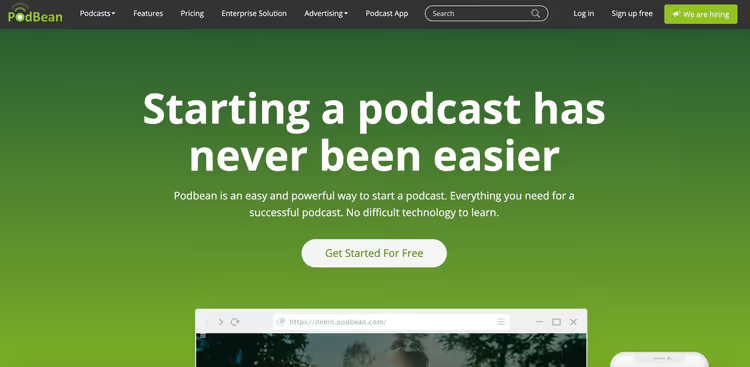
PodBean is the only major hosting service that offers unlimited storage and bandwidth on all paid tiers. Whether you pay $14 or $129, there are no limits on upload volume. For a podcaster with weekly shows or multiple projects, this is a decisive argument. PodBean pricing
PodBean's second strength is monetization. The platform offers crowdfunding (listeners become sponsors through the built-in system), an advertising marketplace, and paid subscriptions for premium episodes. Plus video podcast support on all tiers, including free.
Among the downsides: the interface looks dated, the mobile app falls short of competitors in usability, and advanced analytics are only available on expensive plans.
Pros: unlimited storage on all paid tiers, video podcasts, built-in crowdfunding, permanent free tier (5 h storage).
Cons: outdated interface, weak analytics on cheaper plans, mobile app needs improvement.
Price (June 2026): Free: 5 h storage, 100 GB traffic. Unlimited Audio: $14/month (annual: $9/month). Unlimited Plus: $39/month. Business: $129/month. More on PodBean
🔗 PodBean pricing and registration
3. Captivate: marketing built into the player
Captivate was created by the same team behind one of the first podcast hosts. Their key differentiator from competitors is marketing tools built directly into the publishing process. You can add a CTA button to the player with a link to your website, newsletter, or product. The system automatically generates links for sharing episodes on social media with attractive previews.
All tiers include unlimited podcasts and team members, which is rare. A mobile-friendly podcast website is created automatically. Advanced analytics are available on all plans: listener geography, devices, platforms, and retention by episode.
The downside is the absence of a free tier. You can request a demo, but there's no full-featured free plan. Captivate also doesn't support video content.
Pros: built-in CTAs in the player, unlimited shows and team members, auto-generated social media links, single price for all features.
Cons: no free tier, no video podcasts, volume measured in downloads rather than hours (harder to plan).
Price (June 2026): Podcaster: $19/month (12,000 downloads). Audio Influencer: $49/month (60,000 downloads). Podcast Brand: $99/month (150,000 downloads). Captivate pricing
🔗 Captivate.fm official website
4. Transistor: for brands and podcast networks
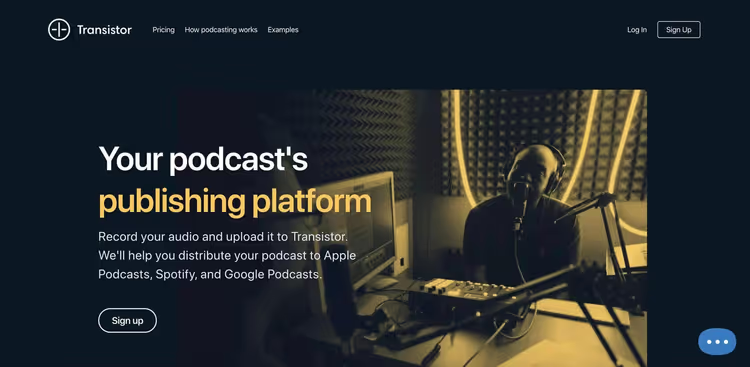
Transistor targets professional teams and brands that need to manage multiple podcasts from a single account. This isn't "one podcast, one account" but a full-fledged network: create as many shows as you want, invite team members with different access rights, and manage all analytics from a single dashboard.
Transistor's analytics are IAB-certified (Interactive Advertising Bureau standard), which matters for advertisers: download data is recognized by the market. The private podcasting feature allows you to create closed RSS feeds for internal corporate shows or paid subscribers.
Cons: no free tier (only 14-day trial), no video podcasts, and the download limit on the starter plan is modest (10,000 across all shows combined).
Pros: unlimited shows on one account, IAB-certified analytics, private podcasts, convenient team management.
Cons: no free tier (only trial), no video, download limit on the starter plan is low.
Price (June 2026): Starter: $19/month (10,000 downloads). Professional: $49/month (50,000 downloads). Business: $99/month (150,000 downloads). Transistor pricing
5. SimpleCast: analytics that advertisers trust
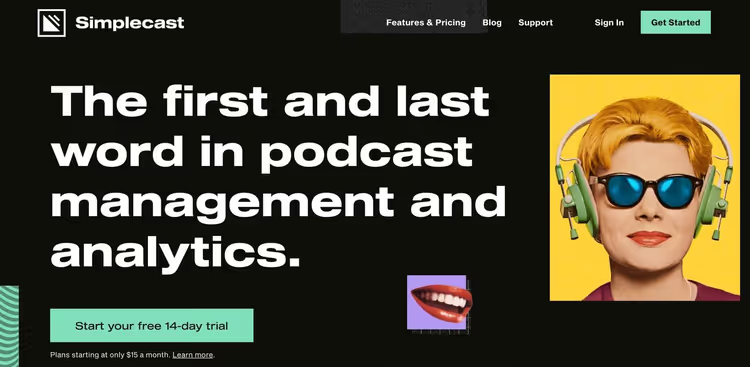
SimpleCast is the choice for those who prioritize analytics above all else. The platform provides IAB-certified reports recognized by advertising networks and sponsors. Clients include Kickstarter, Nike, and HBO.
A distinctive feature is the Recast function: listeners can share episode excerpts on social media as audio snippets. This works like free word-of-mouth marketing. Plus SimpleCast supports unlimited storage and downloads on all plans.
Limitations: no video support, no built-in monetization (only through external advertising), and collaborative episode work is minimally implemented (you can't assign different roles to team members).
Pros: IAB-certified analytics, Recast function for sharing, unlimited storage, powerful embeddable players.
Cons: no video, weak collaboration tools, no built-in monetization.
Price (June 2026): Basic: $15/month (annual: $13.50/month). Essential: $35/month. Growth: $85/month. SimpleCast pricing
🔗 SimpleCast.com official website
6. Castos: the perfect match for WordPress
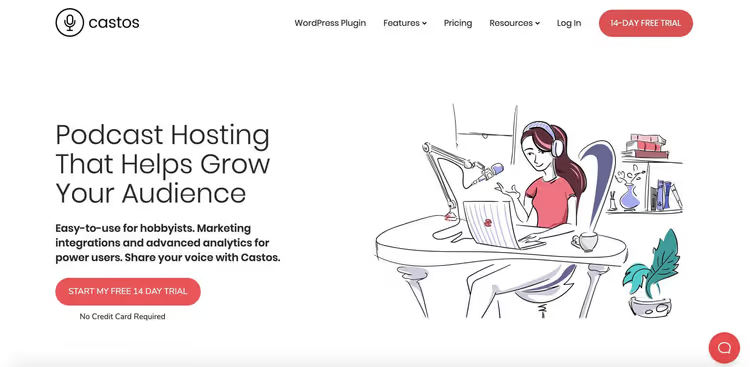
Castos is a hosting service designed with the WordPress ecosystem in mind. Their proprietary plugin Seriously Simple Podcasting (free in the WordPress.org repository) integrates directly with Castos hosting: recording, publishing, and analytics all happen inside the WP admin. No copying embed codes between services.
The second killer feature is automatic YouTube publishing. Castos converts audio to video (static image + audio track) and uploads it to your YouTube channel with one click. This is a way to have a YouTube presence without manual editing.
What's frustrating: no free tier (only trial), and transcription and Premium Podcasting features are charged separately. Castos features
Pros: deep integration with WordPress via Seriously Simple Podcasting, auto-publishing episodes to YouTube, unlimited storage, convenient dashboard.
Cons: no free tier (only 14-day trial), transcription and premium features charged separately, no IAB-certified analytics.
Price (June 2026): Starter: $19/month. Growth: $49/month. Pro: $99/month. Castos pricing
🔗 Castos official website | 🔗 Seriously Simple Podcasting on WordPress.org
7. Audioboom: built-in advertising with 10,000 download threshold
Audioboom stands out from competitors with its own advertising network. Once a podcast reaches 10,000 downloads per month, the platform connects it to advertisers and starts generating revenue without you actively seeking sponsors.
The platform provides unlimited storage and downloads on all tiers, plus detailed analytics on listener geography and devices. Support responds promptly, unlike many competitors where you might wait days for a response.
Among the downsides: no free tier, the interface requires getting used to (many settings, not for beginners), and the annual plan price is higher than comparably featured Buzzsprout or PodBean. Audioboom features
Pros: ad network from 10K downloads, unlimited downloads, strong support.
Cons: no free tier, interface for advanced users, annual plan price is steep.
Price (June 2026): Standard: $9.99/month. Plus: $24.99/month (annual billing). Audioboom pricing
8. Fusebox: a player that grew into a hosting service
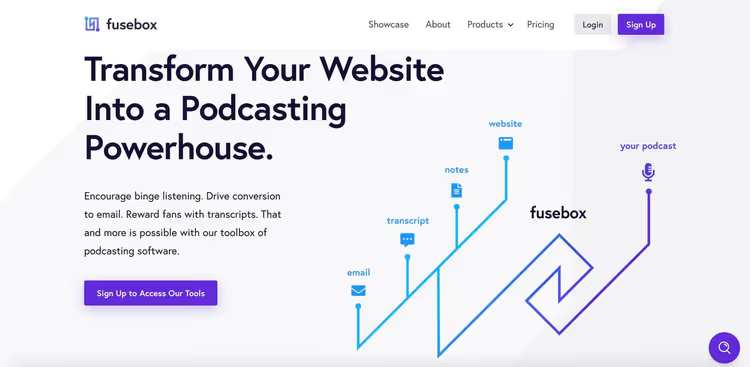
Fusebox started as the WordPress plugin Smart Podcast Player, created by well-known podcaster Pat Flynn. In 2023, the service expanded into full-fledged hosting while retaining its main feature: the best embeddable player on the market. It displays timestamps, allows listeners to download episodes, and uniquely captures email addresses directly from the player window.
This is a powerful tool for building a mailing list: a listener clicks "Subscribe" in the player and gets added to your email database without navigating to a separate landing page.
Limitations: Fusebox is a niche player, and its analytics fall short of SimpleCast and Transistor. The free tier gives only 2 episodes. About Fusebox
Pros: best embeddable player with email capture, WordPress integration, creator Pat Flynn, low starting price.
Cons: weak analytics, free tier limited to 2 episodes, small set of integrations.
Price (June 2026): Free: 2 episodes. Starter: $7.50/month. Pro: $15.83/month. Business: $25/month (annual prices). Fusebox pricing
9. Blubrry: the oldest WordPress podcast plugin
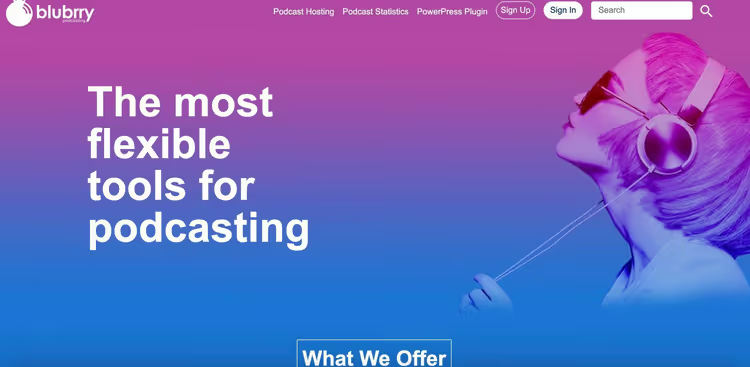
Blubrry is a market veteran with its own ecosystem. Their PowerPress is the most popular free podcasting plugin for WordPress (installed on more than 75,000 sites). The plugin works with any hosting, but paired with Blubrry it provides seamless publishing: record an episode in WordPress, and it automatically goes to all directories.
Blubrry hosting is IAB-certified with detailed analytics. There's a Programmatic Ad Insertion feature for automatic ad insertion based on set rules. But the dashboard interface, frankly, is stuck in 2015, and there's no mobile app for recording.
Pros: PowerPress plugin (free, 75K+ installs), IAB analytics, automatic ad insertion.
Cons: outdated interface, no mobile app, storage on the starter plan is only 100 MB/month.
Price (June 2026): Standard: $12/month (100 MB/month). Advanced: $20/month. Professional: $40/month. PowerPress plugin is free for everyone. Blubrry pricing
🔗 Blubrry official website | 🔗 PowerPress on WordPress.org
10. Libsyn: the grandfather of podcast hosting
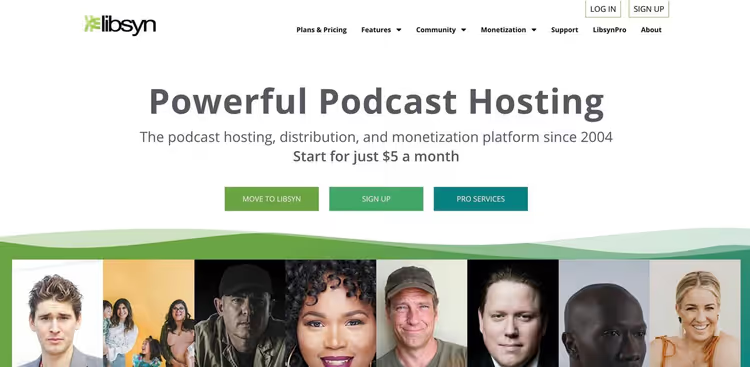
Libsyn (Liberated Syndication) is the oldest podcast hosting service, operating since 2004. Today it's a fully-featured platform with video podcast support (on Pro tiers), IAB-certified analytics, and its own advertising network.
Libsyn's main advantage is stability and reputation. The service has survived all technology cycles and never went down even during peak loads. For podcasters who treat their show as a business, reliability is critical.
Weak points: price. The starter tier gives only 162 MB per month. For unlimited storage you need to upgrade to plans starting at $20. Libsyn pricing The interface is functional but visually dated.
Pros: 20+ years on the market, video podcasts on Pro, IAB analytics, advertising network.
Cons: high price for volume, old-fashioned interface, storage strictly limited on lower tiers.
Price (June 2026): $7/month: 162 MB. $15/month: 324 MB. $20/month: 540 MB. Pro: $40+/month (unlimited, video). Libsyn pricing
11. ZenCast: betting on guests and convenience
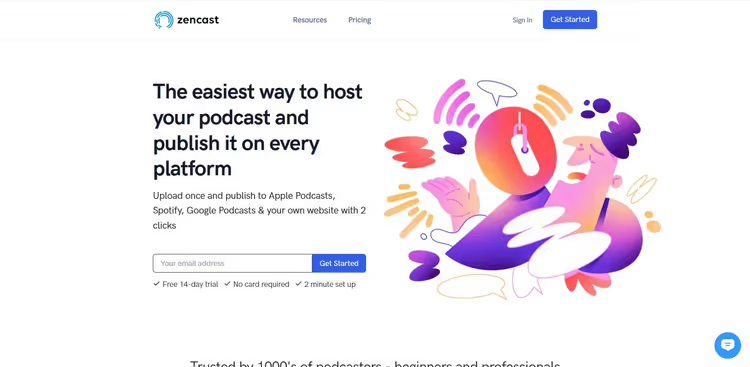
ZenCast is a newcomer to the market (launched in 2019) that found an unconventional niche: working with podcast guests. The platform stores guest profiles (contacts, social media links, appearance history) and displays this information in the player and on the podcast website.
For interview-format shows, this is invaluable: listeners see who the guest is and can go to their website or Twitter directly from the player. Hosts can see how many times they've invited a specific guest and when they last appeared.
Downsides: limited set of integrations with external services. Analytics are basic, without IAB certification. No mobile app for recording.
Pros: guest profiles in player, unlimited downloads, Google Analytics integration, rating tracking.
Cons: no IAB certification, modest set of integrations, no mobile app.
Price (June 2026): Hobby: $12/month. Professional: $35/month. Plus: $89/month. ZenCast pricing
Free tiers: how to launch with no budget
If your project is at the idea stage and your budget is zero, here are five options for a free start. Important: "free" doesn't always mean "without limitations." Read the fine print.
Spotify for Creators (formerly Anchor)
In 2026, this is the only mainstream hosting that's truly free WITHOUT an expiration date: unlimited storage, unlimited episode length, automatic distribution to all directories. Monetization is built in (Spotify Ads and subscriptions). Downside: analytics are tailored to the Spotify ecosystem, and management interface is only through the mobile app or web version at creators.spotify.com.
Buzzsprout Free
90 days of full functionality, 2 hours of uploads per month. Episodes are deleted after 90 days if you don't switch to a paid tier. Perfect for testing a niche: launch a pilot season, look at the numbers, make a decision.
PodBean Free
Permanent free tier: 5 hours of storage, 100 GB of traffic per month, basic statistics and embeddable player. Suitable for infrequent publications; one or two episodes per month will last a long time.
SoundCloud
SoundCloud is known as a platform for musicians, but podcasters can also upload episodes for free. Limit: 3 hours of total storage. An RSS feed is generated, but listener analytics and monetization are absent.
Spreaker Free Speech
15 minutes of live broadcast per episode, 5 hours of storage. Mobile and desktop apps for recording. Format: short daily podcasts or live shows with listener questions.
 AIIllustrative image: AI-generated
Where to submit your podcast after publishing
Hosting is where you store files. But listeners find podcasts through directories. After publishing an episode on your hosting, the RSS feed is automatically picked up by these platforms. Here are the main directories for 2026:
- Apple Podcasts: still the source of 60-70% of traffic for most podcasts. Getting into category top charts delivers explosive growth.
- Spotify: since 2022 it leads in new listeners (Edison Research data, 2025). Algorithmic recommendations bring audiences who never listened to podcasts before.
- YouTube Music: after Google Podcasts shut down in June 2024, all podcasts migrated to YouTube Music. For video format, this is the main channel.
- CastBox: stands out with AI search and episode commenting features.
- iHeartRadio: the largest US radio network with podcast integration, weekly charts, and personalized recommendations.
- Pandora: personalized algorithm at the episode level, not the show level. Brings audiences who aren't actively searching for podcasts.
Stitcher shut down in August 2023, Google Podcasts in June 2024. If your old directory list includes them, cross them out.
A short video comparison (8 minutes) from practicing podcaster Joe Casabona: breakdown of key platforms, pros and cons of each, real migration experience between hosts. Worth watching before making your final choice; some interface nuances are only visible in a live screencast rather than a table.
⁉️🤔 Frequently asked questions
Can I host a podcast on my own website without separate hosting?
Technically yes: you upload an MP3 file to the WordPress media library and publish it in a post. But by the fifth episode you'll face three problems: exhausted hosting disk quota, site speed degradation from serving heavy files, and absence of an RSS feed for directories. Podcast hosting is specifically optimized for streaming audio delivery via CDN and generating valid RSS; a regular web server handles these tasks poorly.
How much does podcast hosting actually cost in 2026?
Range: from $0 (Spotify for Creators) to $129/month (PodBean Business). Median for a hobbyist podcaster with weekly episodes is $12-19/month. Professional studio with multiple shows and video content: $49-99/month. With annual billing, most services give 10-20% discounts, so the actual monthly cost is usually 15-20% lower than the stated monthly price. Buzzsprout pricing confirmation
Which hosting should I choose for a video podcast?
As of June 2026, full video support is offered by PodBean (all tiers), Libsyn (Pro tiers from $40/month), and Castos (audio-to-video conversion for YouTube). Spotify for Creators also supports video episodes for free. Buzzsprout and Captivate fundamentally do not support video. PodBean pricing with video
What is IAB-certified analytics and why does it matter?
IAB (Interactive Advertising Bureau) is the industry standard for audience measurement. Certified analytics means that download and listener numbers are recognized by advertisers. Without it, you won't get into a serious advertising network. From our list, SimpleCast, Transistor, Blubrry, and Libsyn have IAB certification.
Which hosting should I switch to if I'm already recording a podcast through WordPress?
If you're already using the PowerPress plugin (Blubrry), it makes sense to stay in the Blubrry ecosystem. If you work through Seriously Simple Podcasting, your choice is Castos. If you don't have a plugin and just upload MP3s to the media library, start with Buzzsprout (minimal entry threshold) or PodBean (unlimited for the future).
Which platform to choose in 2026: a quick breakdown

If you had to choose one platform for each typical situation in June 2026, the recommendation looks like this:
- First podcast, no experience: Buzzsprout. 90 days free, first episode publishes in 15 minutes, and the simple interface doesn't distract from the main thing: creating content. Buzzsprout free trial
- Need unlimited and video: PodBean. Unlimited storage on all paid tiers plus video support, a rarity for $14/month.
- Running multiple shows: Transistor. One account, as many podcasts as you want, plus IAB analytics for advertisers.
- Budget is zero: Spotify for Creators. Truly free hosting with no expiration. When your audience grows, you'll move the podcast to a paid platform.
- Already have a WordPress site: Castos (Seriously Simple Podcasting plugin) or Blubrry (PowerPress). Both integrate into the WP admin and let you publish episodes without leaving your site.
- Want to earn from your podcast: Audioboom (ad network from 10K downloads) or PodBean (crowdfunding + premium subscriptions).
Prices and features verified on official platform websites as of June 2026. Choose based on your needs, not someone else's ranking.

A professional team of writers and editors specializing in creating quality content.