













🛒 14 best WooCommerce themes for grocery store 2026
You picked a grocery store theme, installed it, and checkout breaks on mobile? Normal. Half of grocery themes are built for screenshots, not real commerce: slow filters, last update three years ago.
Below are 14 working options for organic shops, farm stores, and supermarkets with hundreds of SKUs. Criteria: active updates in 2025-2026, working Ajax search, proper mobile cart.
💡 Quick overview:
- Check hosting technical requirements (PHP 8.2+, MySQL 5.7+) before purchase to avoid conflicts during theme installation.
- Review the comparison table: it shows price, number of demos, and page builder for each theme to quickly choose within budget.
- Open the live demo on mobile, go through the journey from search to checkout, this tests layout and speed of real commerce.
Comparison table: 14 themes for grocery store
Theme | Price | Demos | Builder | Multilingual | RTL |
|---|---|---|---|---|---|
Bacola | $47 | 24 | Elementor | WPML, Polylang | Yes |
Cartzilla | $59 | 6 | Gutenberg | WPML | Yes |
Ekomart | $19 | 6+ | Elementor | WPML | Yes |
Supgor | $39 | 6+ | Elementor | WPML, Polylang | Yes |
Mildhill | $75 | 1 | WPBakery | WPML | Yes |
Groci | $49 | 24 | WPBakery | WPML, Polylang | Yes |
Freshio | $59 | 8 | Elementor | WPML, TranslatePress | Yes |
Grogin | $49 | 6+ | Elementor | WPML | Yes |
GreenMart | $49 | 8 | Elementor | WPML | Yes |
GoGreen | $59 | 1 | WPBakery | Translation-ready | No |
Organey | $59 | 10 | Elementor | WPML, Polylang | Yes |
Qwery | $59 | 1 | Elementor | WPML | Yes |
Safira | $38 | 16 | WPBakery | WPML | Yes |
Food Store | $59 | 50+ | Elementor, WPBakery | WPML, TranslatePress | Yes |
Prices as of publication date, check on theme page.
1. Bacola
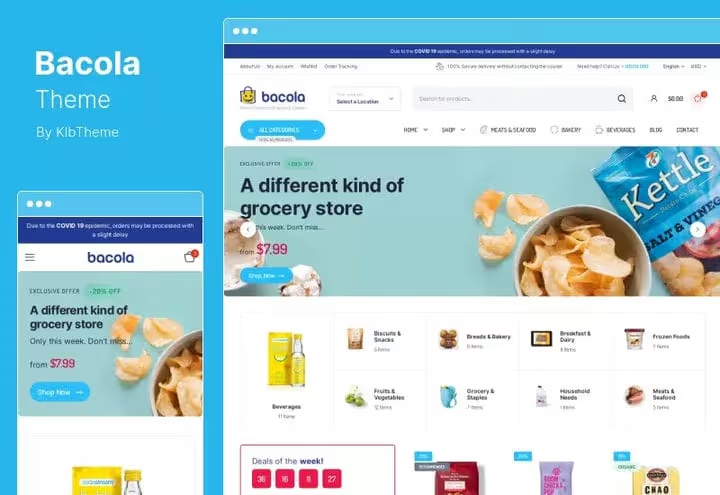
Bacola, the most functional option in this roundup. 24 pre-built demos cover virtually every grocery niche scenario: retail grocery, food delivery, farm shop, wine boutique. One-click demo import, then you swap content with your own.
Multilingual support through WPML/Polylang and RTL layout work out of the box, question of Arabic and Hebrew stores closed. Ajax search delivers results without reload, Ajax cart adds products without leaving the page, filter updates output on the fly. Customer doesn't lose context.
Built-in multi-currency solves price conversion for visitor's region without additional plugins. Wishlist and Quickview also in core. In practice, this means two to three fewer plugins on the mandatory list and noticeable speed gain compared to a setup with separate modules.
- Pros: 24 demos for any grocery sub-niche, multi-currency without plugins, Ajax cart and search in core, active updates (version 1.6.2 from June 2026 on theme page).
- Cons: price above average for this roundup, for a small 50-product store the functionality is excessive.
- Price: $47 with auto-updates.
2. Cartzilla
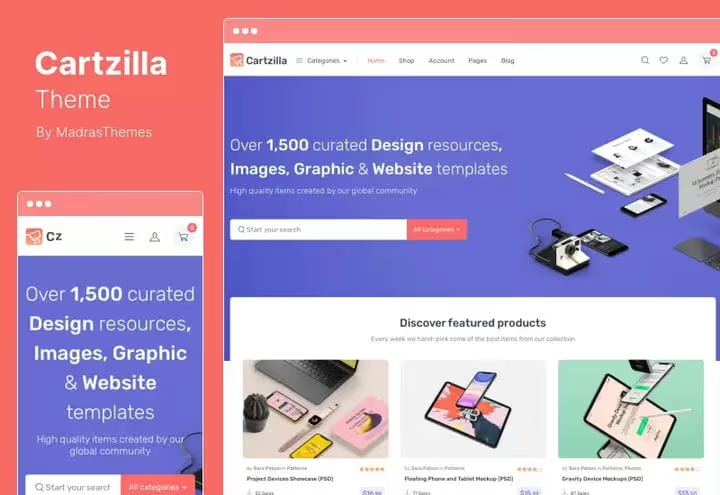
Cartzilla was created as a theme for digital marketplaces, but one of the demo sets is fully adapted for grocery retail. Six ready demos, several header styles, and a collection of widgets let you assemble a storefront without coding, all on Gutenberg and built-in drag-and-drop.
Main technical feature: lazy loading of images out of the box. Product grids with dozens of photos don't crash Speed Index, images load as you scroll. For a store with hundreds of SKUs, this is the difference between a customer who managed to buy and one who left for a competitor.
WooCommerce integrated natively: product card, cart, checkout don't require tweaking. Wishlist and product comparison widgets pre-installed. Configuration through WP Customizer with live preview, you change a parameter and immediately see the result.
- Pros: Gutenberg (no dependency on third-party builders), lazy loading in core, clean WooCommerce integration.
- Cons: only one demo tailored for grocery retail, the rest for marketplaces, no built-in multi-currency.
- Price: $59 on ThemeForest.
3. Ekomart

Ekomart, the most affordable option in this roundup. $19 for a full-featured grocery tool on Elementor. The theme is built for supermarkets, organic shops, and grocery delivery: clean design without visual noise, mobile-first grid, quick demo import.
In core: Ajax product filter, Quickview, product comparison, and wishlist. Separately worth noting is compatibility with Dokan from the WordPress.org catalog: if you're planning a multi-vendor marketplace (farmers sell directly), Ekomart is ready for this without additional template dancing.
On a test server, the theme showed good PageSpeed scores on desktop with a standard installation, without caching plugins. For a budget grocery store launch with growth potential, one of the most rational options.
- Pros: best price in this roundup, Dokan compatibility out of the box, high speed on clean install.
- Cons: less known author (Reacthemes), fewer demos than category leaders, documentation thinner for some rare cases.
- Price: $19.
4. Supgor

Supgor from KlbTheme, six home pages on Elementor. Design is restrained: large typography, breathing space between sections, emphasis on product photography rather than banners.
From technical features rarely seen in this price segment: built-in WhatsApp ordering (button right in the product card), geolocation filter (visitor sees products available for their area), Ajax cart with Side Cart mode, and sticky add-to-cart button on mobile.
Multi-vendor support through Dokan plugin, countdown timer for promotions, popup newsletter, and free shipping notice bar. Tools that in other themes are added with paid plugins. In practice, Supgor saves dozens of dollars on additional conversion modules.
- Pros: WhatsApp ordering and geolocation filter in core, Side Cart plus sticky cart, Dokan compatibility, six demos for different niches.
- Cons: documentation in English without Russian translation, for a store without delivery some features (geolocation) are excessive.
- Price: $39.
5. Mildhill
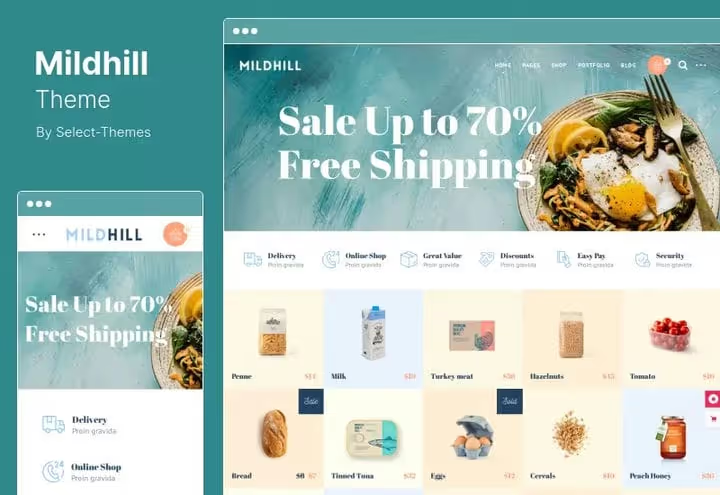
Mildhill is oriented toward organic and farm businesses: clean design with emphasis on product photography. Works on WPBakery Page Builder, drag-and-drop with grid and ready blocks. One-click demo import, then replace content with your own.
Built-in Mega Menu Builder lets you assemble a multi-level menu with icons and images visually, without code. For a store with dozens of categories (vegetables, fruits, dairy, bakery), this is a serious plus for navigation.
Social integration, the second strong side: Instagram feed right on the site, share buttons on products and posts. WPML support solves the multilingual question.
- Pros: visual Mega Menu Builder, built-in Instagram feed, farm aesthetic out of the box.
- Cons: highest price in this roundup, only one demo, RTL not declared.
- Price: $75 with lifetime updates and six months of support.
6. Groci
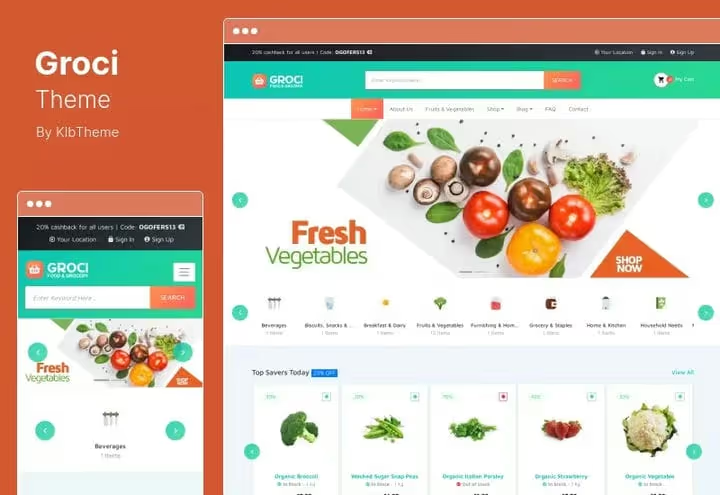
Groci, theme with 24 demos on WPBakery. Minimalist design doesn't distract from products: large photos, clean lines, breathing space between blocks. RTL support and multilingual through WPML/Polylang close the question of international markets.
Ajax cart and Ajax post loading work without page reload. "Load more" button under product list, an alternative to pagination, convenient for mobile shoppers. Parallax scroll adds depth to the home page.
More than 1000 Google Fonts and sticky menu, standard for themes in this segment. Google Analytics integration for tracking post scroll, a rare useful detail for content marketing alongside the store.
- Pros: 24 demos (same as Bacola), parallax scroll, Google Analytics integration for content.
- Cons: WPBakery (slower than Elementor in visual editing), $49 price with one builder could be lower.
- Price: $49 with full documentation.
7. Freshio
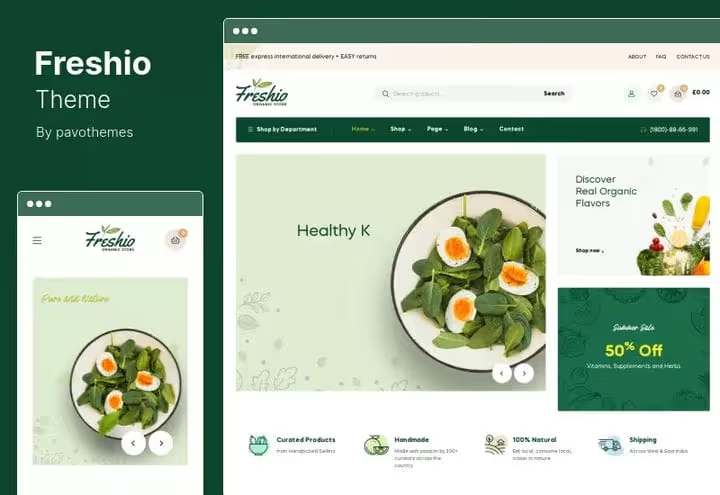
Freshio is built for organic products. Eight demos on Elementor: visual page editing plus built-in header and footer builder. Mega Menu constructor lets you assemble navigation of any complexity, from simple dropdown to mega-menu with banners and category icons.
Product comparison, QuickView, wishlist, full set for conversion product card. Theme compatible with multi-vendor plugins like Dokan Multivendor: if you're planning a marketplace where farmers sell directly, Freshio is ready for this.
Eight home page styles cover different scenarios: from classic grocery to minimalist organic brand. TranslatePress and Polylang for multilingual in the package.
- Pros: visual Mega Menu, eight home styles, multi-vendor compatibility, Elementor header and footer builder.
- Cons: average price but without unique features like Supgor, organic niche only, won't fit a universal store.
- Price: $59, six months of support.
8. Grogin

Grogin from KlbTheme, six home pages on Elementor with mobile-first layout and separate RTL demo for the Middle Eastern market.
Key detail, geolocation product filter. Visitor sees only those products physically available in their delivery area. For a regional network with different assortment by city, this is not a nice bonus but an infrastructure necessity. Five header variants, Ajax filter with horizontal and sidebar mode, Quickview and wishlist.
Compatibility with Dokan lite for multi-vendor marketplace, countdown timer, and free shipping bar. On a test server, Grogin showed decent load speed without caching, for an Elementor theme the result is above average.
- Pros: geolocation filter in core, Dokan compatibility, good speed on clean install, six demos.
- Cons: new product (released in 2024), fewer reviews than Bacola/Groci, documentation being filled in for rare cases.
- Price: $49.
9. GreenMart

GreenMart from thembay, Best rated Organic & Food WooCommerce theme on ThemeForest. Eight demos on Elementor, visual header and footer builder, multi-vendor compatibility with Dokan, MultiVendorX, WCFM Marketplace, and WC Vendors.
Key distinction, four variants of multi-vendor system integration out of the box (including free Dokan and MultiVendorX). If you're planning a marketplace where farmers sell directly, GreenMart is ready without custom development.
Ajax product filter, QuickView, product comparison, and wishlist. WPML compatibility for multilingual, RTL layout for Middle Eastern market.
- Pros: Best rated theme in category, compatibility with four multi-vendor systems (Dokan, MultiVendorX, WCFM, WC Vendors), active 2026 updates, Elementor Header & Footer Builder.
- Cons: price higher than budget Ekomart, for a store without multi-vendor some features are excessive.
- Price: $49 with six months of support.
10. GoGreen
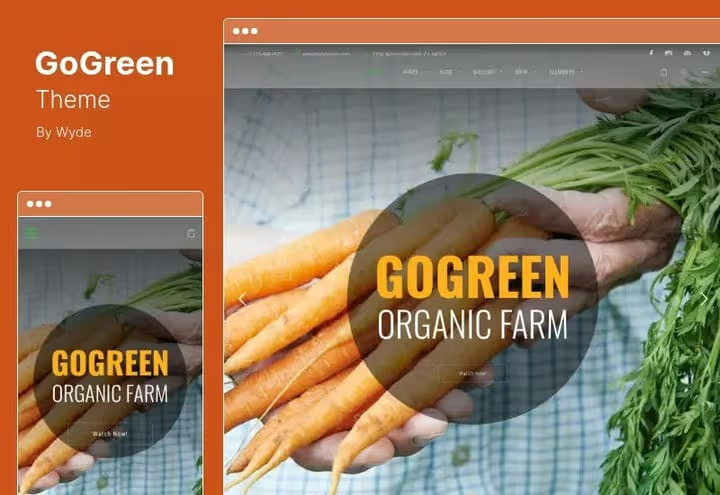
GoGreen, niche theme for farm businesses, organic brands, and agricultural markets. WPBakery Page Builder with extended component set: drag-and-drop modules assemble a page without code.
Video background for sections and smooth scroll add visual depth to the landing. Sticky menu, navigation always in front of eyes. Ajax post loading keeps reader on page: next post pulls automatically.
Mega Menu and more than 1000 fonts from Google catalog, standard package for themes in this price segment. Social network integration and translation-ready cover basic needs. RTL not declared: not critical for European market, a miss for Middle Eastern.
- Pros: farm aesthetic without extra elements, video background for sections, smooth scroll.
- Cons: no RTL, translation-ready rather than full WPML out of the box, only one demo.
- Price: $59, six months of support.
11. Organey
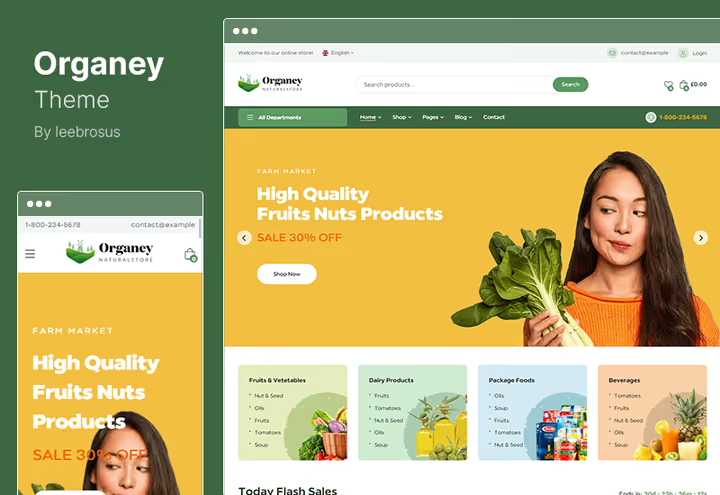
Organey, theme with 10 demos, oriented toward organic products and farm markets. Elementor as main constructor plus Elementor header and footer builder: any part of page edits visually without limits.
Mega Menu assembles without limits. Ten home page variants and a set of portfolio styles give room for branding. Ajax product filter, product comparison, and QuickView, conversion minimum covered.
WooCommerce wishlist pre-installed. WPML and Polylang for multilingual, social share buttons. Theme suits stores with strong emphasis on visual brand: photogenic organic segment benefits from quality imagery.
- Pros: 10 demos, Elementor header and footer builder, Mega Menu without limits, multi-vendor.
- Cons: no built-in multi-currency, no video background (unlike GoGreen), specific to organic rather than universal grocery.
- Price: $59 with six months of support.
12. Qwery
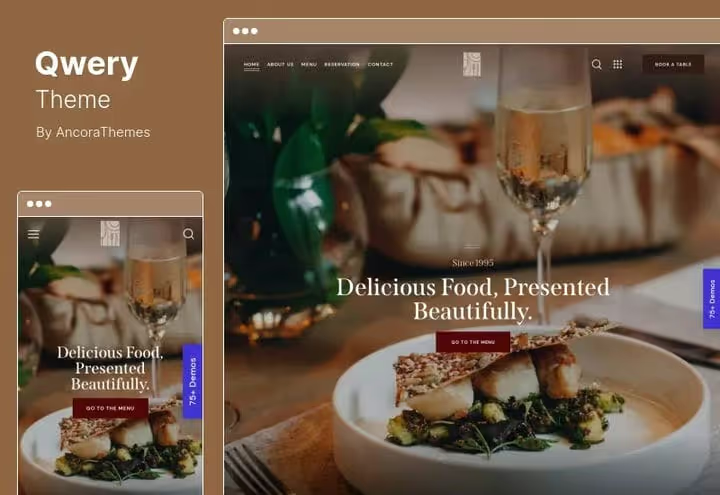
Qwery, multipurpose theme with strong WooCommerce core. Elementor for visual page assembly, live product search, Slider Revolution for impressive banners. Boxed and wide layouts give two fundamentally different design variants.
From unique: built-in booking system and MailChimp widget for email marketing, tools usually purchased as separate plugins. Instagram feed and Facebook widget right on site convert social media into content for store.
WooCommerce integration at level: wishlist, cart, checkout.
- Pros: booking system and MailChimp in core, Slider Revolution included, boxed and wide layouts.
- Cons: only one demo, multipurpose rather than specialized grocery theme (some features outside grocery niche).
- Price: $59 with lifetime updates and six months of support.
13. Safira
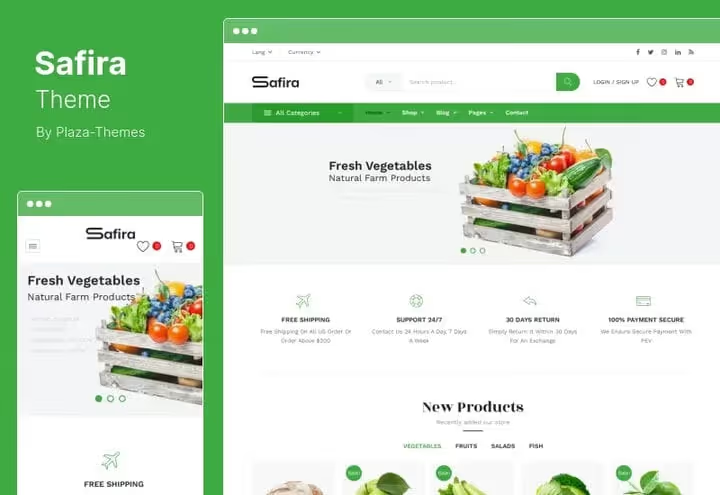
Safira closes this roundup with 16 pre-built demos. WPBakery as constructor: visual editing in real time. Mega Menu assembles without limits, configuration through WordPress Customizer with live preview.
Full-cycle Ajax shop: cart, product filter, QuickView and product comparison, entire purchase cycle without page reloads. Zoom Magnifier for product cards lets examine product in detail. Wishlist and WPML, standard set.
16 demos at $38 price, best ratio of number of templates per dollar in this roundup. For launch without designer and without desire to fuss with customization, Safira gives maximum ready variants.
- Pros: 16 demos (best ratio in this roundup), full-cycle Ajax shop, Zoom Magnifier for cards.
- Cons: WPBakery (Elementor would be more convenient), support price after first six months not disclosed.
- Price: $38 with six months of support.
14. Food Store

Food Store from ThemeFTC, universal tool with 50+ demos to choose from. Elementor and WPBakery Page Builder, Header and Footer Elementor Builder, multi-vendor compatibility with Dokan, MultiVendorX, WC Vendors, and WCFM.
From unique: AI Product Review Summary based on OpenAI for automatic generation of review summaries and 360° Product Viewer for visualizing product from all sides. Revolution Slider included in package.
- Pros: maximum number of demo variants, AI Product Review Summary and 360° Viewer, active 2026 updates, dual builder support.
- Cons: high price, excessive functionality for a small store.
- Price: $59.
Video: how to launch a grocery store on WooCommerce
Lists are half the job. Below is a tutorial on launch: WordPress installation, WooCommerce connection, storefront setup, and product cards in 20 minutes.
⁉️🤔 Frequently asked questions
Can you build a full-featured grocery store on WordPress?
WordPress with WooCommerce, one of the most common setups for online food commerce. According to BuiltWith data, WooCommerce serves millions of active sites, from cheese stalls to regional delivery networks. You need: hosting with PHP 8.2+, theme from the roundup above, SSL certificate, and two to three plugins (shipping, caching). You don't pay transaction fees like in Shopify.
Which theme to choose for organic products and farm store?
For the organic niche, visual emphasis on photography and multi-vendor support are critical (if farmers sell through one platform). Best fits are Organey (10 demos, Elementor, multi-vendor), GoGreen (video background, farm aesthetic), and Mildhill (Instagram feed, Mega Menu). If you need one option, take Organey.
What matters more: theme price or number of demos?
Depends on who sets it up. Have a developer, take a theme with one demo but good builder: Ekomart or Qwery. Need to turn on and work, 16-50 demos (Food Store, Bacola, Groci, Safira) sharply reduce launch time. One solid demo for your niche is more useful than 24 universal templates.
Is RTL needed for a grocery store?
RTL (Right-to-Left) is mandatory if you plan sales to Israel, UAE, Saudi Arabia. Theme without RTL (GoGreen) is useless in such market: menu and cards will shift left. For Europe and CIS, not critical. 13 out of 14 themes in this roundup support RTL. If in doubt, take with RTL.
How long does store launch take on a ready theme?
With demo import: two to three hours for WordPress and theme installation, four to six hours for replacing content with your own (products, categories), two to three hours for payment gateway and shipping. Total one to two working days. Main time goes to product photography and descriptions.
What to install for a grocery store in 2026: final breakdown
No universal winner, there's the right choice for the scenario.
Large supermarket with hundreds of SKUs and multilingual, Bacola or Food Store. Bacola gives 24 demos and multi-currency in core, Food Store beats by number of demos (50+) and adds AI review summaries.
Budget is limited, Ekomart. Lowest price in this roundup, Elementor, Dokan compatibility for growth.
Delivery by areas with different assortment, Grogin or Supgor. Geolocation filter solves a task that regular themes close with custom development. Supgor adds WhatsApp ordering.
Farm organic brand with emphasis on storytelling, Organey or Mildhill. First wins by number of demos and Elementor flexibility, second by visual cleanness and Instagram feed.
Multi-vendor marketplace, GreenMart or Food Store with four integration variants (Dokan, MultiVendorX, WCFM, WC Vendors).
Not sure about niche, Food Store (50 demos), Safira (16 demos), or Groci (24 demos). First wins by absolute number of variants, second by price per demo.
Theme solves a noticeable part of conversion. The rest, load speed (hosting plus caching), photo and description quality, navigation logic. Take a demo, upload 20 test products, go through the customer journey from search to checkout. Theme that doesn't interfere with this path is yours.

A professional team of writers and editors specializing in creating quality content.