













🛒 18 best Elementor themes for WooCommerce 2026
Building an online store on WordPress that doesn't lag and lets you manage every product card without a programmer is a task for the Elementor + WooCommerce combo. The theme determines how quickly you'll launch.
The theme market is overheated. Hundreds of options on ThemeForest, half bloated with dead code or abandoned two years ago. Choosing blindly, there's a risk of getting a store that loads in 6 seconds.
We filtered out themes with updates older than two years and ratings below 4.0, ran live demos through PageSpeed Insights.
💡 Quick overview:
- Define your niche and budget: specialized theme for a specific product type or universal
- Compare key features in the table below, open live demos of 2-3 candidates on mobile, check product cards and cart on mobile
- Verify compatibility with the current version of WooCommerce on the theme page before purchase
- Run demo speed through PageSpeed Insights, look for FCP under 1.8s and TBT under 200ms
Comparison table: 18 themes for Elementor + WooCommerce
Theme | Price | Builder | Demos | Key feature |
|---|---|---|---|---|
Sportie | $59 | Elementor + Live Customizer | 6+ | Sports/bike niche, Ajax cart |
WoodMart | $59 | Elementor + WPBakery | 80+ | ThemeForest bestseller, 100K+ installs |
Hugge | $69 | Elementor | 12+ | Affiliate links and mini-banners |
Rey | $59 | Elementor | 30+ | AJAX filtering, lookbook |
Avada | $60 | Avada Builder + Live | 90+ | 8 premium plugins included |
Flatsome | $59 | UX Builder | 50+ | 232K+ sales, live search, quick view |
Martfury | $59 | Elementor + WPBakery | 10+ | Dokan marketplace, multi-currency |
Karma | $64 | Elementor | 50 | 50 ready-made home pages |
Jupiter | $59 | Elementor + Header Builder | 450+ | Pop-up builder, 40 WooCommerce demos |
Bifrost | $59 | Elementor | 10+ | Portfolio focus, 500+ options |
Shopkeeper | $59 | Elementor + WPBakery | 10 | Catalog mode, Adobe Typekit |
Porto | $59 | Elementor + Gutenberg | 90+ | Layout studio, AJAX filtering |
The Retailer | $59 | WPBakery | 8+ | Horizontal and vertical sidebar |
Salient | $60 | WPBakery + Front-end Editor | 300+ | Quick checkout, sticky product info |
Sober | $59 | Elementor | 16 | Minimalism, smooth slider |
Auros | $59 | Elementor | 12+ | Header/footer builder, retina interface |
Nyture | $59 | Elementor + Live Customizer | 10+ | Product filter by color |
Oxygen | $59 | WPBakery + Revolution Slider | 8+ | Elegant minimalism, product slideshow |
1. Sportie
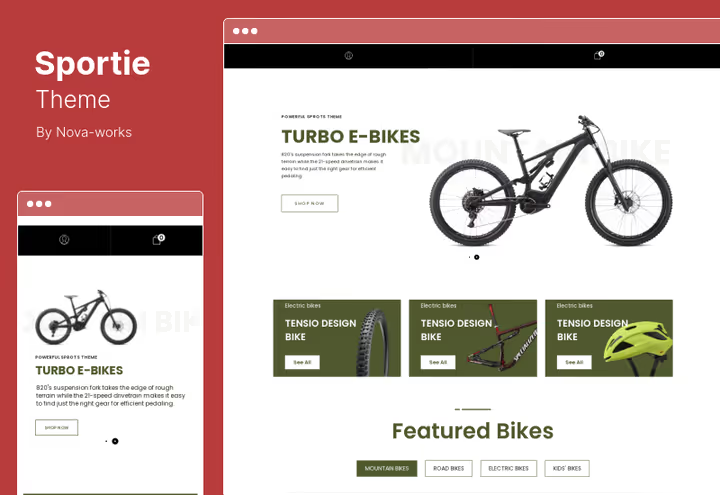
Sportie, a specialized theme for sports online stores. Perfectly suited for selling bicycles, gear, sportswear and accessories. The theme doesn't try to be everything for everyone, and that's its main advantage.
Stack: Elementor for page content and Live Customizer for global header, footer and typography settings.
WooCommerce integration: Ajax cart, Ajax shop, load products on click, color and image swatches for variable products. Wishlist and visual attributes out of the box.
- Pros: niche specialization, Ajax cart and shop, product swatches, Gutenberg compatibility
- Cons: limited number of demos (6+), not for universal stores
💵 $59 on ThemeForest, theme and 6 months support.
2. WoodMart

WoodMart, a ThemeForest bestseller with an audience of over 100,000 stores. Works for furniture, electronics, clothing and multi-category supermarkets.
Stack: Elementor and WPBakery to choose from, plus a custom header builder. 80+ ready-made demos cover practically any product niche. AJAX search, AJAX cart, AJAX filters without page reload.
Mega Menu with three-level nesting, wishlist, Quick View, product comparison and variable swatches out of the box. Compatible with Dokan for multi-vendor marketplace, WPML for translation and Multi-Currency. Performance is on point.
- Pros: 80+ demos, AJAX shop without reload, Mega Menu, Dokan, 100K+ users
- Cons: abundance of options requires time to master
💵 $59 on ThemeForest, regular license with lifetime updates.
🔗 WoodMart on ThemeForest | 🔗 Live demo
3. Hugge
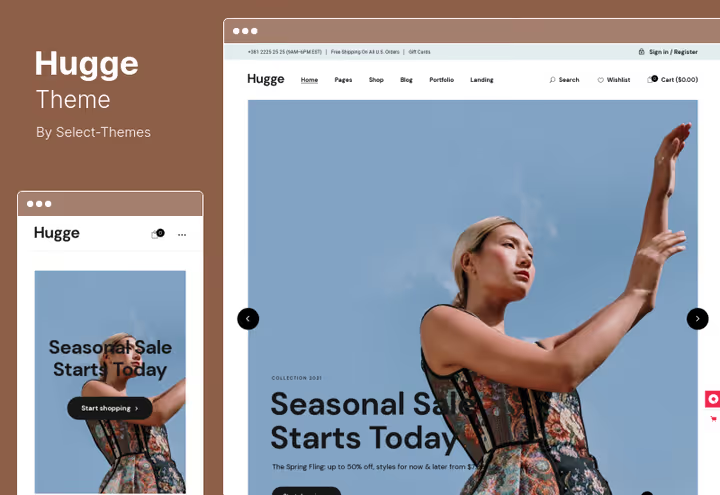
Hugge is designed for cosmetics, watches, fashion clothing and furniture stores. Key feature, affiliate sales. You can run a blog with reviews and referral links to third-party products, place mini-banners with special offers.
eCommerce side: support for physical and virtual products, color swatches, customer reviews with photos. Sticky header with several behavior modes: fixed, sticky on scroll up, regular.
- Pros: affiliate mechanics, mini-banners, photo reviews, flexible header
- Cons: price slightly above average
💵 $69 on ThemeForest, one-time payment.
4. Rey

Rey, a multi-purpose WooCommerce theme focused on smooth shopping experience. Bet on interaction speed: AJAX filtering, AJAX catalog navigation and Quick View without page reload.
From non-standard features: built-in lookbook for fashion stores, where products are linked to points on a photo. The buyer clicks on an outfit on the model and lands on the product card.
Mega Menu, customizable product cards, variable swatches and off-canvas cart are configured through Elementor.
- Pros: AJAX filtering without reload, lookbook, off-canvas cart, Mega Menu
- Cons: fewer ready-made demos than WoodMart, entry threshold above average
💵 $59 on ThemeForest, includes 6 months support.
🔗 Rey on ThemeForest
5. Avada
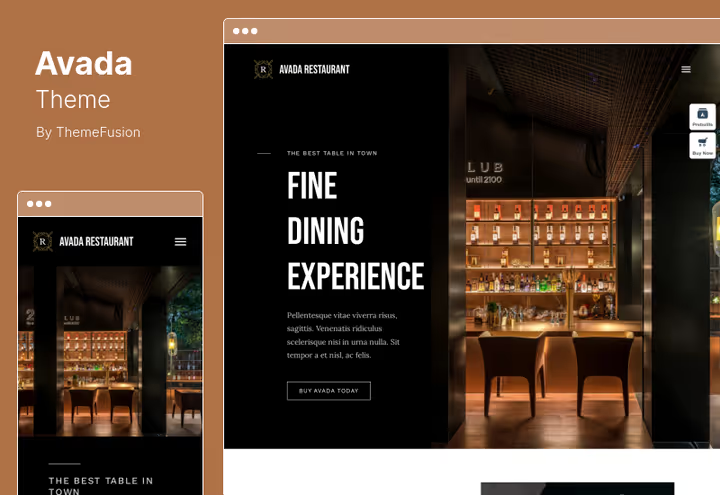
Avada, a ThemeForest bestseller with an audience of over a million users. Uses its own builder: Avada Builder for backend and Avada Live for frontend.
Includes 8 premium plugins, WooCommerce Builder, form constructor, post card layouts, headers and footers. Avada Live lets you edit any page in real time.
Integrations: Yoast SEO, WooCommerce, The Events Calendar, HubSpot, WPML.
- Pros: powerful custom builder, 8 premium plugins included, huge user base
- Cons: not on Elementor (custom Avada builder), learning curve for beginners
💵 $60 on ThemeForest, includes 6 months support.
6. Flatsome

Flatsome, the best-selling WooCommerce theme on ThemeForest with over 232,000 sales according to Envato Marketplace. Tailored specifically for eCommerce and includes its own UX Builder for visual customization without code.
Advanced eCommerce features: live product search, quick view of products, pop-up cart, customizable product galleries. Drag-and-drop header builder gives complete freedom in constructing the header to match brand guidelines.
As of mid-2026, Flatsome holds 50+ ready-made demo sites for different product niches. According to 2026 performance tests, Flatsome shows 83/100 for loading speed.
- Pros: 232K+ sales, UX Builder, live search and quick view, customizable galleries
- Cons: custom builder instead of Elementor, slightly heavier than lightweight competitors
💵 $59 on ThemeForest, all templates, demos and 6 months support included.
7. Martfury

Martfury, a theme tailored for multi-vendor marketplaces. If you plan to launch a platform similar to AliExpress or Amazon on WordPress, this is a direct candidate.
Key feature, integration with Dokan out of the box. Designed for marketplace logic: vendor storefronts, commissions, multi-currency through WooCommerce Multi-Currency. AJAX search and AJAX cart without reload.
Stack: Elementor and WPBakery to choose from. 10+ demos for different niches, electronics, furniture, clothing. RTL support for Arabic and Hebrew stores, WPML compatibility, mega menu with product categories.
- Pros: Dokan marketplace out of the box, multi-currency, RTL, AJAX search and cart
- Cons: excessive for a regular store without multi-vendor
💵 $59 on ThemeForest, regular license.
🔗 Martfury on ThemeForest | 🔗 Live demo
8. Karma
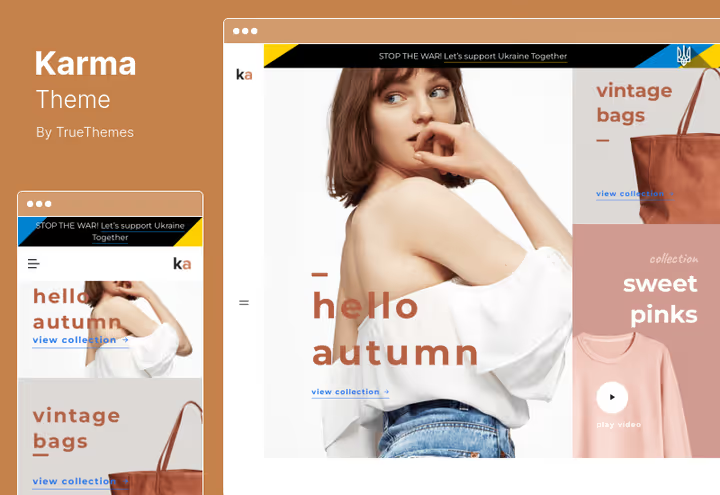
Karma, a business-oriented theme that covers construction, finance, industry and corporate sites. With Elementor visual control over 50 ready-made home page demos.
The theme offers over 10 header and footer variants with transparent overlays. Extended color and typography settings adapt the theme to brand guidelines.
Supports Contact Form 7, Google Maps and Gutenberg.
- Pros: 50 ready-made home pages, 7 header patterns, corporate focus
- Cons: weaker in WooCommerce specifics than specialized eCommerce themes
9. Jupiter
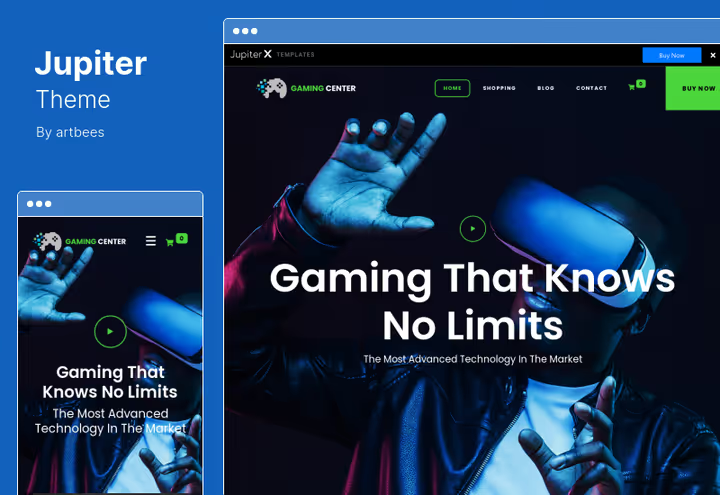
Jupiter, a multi-purpose ThemeForest veteran. 450+ ready-made sites, including 120 corporate templates, 130 creative portfolios and 40 WooCommerce demos.
Builder: Elementor with visual editor. Built-in header builder gives complete freedom in constructing the header. Pop-up builder with presets for pop-ups.
The theme is responsive, retina-ready, supports RTL.
- Pros: 450+ demos, 40 WooCommerce sites, pop-up builder, header builder
- Cons: may seem overloaded for a small store
💵 $59 on ThemeForest, theme, 6 months support and lifetime updates.
10. Bifrost
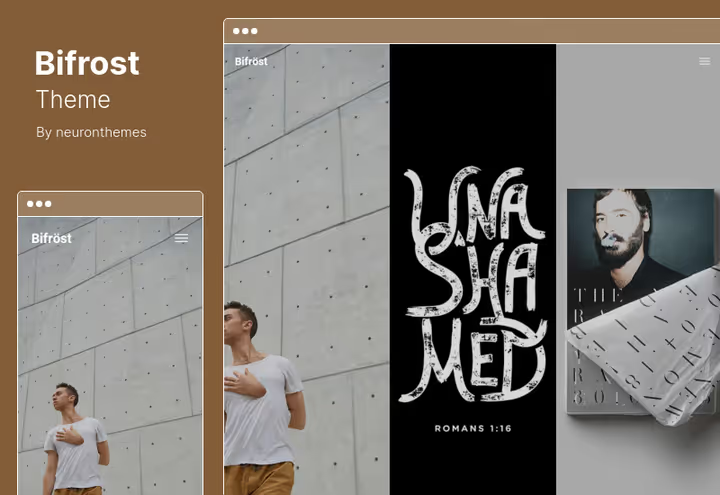
Bifrost was created for portfolios, agencies, freelancers, photographers. WooCommerce integration allows adding a store to a portfolio site.
500+ customization options provide unprecedented flexibility. Headers, footers, colors, fonts change without code. Fully responsive and friendly with WPML for translation.
One of the advantages, speed. Not overloaded with unnecessary scripts.
- Pros: 500+ customization options, lightweight, portfolio + store, WPML
- Cons: not for large product stores (no advanced WooCommerce filters)
💵 $59 on ThemeForest, auto-updates for the lifetime of the theme + 6 months support.
11. Shopkeeper
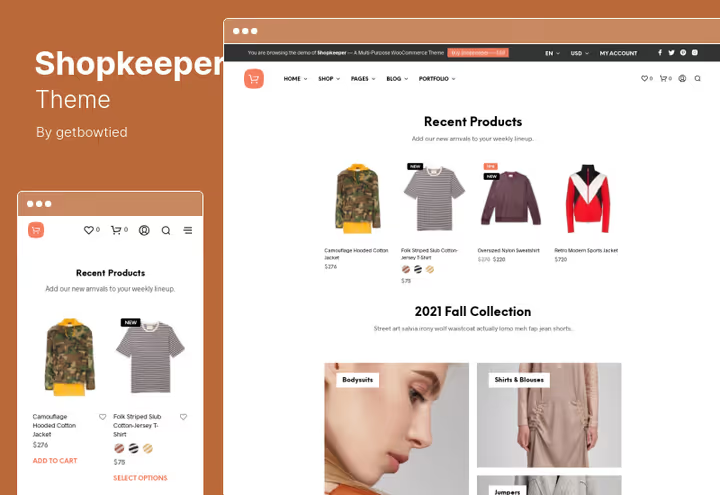
Shopkeeper, a premium theme with two builders: Elementor and WPBakery. 10 landing page demos provide a good start.
eCommerce capabilities: catalog mode, storefront without cart, product zoom, reviews tab and related products on product page.
Typography: 70+ Google Fonts plus integration with Adobe Typekit.
- Pros: two builders to choose from, Adobe Typekit, catalog mode
- Cons: only 10 demo landings
💵 $59 on ThemeForest, 6 months free support.
12. Porto
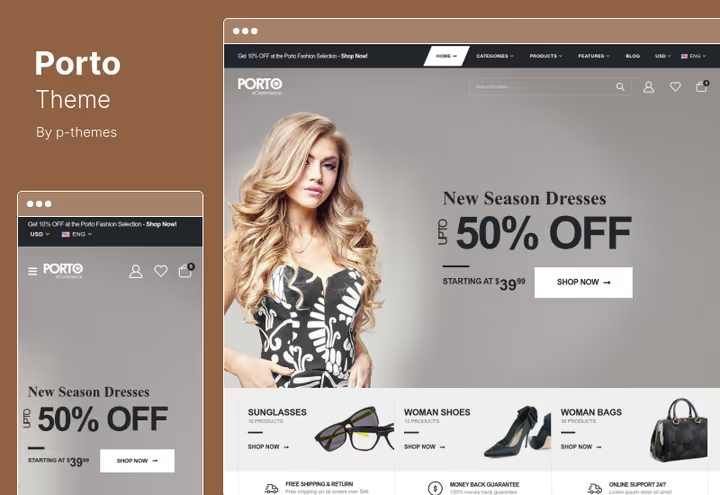
Porto, one of the most functional multi-purpose templates for WooCommerce. 90 demo sites built on Elementor, built-in layout studio allows creating custom layouts.
WooCommerce features: wishlist, AJAX search, product filtering and sorting. 30+ home page variants. Mega Menu with three-level dropdown menu.
Porto is compatible with Gutenberg, you can combine Elementor pages and block editor.
- Pros: 90 demos, layout studio, AJAX search and filtering, Mega Menu, wishlist
- Cons: complexity for beginners due to abundance of options
💵 $59 on ThemeForest, 6 months support included.
13. The Retailer
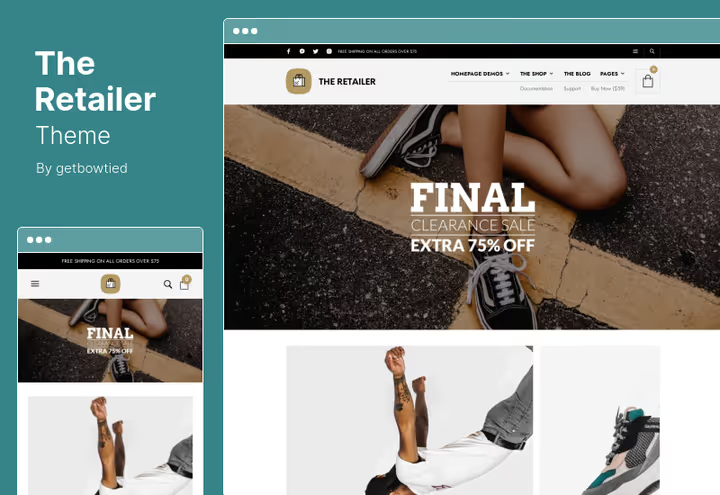
The Retailer, a classic theme for online stores with a flexible layout system. Horizontal and vertical sidebars, two widget zones with individual customization for each page.
Color and image swatches for variable products help buyers quickly choose a variant. Catalog mode allows disabling the cart and using the site as a showcase.
- Pros: flexible layout (horizontal and vertical sidebar), 2 widget zones, swatches
- Cons: fewer demos than leaders, WPBakery instead of Elementor by default
💵 $59 on ThemeForest, theme and 6 months support.
14. Salient

Salient, a creative multi-purpose theme with visual frontend editor. 300+ templates in the library cover practically any niche.
WooCommerce integration: custom product gallery, Quick View, product carousel, sticky product info on page, quick checkout and multiple filters.
Slideshows, grids, animations and carousels are built through the theme's built-in tools.
- Pros: 300+ templates, quick checkout, sticky info, deep WooCommerce integration
- Cons: learning curve with visual editor
💵 $60 on ThemeForest, 24/7 support and 6 months free.
15. Sober

Sober bets on minimalism. 16 preset demos and clean design, what you need for a fashion store.
Technical stack: Elementor + WooCommerce + multiple widget zones. Mini cart, unlimited color schemes and smooth slider effects.
The theme is responsive.
- Pros: clean minimalism, 16 demos, unlimited color schemes
- Cons: fewer eCommerce features than Porto or Avada
💵 $59 on ThemeForest, auto-updating theme.
16. Auros
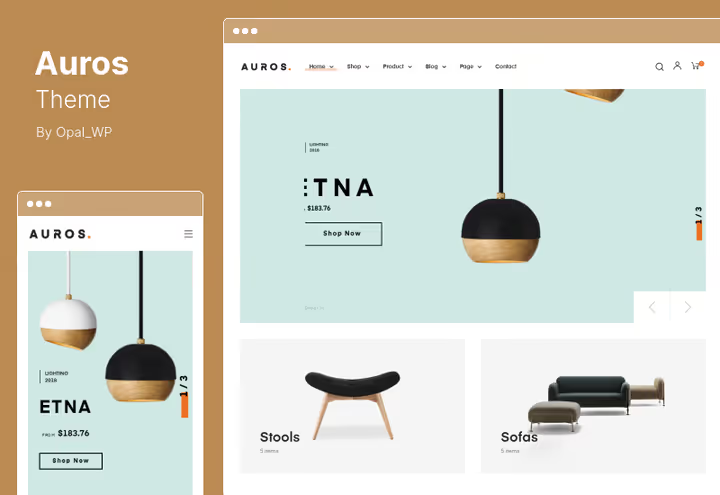
Auros, a specialized theme for furniture and interior stores. Products are presented in the context of interiors, helping buyers envision the product in their own space.
Stack: Elementor + built-in header/footer builder + retina interface. Optimized for speed and adapted for all devices.
Flexible widget management allows fine-tuning display on different pages.
- Pros: furniture specialization, header/footer builder, retina-ready, high speed
- Cons: narrow niche, not suitable for stores outside interior and furniture
💵 $59 on ThemeForest, 6 months free support and lifetime updates.
17. Nyture
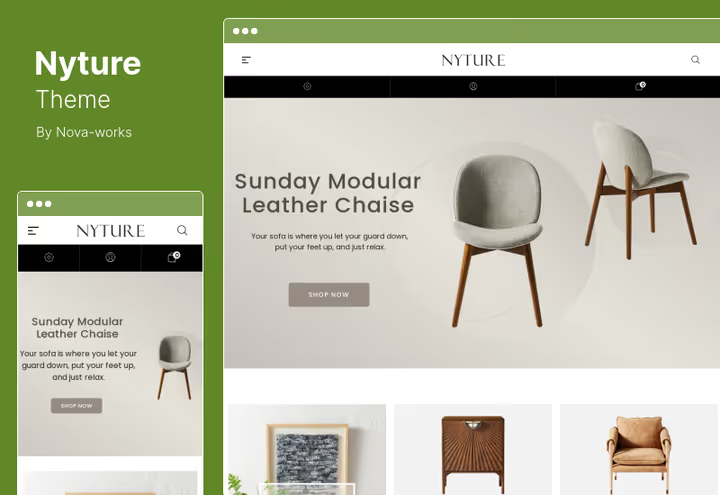
Nyture combines two frontend tools: Elementor and Live Customizer. Elementor handles content, customizer handles global settings.
Niches: eCommerce, fashion stores, furniture, megastores.
From WooCommerce features: additional widgets through product attributes, image swatches, product filter by color.
- Pros: Elementor + Live Customizer, color filter, one-click import
- Cons: fewer demos than leaders, average depth of WooCommerce integration
💵 $59 on ThemeForest, theme with lifetime updates.
18. Oxygen
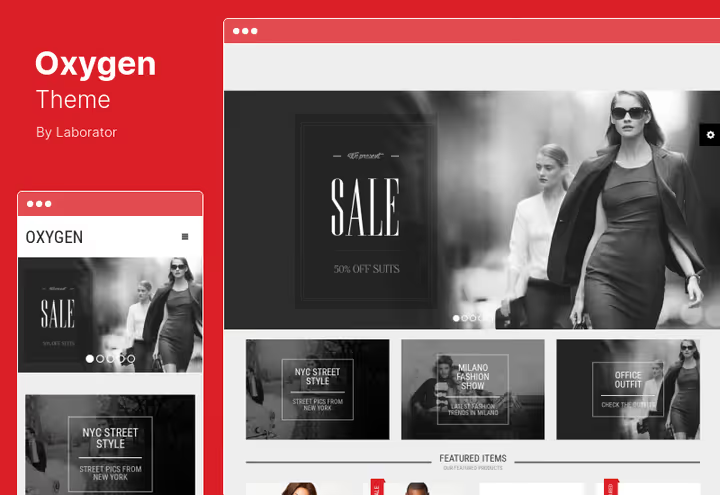
Oxygen, an elegant minimalist theme. Four header types, customizable fonts, theme panel options allow maintaining a unified style.
Stack: WPBakery for building layouts and Revolution Slider for effective product slideshows. Has a custom 404 page and payment method icons.
For a store with a small catalog, Oxygen is an excellent choice.
- Pros: elegant minimalism, Revolution Slider included, 4 header types
- Cons: WPBakery instead of Elementor, no Ajax cart
💵 $59 on ThemeForest, theme and 6 months free support.
Visual guide to designing a WooCommerce store page with Elementor in 2026. The video covers catalog setup, product card customization, working with filters and mobile adaptation.
⁉️🤔 FAQ
Which theme should I choose if the store is just launching and the budget is minimal?
You can build a professional store on WooCommerce without an astronomical budget: the majority of themes in the selection cost the same, which simplifies the choice. With a limited budget, pay attention to WoodMart: you get 80+ ready-made demos and the best documentation among competitors. For a multi-vendor marketplace, take Martfury, Dokan out of the box saves weeks of setup. If the store already has turnover, look at Porto or Flatsome with deep customization.
What's the difference between themes on Elementor and themes on WPBakery?
Elementor, a visual frontend builder: you edit the page and immediately see the result. WPBakery (formerly Visual Composer), a backend editor with frontend mode. For a store, Elementor is more convenient: faster to assemble a product card. But Salient with 300+ templates and Avada with its own builder based on WPBakery are also strong. The choice of builder is a matter of habit and specific tasks.
Is Elementor Pro needed to work with these themes?
Most themes from the list work with the free version of Elementor. But for full use, theme builder, dynamic widgets, popups, Elementor Pro is desirable. Three themes from the selection don't depend on Elementor Pro at all: Avada comes with its own builder, Shopkeeper and Salient offer WPBakery as an alternative.
How do I check that the theme won't slow down the store?
Open the live demo of the theme, run it through PageSpeed Insights. Look at FCP under 1.8s, TBT under 200ms, DOM size under 1500 nodes. Compare 2-3 candidates, the numbers will show the real picture. After installation, configure caching and image optimization.
Can I use one theme for two different stores?
According to the ThemeForest license, no. Regular License covers one project, meaning one domain. For a second store, you need a second license. Exception, multisite on WordPress: some themes, including Porto and Avada, allow using one license on subdomains of one network. Check the license description of the specific theme before purchase.
What to install on your store in 2026
The choice comes down to three scenarios. Niche store, sporting goods, furniture, interior, take Sportie, Auros or Hugge: they are tailored for a specific product type. Universal powerful theme, Porto, WoodMart or Flatsome. Porto for fans of Elementor: 90 demos, layout studio. WoodMart for those who want maximum ready-made solutions: 80+ demos, Mega Menu, AJAX shop and 100,000+ users. Flatsome for those ready to work with custom UX Builder for the sake of 232,000+ sales on ThemeForest. Budget start, practically any theme from the bottom half of the list.
Run live demos of 2-3 candidates on mobile, look at product cards and cart. Take the one where the interface is intuitively clear.

A professional team of writers and editors specializing in creating quality content.