













🎨 Generative art: best examples, tools and artists of 2026
Imagine: you do not paint a picture by hand, you write rules. An algorithm takes those rules and produces thousands of variations in seconds, including ones no human would have thought of alone. This is generative art, and in 2026 it is no longer just for programmers.
The barrier to entry has dropped to zero. p5.js delivers a working sketch in 15 minutes, Midjourney generates without a single line of code, and artists like Refik Anadol and Michael Hansmeyer prove that algorithmic works land in museums and at auctions.
Below: key names, battle-tested tools, and seven trends shaping generative art right now.
💡 Quick overview:
Understand the principle: the artist sets the rules of a system, the algorithm generates variations, you select the best and steer the process rather than every line
Meet the key names: pioneers Michael Noll and Brian Eno, contemporary practitioners Anders Hoff and Refik Anadol
Choose a tool that fits your goal: p5.js for the web, TouchDesigner for visual node-based programming without code, Midjourney for AI generation
Make your first sketch: open the p5.js Web Editor, write 10 lines of code, and see the result right in your browser
How generative art works: an algorithm instead of a brush
At its core is a simple idea. The artist creates a system of rules (an algorithm) that defines what is allowed: colors, shapes, composition principles. The computer follows those rules and produces a result. The key point: the artist does not control every line; the artist designs the process.
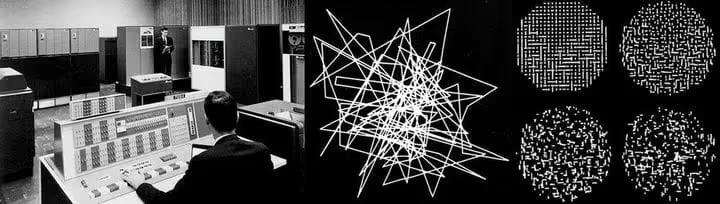
The pioneers were researchers at Bell Labs in the early 1960s. Michael Noll, one of the most active, called in 1970 for "a new generation of computer-artists." His words proved prophetic.
The most recognizable mathematical object in generative art is the Mandelbrot set. In 1979 Benoit Mandelbrot used computer graphics to visualize fractals and showed how simple rules generate visual complexity. This discovery changed our understanding of the machine's creative potential.
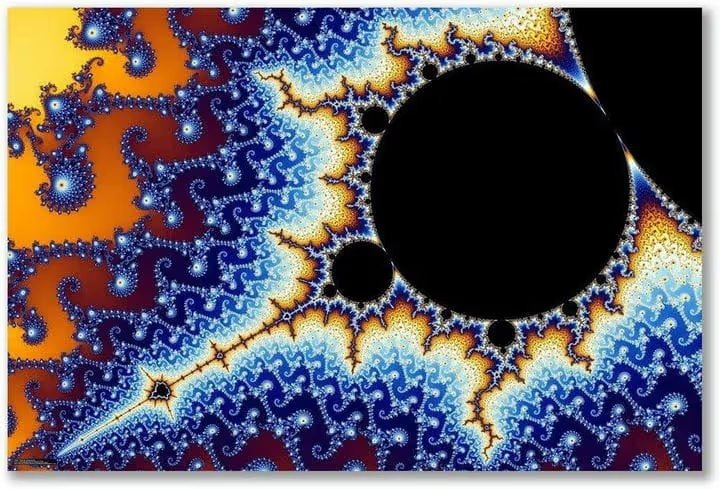
The Mandelbrot set expresses repeating patterns at every scale. No matter how far you zoom in, the same geometric patterns reappear. That property is what makes it a fractal and one of the most iconic images in generative art.
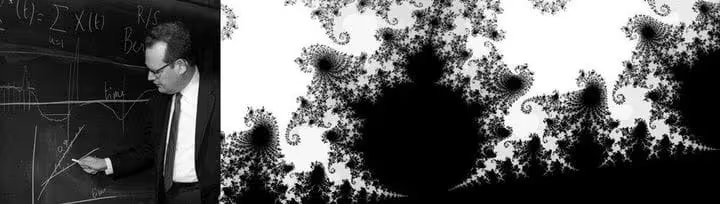
According to Roelof Pieters and Samim Winiger, cofounders of Creative.ai, the Mandelbrot set launched the "code art revolution" that continues today.
Notable generative art practitioners
Here are the artists whose work defines the genre in 2026.
Michael Hansmeyer: architecture born of algorithm
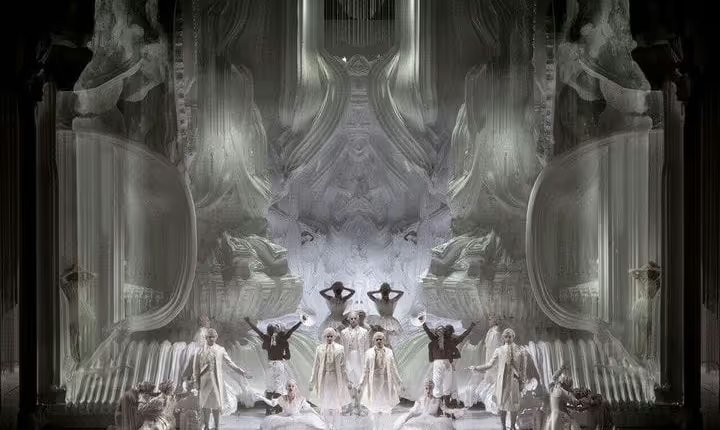
Swiss architect Michael Hansmeyer designs not the object itself but the process that creates it. His method: take a primitive shape and repeatedly apply a face-subdivision operation until an unpredictable structure emerges.

The set for Mozart's opera "The Magic Flute" (2018) was designed entirely algorithmically and manufactured through digital fabrication. The result: a space impossible to draw by hand.
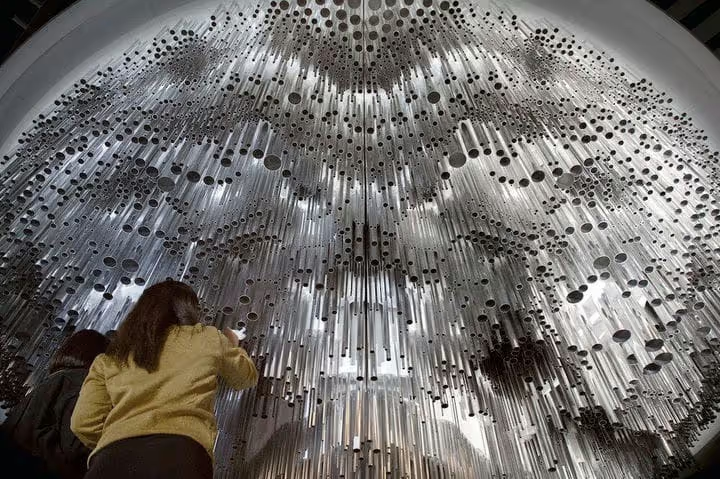
In the "Muqarnas" series Hansmeyer reinterprets Islamic decorative vaults through computational design, producing objects of extraordinary detail.
Anders Hoff: order on the edge of chaos
Anders Hoff (inconvergent) explores complex behavior in systems with simple rules. His method: start with an organized structure and gradually disrupt it, finding the sweet spot between recognizability and chaos.
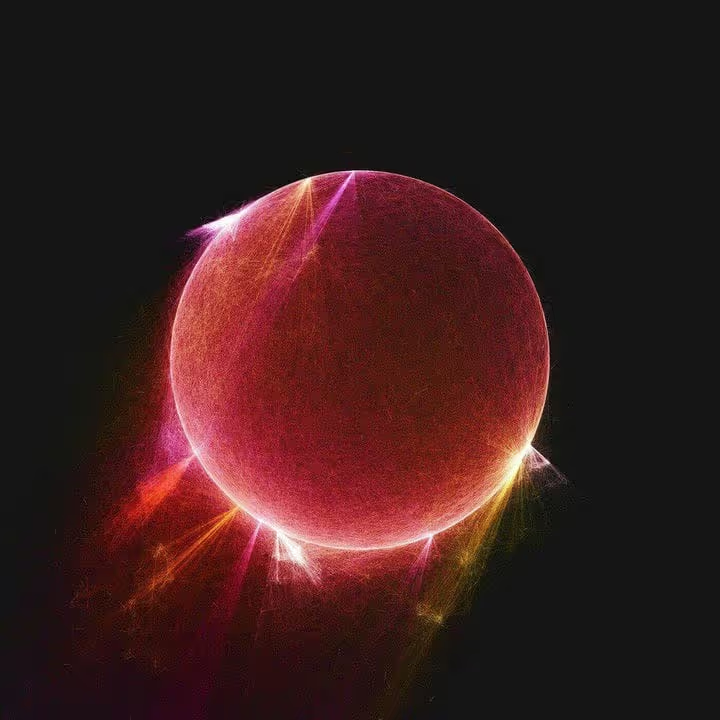
Hoff also experiments with pen plotters, creating physical drawings of algorithmic origin.
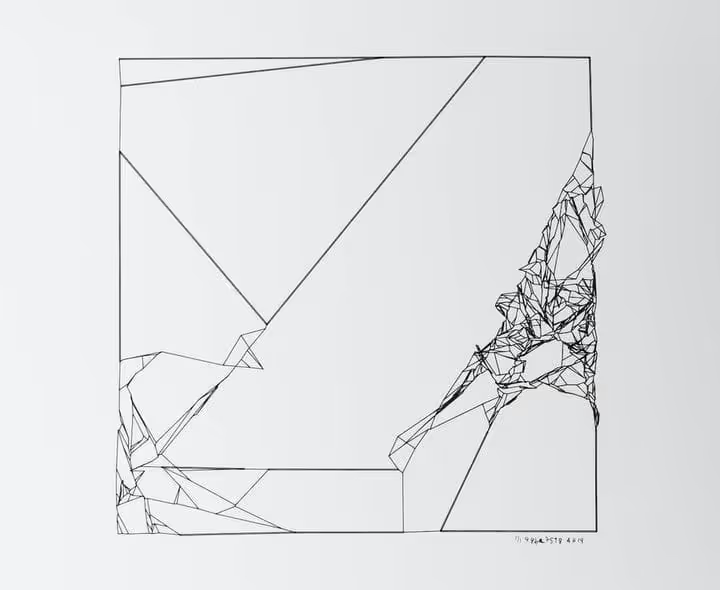
Mark J. Stock: nature meets computation
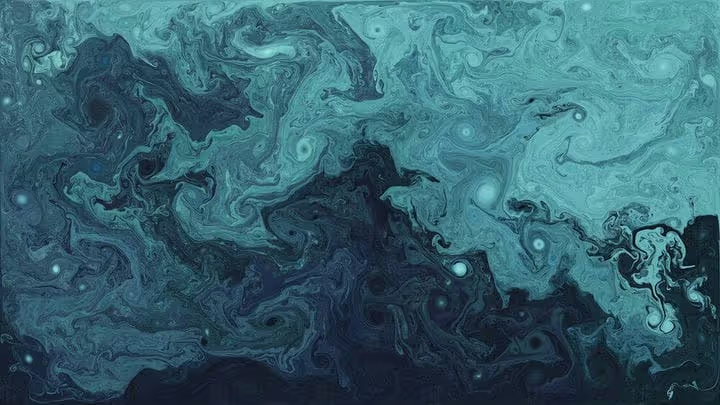
Mark J. Stock works at the intersection of organic and digital. In "Sprawl" he used a diffusion-limited aggregation (DLA) algorithm: the contrast between "artificial" order and "natural" growth became a central theme of his practice.
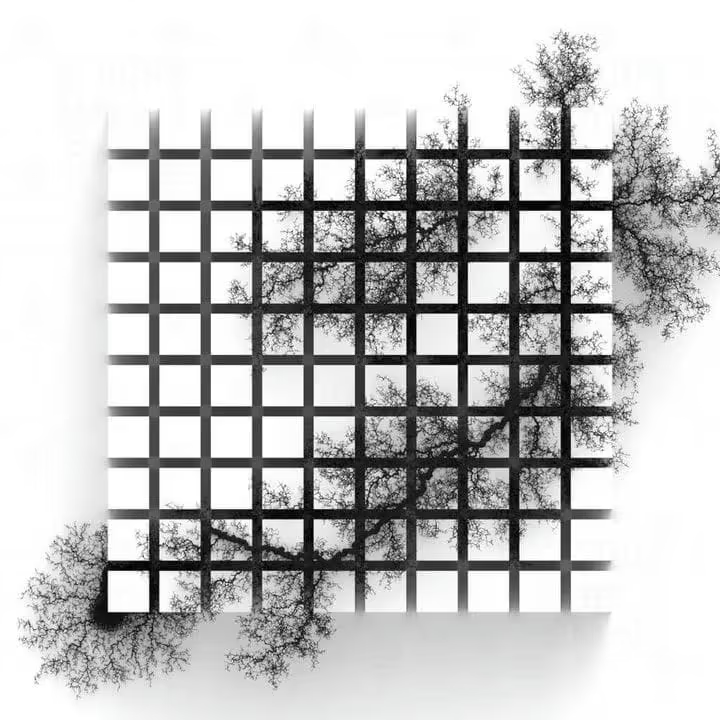
The work Gyre 35700: a meditation on the hierarchy of ocean currents and their effect on climate.
Katharina Brunner: generative art in R
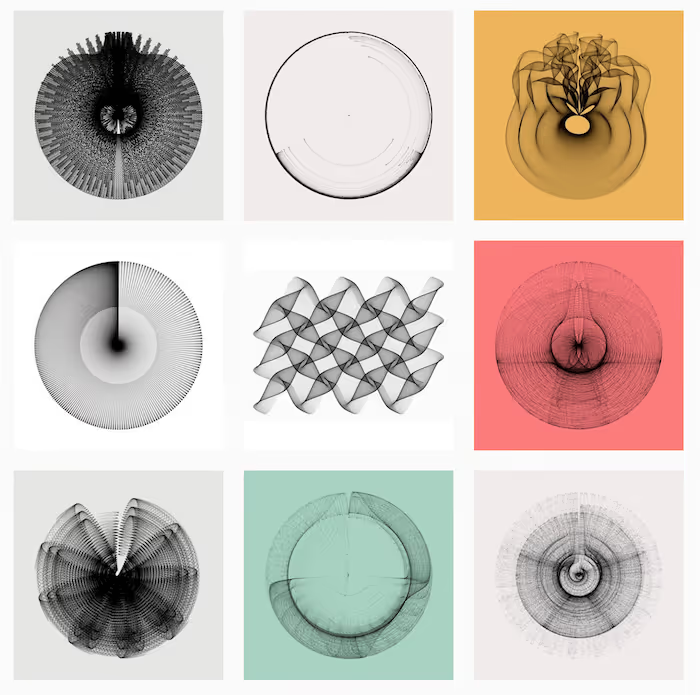
Katharina Brunner demonstrated that algorithmic art can be made in R, a language associated with statistics rather than creativity. Her generativeart package calculates the positions of thousands of points using a formula with random parameters. Every image is unique.
Jon McCormack and Andy Lomas: evolution in code
Jon McCormack in his installation "Fifty Sisters" algorithmically "grew" 50 plant forms from oil-company logos using artificial evolution. Andy Lomas explores morphogenesis (the growth of biological forms) through computer simulation of cellular structures.
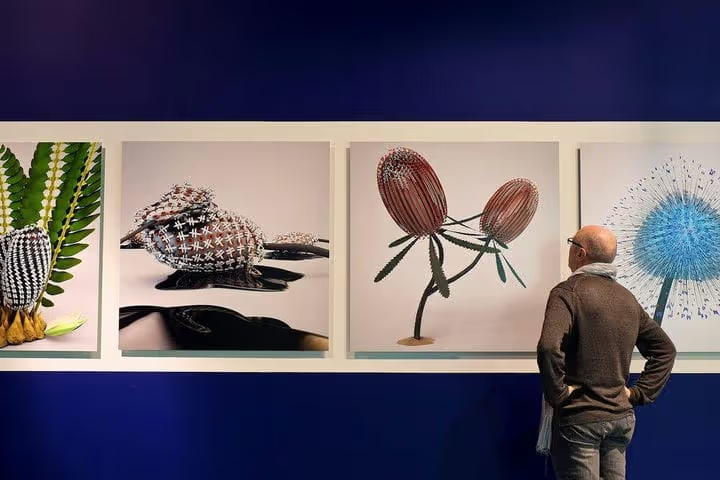
Lomas simulates cellular growth according to rules that resemble those found in nature. His morphogenesis simulations sit on the boundary between biology and art.
Manolo Gamboa Naon: algorithmic aesthetics
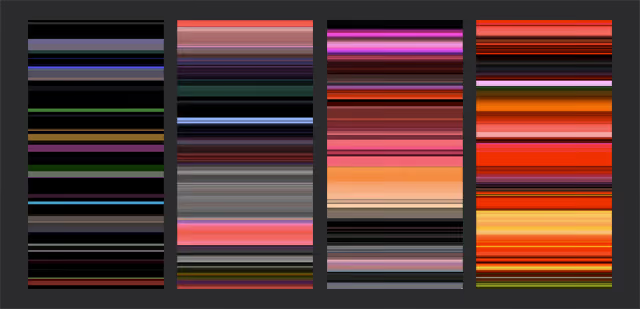
Argentine artist Manolo Gamboa Naon (Manoloide) creates vibrant abstract compositions in Processing. His digital canvas: a living space where code becomes a plastic instrument.
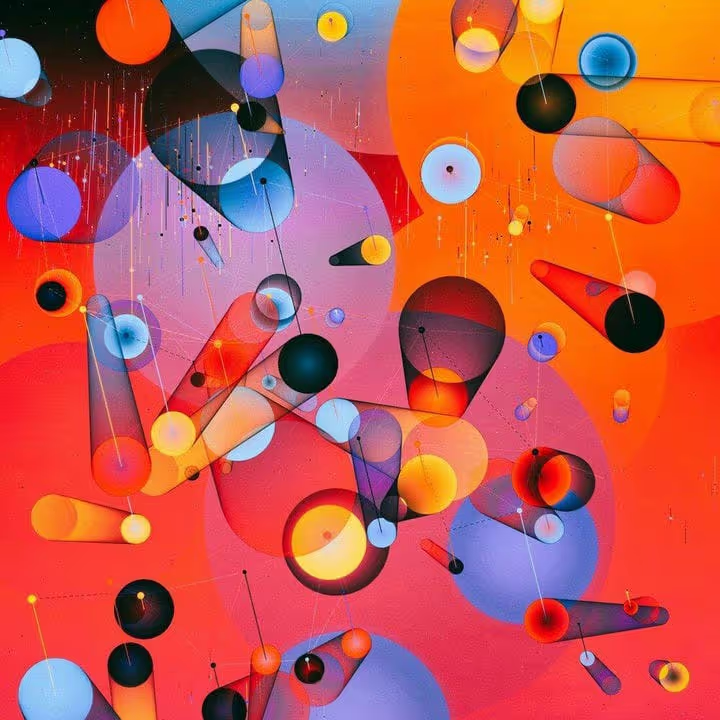
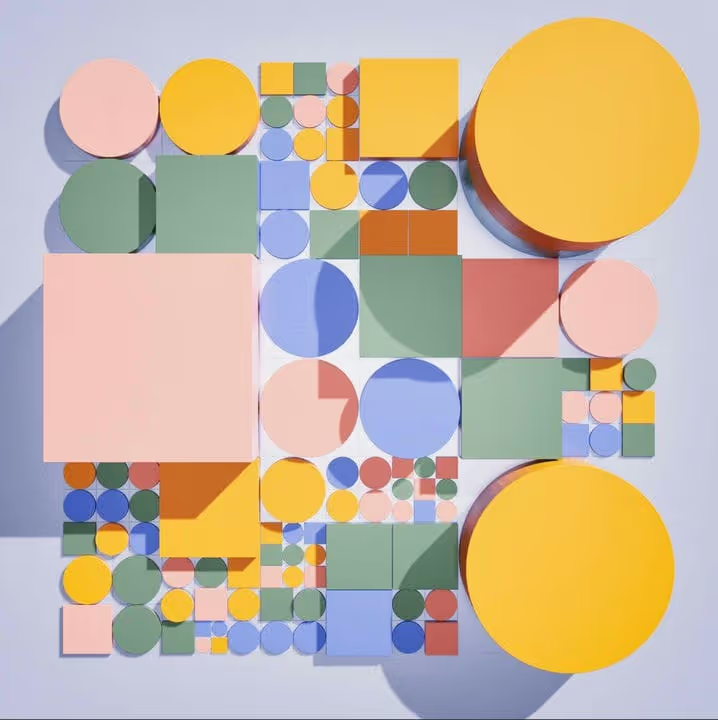
Each work is the result of simple rules interacting with randomness. The same starting parameters never yield the same result.
Brian Eno: generative music
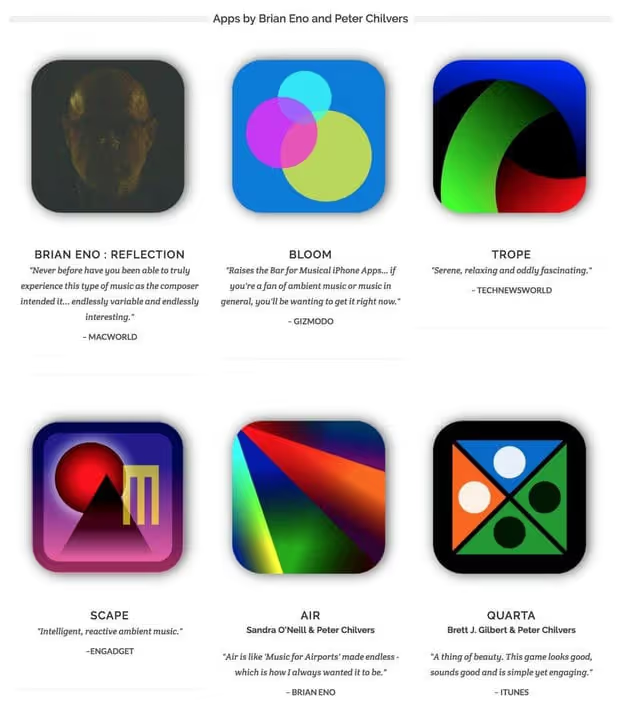
British composer Brian Eno has used algorithmic principles in music since the late 1990s. Together with Peter Chilvers he created apps where a musical composition never repeats.
Tools for generative art: what to choose in 2026
The right tool depends on your goal and background. Here is a quick guide.
Tool | Level | Highlight |
|---|---|---|
p5.js | Beginners | JavaScript, code in the browser, instant results |
Processing | Beginners and intermediate | The environment that started creative coding (v4, 2023) |
TouchDesigner | Intermediate | Visual node-based programming, no code required |
openFrameworks | Intermediate | C++ for installations and performance-critical projects |
Midjourney | All levels | AI generation without code, impressive results immediately |
Stable Diffusion | Intermediate | Open source, ControlNet for precise control |
OPENRNDR | Advanced | Kotlin, convenient for long-form generative projects |
For beginners: start with p5.js (JavaScript library by Lauren Lee McCarthy) or Processing (version 4 released in 2023). Both deliver results in the browser within minutes.
Intermediate: openFrameworks (C++) for installations and performance-critical projects. TouchDesigner for visual node-based programming: no code required. Nannou for those who prefer Rust.
Advanced: OPENRNDR (Kotlin), Cinder (C++), thi.ng (Clojure/ClojureScript), Hydra for live-coding shaders.
AI generators: Midjourney, Stable Diffusion (open source, ControlNet for precise control), DALL-E 3, Adobe Firefly. Art Blocks and fx(hash): marketplaces for generative NFTs where the algorithm creates a unique work at the moment of purchase.
Interactive generative tools
Electric Sheep, a project by Scott Draves: a collective intelligence of 450,000 computers creating endless abstract animation through genetic algorithms.
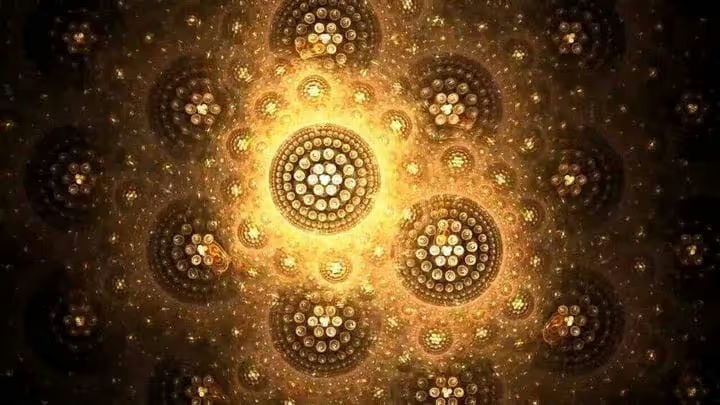
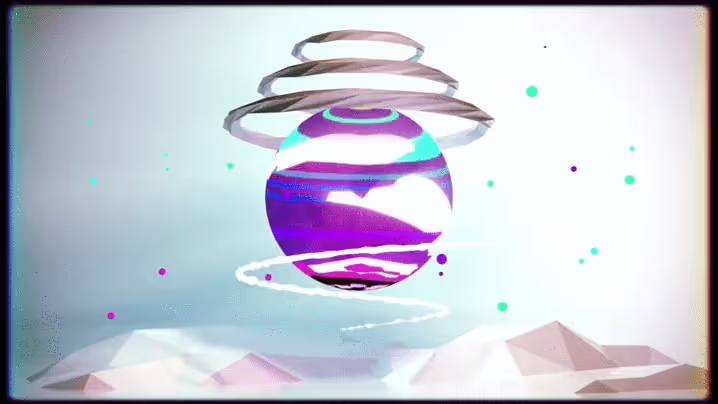
PANORAMICAL, a video game by Fernando Ramallo and David Kanaga: you enter an audiovisual world and shape it through a controller or MIDI device. The game spans 18 audiovisual dimensions: sound and graphics are algorithmically stitched into a single fabric.
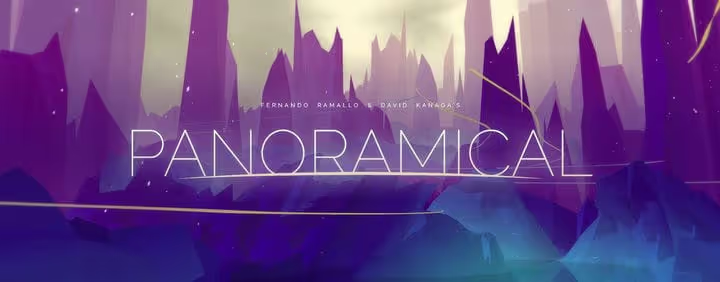
A standard gamepad changes generation parameters in real time: speed, color, shape density. Press a button, and the world transforms.
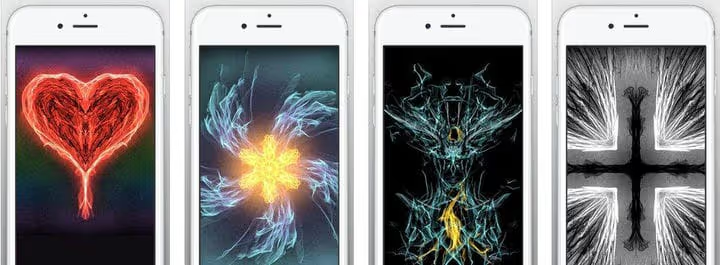
Silk on iOS: drag your finger, and mirror symmetry turns the gesture into an intricate pattern.
Generative design in industry: not just art
Generative methods have moved beyond galleries. Procedural modeling saves game studios hundreds of millions: instead of modeling by hand, developers set rules, and the algorithm generates variations automatically.
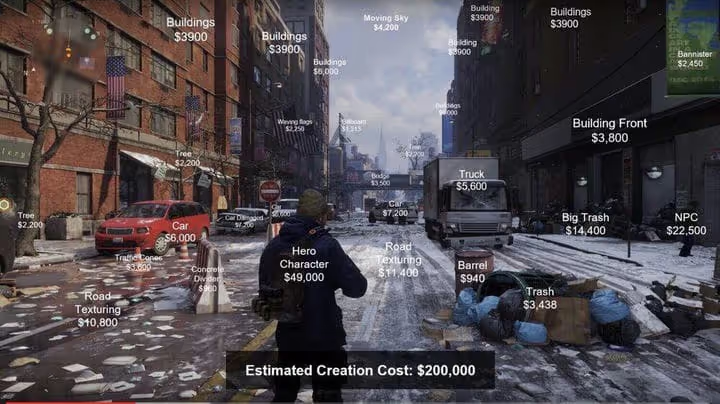
Anastasia Opara, a procedural-modeling instructor, discovered an unexpected effect: by defining an object's parameters precisely, she deepened her understanding of why something looks good. An algorithm forces you to state criteria explicitly.
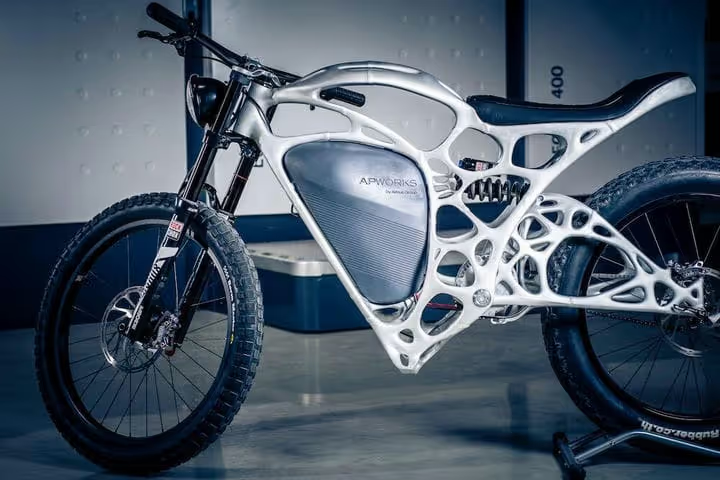
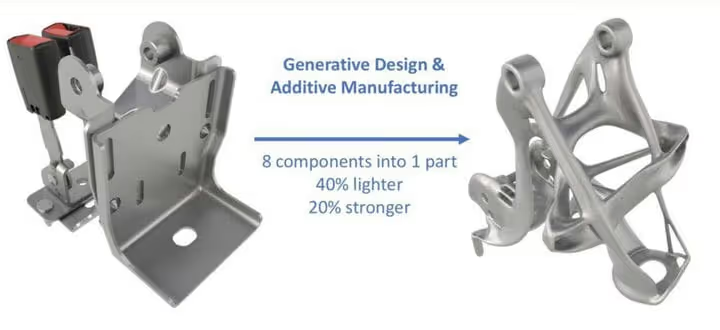
Autodesk uses generative design to optimize structures: a bicycle frame designed by algorithm became lighter and stronger than its human-designed counterpart.
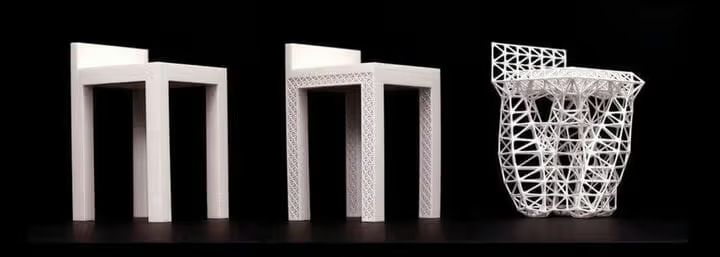
A chair designed by Autodesk's algorithm turned out to be 3.5 times lighter than the human-designed version while maintaining the same strength.
7 generative art trends in 2026
Here is where the field is heading right now.
AI co-authorship. Midjourney and Stable Diffusion are becoming prototyping tools for ideas. ControlNet enables precise compositional control.
Open source. openFrameworks, p5.js, Stable Diffusion: free tools accessible to everyone. The barrier to entry drops to zero.
Open datasets. Google Open Images holds millions of images; Kaggle and museum archives give artists a vast body of source material. The Art Institute of Chicago has released more than 50,000 works into the public domain.
Assistive systems. HumOn, Mubert, AIVA, Boomy make music creation accessible to non-musicians, much as Instagram made photography accessible to non-photographers.
GANs and creative adversarial networks. Machines do not just copy style; they introduce novelty. And they learn which novelty is useful.
Evolutionary algorithms. Natural processes (selection, mutation) are embedded in code, allowing "the wisdom of ages" to surface in new forms.
Educational platforms. The Coding Train on YouTube, freeCodeCamp, LinkedIn Learning: the path from beginner to confident practitioner is shorter than ever.
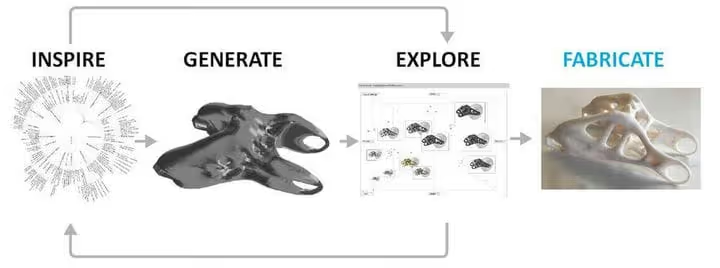
All these vectors converge on one point: "democratization of creativity." The cost of tools drops to zero, the time from beginner to confident practitioner shrinks, and the audience for generative art extends beyond galleries.
A 15-minute dive into generative art
A hands-on introduction from a creative coder: what generative art is and how to start right now.
⁉️🤔 Frequently asked questions
How long does it take to learn to create generative art?
First results: the very first day. p5.js delivers a working sketch in 15-30 minutes. Reaching exhibition level takes 6-18 months of practice. AI tools and visual environments let you start without code.
Do I need to know programming?
No. TouchDesigner and Cables.gl connect visual blocks; AI generators are controlled by text. But JavaScript or Python will unlock your own algorithms, not just ready-made tools.
What are the most popular tools in 2026?
Beginners: p5.js and Processing. Intermediate: TouchDesigner and openFrameworks. AI: Stable Diffusion with ControlNet and Midjourney. More details: creative coding tools overview from Lumitree.
How does generative art differ from AI art?
Generative art: any art created through an autonomous system (from Mandelbrot fractals to procedural architecture). AI art: a subset of generative art based on machine learning. Artists continue to work with mathematical algorithms without AI.
Can you make money from generative art?
Yes. Art Blocks and fx(hash) have sold generative NFTs for hundreds of millions of dollars. Sotheby's and Christie's held specialized digital-art auctions in 2024-2025. Creative-coding skills are in demand in games, film, and advertising.
Where can I find ideas and inspiration?
Twitter/X (#GenerativeArt, #CreativeCoding), Reddit r/generative, fx(hash), and Art Blocks. Offline: Ars Electronica in Linz, digital sections of the Venice Biennale. The best approach: take an open sketch and change the palette, shape, and rules.
Where to start with generative art in 2026
Generative art in 2026: it is not a niche hobby for programmers but a full-fledged creative discipline with a low barrier to entry and a growing market. The path you choose depends on what resonates with you:
- Want to draw with code: start with p5.js or Processing. Minimal boilerplate, instant results in the browser.
- Prefer a visual approach: TouchDesigner or Notch Builder, where you drag nodes instead of writing code.
- Interested in AI: Stable Diffusion with ControlNet for maximum control or Midjourney for quick results.
- Need maximum performance: openFrameworks (C++) or Nannou (Rust).
- Just want to try it: open any tutorial from The Coding Train on YouTube, and in 20 minutes you will have your first working sketch.
Do not wait for the perfect moment. Open the p5.js Web Editor right now and write ellipse(mouseX, mouseY, 50, 50). That is generative art: simple rules, unexpected results. Let us know in the comments which tool or artist from this article grabbed your attention.

A professional team of writers and editors specializing in creating quality content.