













 AIIllustrative image: AI-generated
🚀 50 best websites for freelancers: where to find remote work in 2026
The freelance market is no longer a bulletin board. According to Upwork statistics, major platforms have processed over $4 billion in payments, and the number of independent specialists in the US has exceeded 72 million people. Some platforms take 20% commission but provide a ready client base. Others promise 0% fees but require a portfolio. Still others operate as closed clubs with multi-stage selection.
A beginner without case studies loses months on tenders where their rate gets undercut by lowballing. An experienced specialist gets stuck on a general exchange where the average check is three times below market rate. The niche and level of platform for your profile is the difference between endless scrolling and a stable flow of adequate projects.
Below are 50 vetted platforms across ten specializations. For each, we list real commissions, the entry model, and the main catch that marketing pages stay silent about.

💡 Quick overview:
- Choose two to three platforms for your specialization and experience: beginners should start with Fiverr+Freelancer, experienced specialists should add a niche network like Toptal or Codeable
- Fill out your profile completely on each platform with portfolio, hourly rate, and detailed experience description so client filters can find you
Comparison table: top 10 universal platforms
Platform | Model | Commission | Average rate (hour) | Entry barrier |
|---|---|---|---|---|
Upwork | Tender + invitations | 20% → 10% → 5% | $25-65 | Low |
Fiverr | Gigs from $5 | 20% flat | $15-80 | Low |
Freelancer | Tender | 10%-20% | $15-50 | Low |
Toptal | Top 3% selection | Built into price | $60-150+ | Extremely high |
FlexJobs | Subscription (board) | $0 commission | $20-60 | Vacancy verification |
SolidGigs | Aggregator (subscription) | $0 commission | $25-75 | Low |
PeoplePerHour | Tender + gigs | 3.5%-5% | $20-60 | Low |
Guru | Tender | Free (basic) | $15-45 | Low |
Twine | Criteria matching | Built in | $20-50 | Medium |
Contra | Portfolio + direct hire | 0% | $40-100+ | Medium |
Universal freelance exchanges
Platforms where clients from any niche post projects and freelancers submit applications or list gigs. Suitable for starting out and testing the market.
1. FlexJobs
FlexJobs is not just a bulletin board. It's a hub of verified vacancies: remote work, part-time, project work. The catalog has more than 50 career categories, from entry-level to executive positions. The main advantage is that each vacancy goes through manual moderation. No scam listings that plague open boards. Over 25,000 active positions hang at any given time. According to FlexJobs data from February 2026, the number of freelance vacancies in the database grew by 22% over the last six months.
- Pros: manual moderation of all vacancies (protection from scammers), company cards with ratings, built-in portfolio and filter notifications
- Cons: paid subscription for job seekers, no direct tender, you respond rather than negotiate
- Price: subscription with annual payment
2. Fiverr
Fiverr flipped the freelance model: here the contractor doesn't search for the client, the client chooses a ready gig with a fixed price. You can start with micro-projects and gradually build up your portfolio to orders of $500-1000+. The platform is especially strong in creative and digital niches: design, copywriting, animation, video, development. According to Fiverr data, the number of active buyers exceeded 830,000.
- Pros: no need to negotiate and make bids, free training courses within the platform, suitable for starting with zero portfolio
- Cons: commission on each gig, one of the highest in the industry, high competition in popular categories
- Price: fixed commission from contractor
3. SolidGigs
SolidGigs is not a classic exchange but an aggregator. The platform's team combs through dozens of job boards daily and manually selects the best applications for your profile. You get a ready selection in your dashboard and save hours on scrolling.
- Pros: time savings (instead of 10 boards, one feed), library of courses and templates within subscription, no commission on earnings
- Cons: not suitable for those who want to see all available vacancies rather than a selection, designed for experienced freelancers with portfolios
- Price: monthly subscription
4. Upwork
Upwork is the world's largest freelance exchange, the result of oDesk and Elance merging in 2015. It covers all imaginable niches: from copywriting to machine learning. You create a profile with portfolio and hourly rate, respond to projects or receive invitations from clients. Built-in time tracker, secure payments through escrow, and rating system make the platform an industry standard. Total payments to freelancers exceeded $4 billion in 2025, with over 18 million freelancers from more than 180 countries registered on the platform.
- Pros: maximum coverage, tens of thousands of active projects daily, secure payment system protecting both sides, accurate time tracker for hourly contracts
- Cons: high commission for small amounts (decreases as revenue from client grows), difficult for beginners to get first order without rating
- Price: commission decreases from 20% to 5% as earnings from client grow
5. Toptal
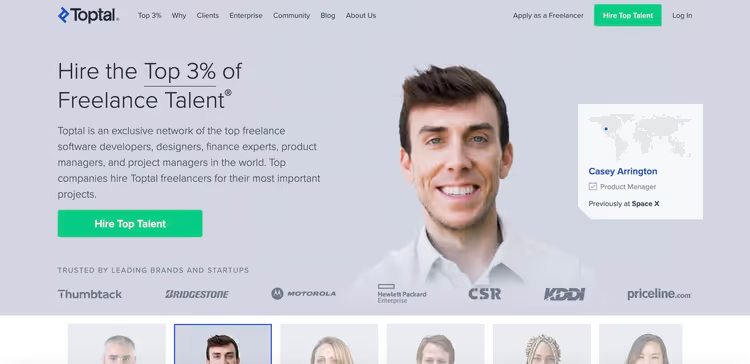
Toptal is a premium network for the top 3% of freelancers worldwide. Entry through multi-stage selection: English proficiency tests, technical interview, trial project. Less than 3% of applicants pass. After selection, the platform matches projects from prestigious clients. Among customers: Airbnb, Zendesk, Shopify. Average duration of full screening process: 3-8 weeks, but average project matching time after passing selection is less than 24 hours.
- Pros: guaranteed high rates, projects from top companies rather than micro-businesses, fast matching after passing selection
- Cons: strict selection (less than three percent of applicants pass), not for beginners, requires confirmed portfolio
- Price: commission built into price (client pays Toptal, freelancer receives their rate)
6. Indeed
Largest job aggregator. "Remote" filter yields thousands of positions. Free, built-in resume builder.
- Pros: free access, huge volume of vacancies
- Cons: no built-in transaction protection, lots of noise
- Price: free
7. Freelancer
Oldest exchange with 65 million users. Classic tender model.
- Pros: many projects, contests, mobile app
- Cons: confusing commission system, free account limited
- Price: commission depends on account type
8. Guru
Simple exchange with escrow payments. Minimal entry barrier.
- Pros: many payment methods, free basic account
- Cons: fewer projects, paid features
- Price: free / paid tiers available
9. Twine
Creative niches: music, animation, design, video. Matching by 10+ criteria.
- Pros: quality matching, secure payments
- Cons: few tech projects, paid subscription
- Price: monthly subscription
10. Contra

Modern alternative to Upwork with zero commission. Model: freelancer creates portfolio page, client finds them through search or gets system recommendation. No bidding and tenders, direct hire. Contra earns on premium features for freelancers, not commission on earnings.
- Pros: zero commission, you receive full amount, clean modern portfolio, growing client base from tech sector
- Cons: fewer projects than Upwork, not for beginners without polished portfolio
- Price: free (premium features optional)
Writing exchanges and aggregators
For writers, copywriters, and editors, general exchanges work poorly: lowballing, irrelevant vacancies, competing with designers for client attention. Below are specialized platforms where clients specifically look for texts.
11. Contena
Writing job aggregator by profitability. Courses, tracking, support.
- Pros: profitability filters, training
- Cons: expensive subscription
- Price: annual subscription
12. Blogging Pro
Blogging vacancies: content, editing, journalism.
- Pros: narrow specialization
- Cons: modest vacancy volume
- Price: monthly subscription
13. Contently
Elite network for premium clients: Google, Walmart, Marriott.
- Pros: Fortune 500 clients, high rates
- Cons: strict portfolio selection
- Price: depends on project
Graphic design
Designers need a portfolio that clients see. These platforms are either galleries with hiring or contest platforms with cash prizes.
14. Behance
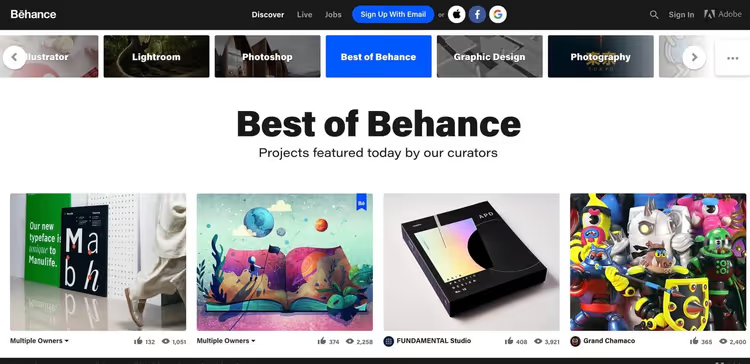
Largest creative portfolio network (Adobe). Public showcase for designers.
- Pros: huge audience, Adobe ecosystem
- Cons: no transaction system
- Price: free
15. 99designs
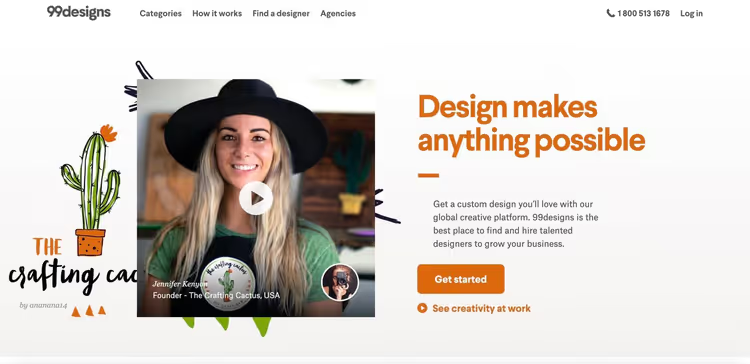
Contest model: client pays prize, designers compete. 90+ categories.
- Pros: large prizes
- Cons: spec work
- Price: prizes vary
16. Dribbble
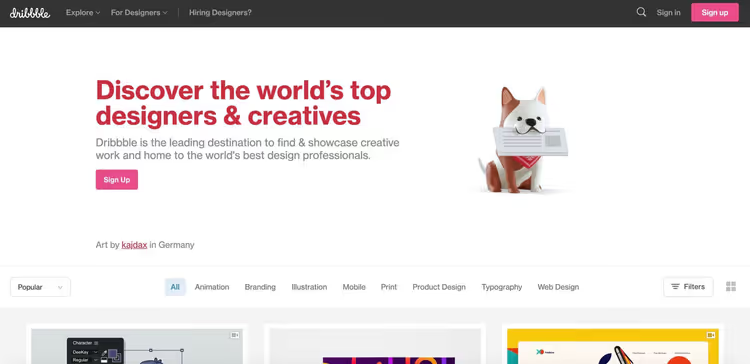
Shot platform. Feedback from community and clients.
- Pros: UI/UX focus, active community
- Cons: paid account for shots
- Price: free / paid subscription
Marketing
Marketing vacancies for freelancers: SEO, content strategy, paid traffic, social media.
23. PeoplePerHour
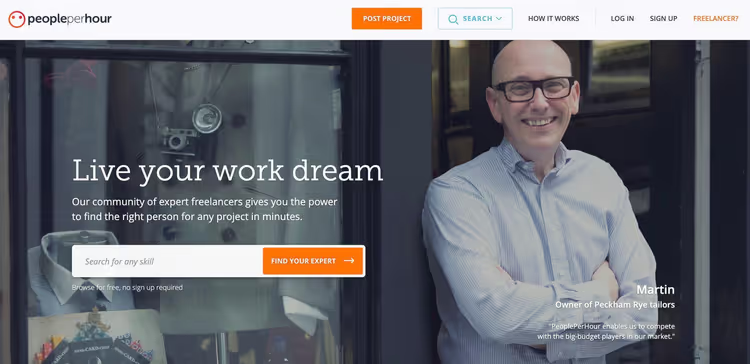
British platform for SEO specialists, content marketers, PPC specialists, and developers. Freelancer submits application with price, client chooses. To protect contractors from fake clients, the platform collects prepayment from client.
- Pros: prepayment from client, protection from scammers, strong positions in marketing niches, convenient project management system
- Cons: commission higher than Contra, some vacancies UK-only
- Price: percentage of transaction
24. Remotive
Remotive is not just a board but infrastructure for remote workers: newsletter with vacancies twice a month, remote work guides, community. Vacancies divided by categories with company contacts.
- Pros: useful content beyond vacancies, free access, active remote worker community
- Cons: not purely freelance, many full-time remote positions, fewer marketing vacancies than universal exchanges
- Price: free
Development and web development
Developers need platforms where clients understand technical specifics and don't try to order "a site like Amazon" for pennies. Here are platforms with tech screening, premium matching, and adequate rates.
25. Aquent
Aquent is a global workforce solutions company connecting creative and digital specialists with major brands. It's a staffing agency that places designers, developers, marketers, and copywriters in temporary and permanent positions. Among clients: NASA, Google, Sanofi.
- Pros: projects from corporate clients, full legal and payment support, no need to negotiate
- Cons: selection, not all candidates pass screening, focus on US and Western Europe
- Price: free for job seekers (commission built into client rate)
26. Lorem
Lorem is a platform for web developers and designers working without subscription fees. You can take projects creating sites on WordPress, Shopify, landing pages. All freelancers pass verification before admission.
- Pros: no monthly fee, fast client communication, quality pool of verified specialists
- Cons: not for all development types, focus on web, payout size more modest than premium platforms
- Price: payment per project
27. Gun.io
Gun.io is a premium platform for experienced developers. Among clients: Tesla, Cisco. The platform verifies both company and freelancer: technical interview, experience confirmation. After onboarding, individual projects with high rates.
- Pros: work with industry giants, full support from start to delivery, high rates
- Cons: only for experienced developers, lengthy onboarding process
- Price: hourly payment (freelancer receives their rate)
28. Gigster

Gigster from Silicon Valley specializes in custom app development. Uses AI for matching freelancers with projects. Clients are tech companies needing fast team assembly for a product.
- Pros: projects from tech companies, AI matching saves time, fast project launch
- Cons: strict selection, only experienced engineers, project work rather than hourly
- Price: payment per project
29. Talent Cupboard
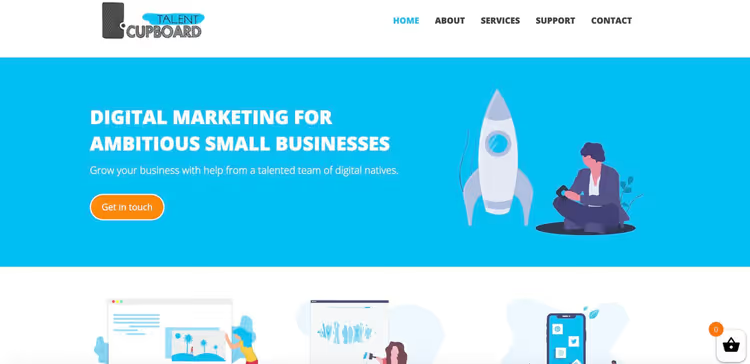
Talent Cupboard is a portfolio platform for developers. You create a digital resume, clients browse profiles and invite to projects. Supports modern stack: frontend, backend, mobile development.
- Pros: digital resume instead of boring PDF, free for job seekers, open to developers of any level
- Cons: smaller client base than Upwork, passive model, you wait to be found
- Price: free
30. Codeable
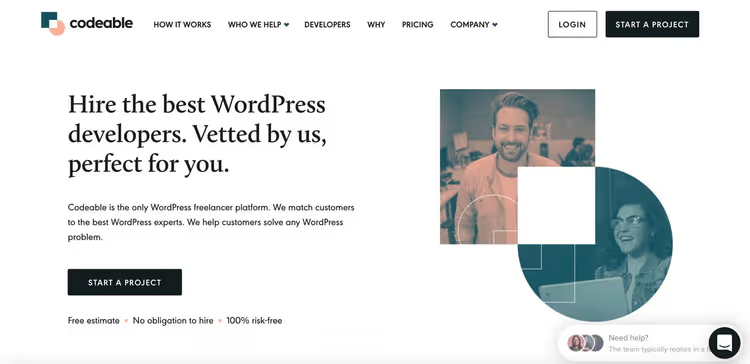
Codeable is an exclusive platform for WordPress developers. Algorithm matches freelancer to project automatically, client doesn't need to browse dozens of applications. Developer sets their price and works directly with client.
- Pros: WordPress only, deep specialization, system matches you to project, consistently high rates
- Cons: strict selection, only experienced WP developers, not for full-stack outside WordPress
- Price: hourly payment
Photography
Freelance photographers need not so much a tender as access to a client with specific assignment: real estate shooting, events, stock series.
31. Craigslist
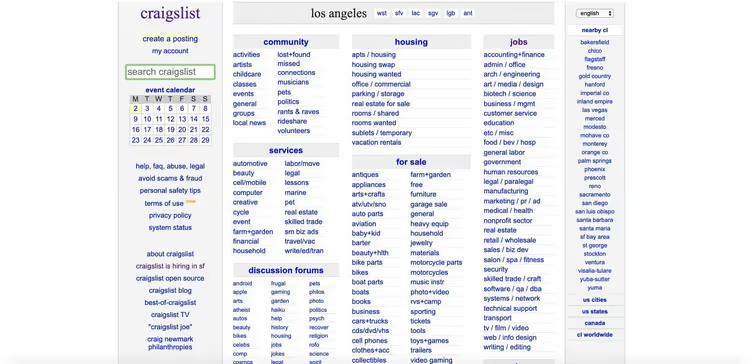
Craigslist remains a working tool for photographers in the US. "Gigs" section contains local orders for shooting: real estate, events, family photo sessions. Works best in large cities, but there are positions for remote processing too.
- Pros: free access, local orders, live shoots, minimal entry barrier
- Cons: need to filter spam and scammers, no payment protection
- Price: free
32. Airbnb

Airbnb hires photographers on contract basis for shooting real estate properties. Requirements are high: image quality at studio processing level. Photographer processes shots independently and delivers ready package.
- Pros: good payment per package, interesting locations, stable order flow in tourist regions
- Cons: real estate shooting only, narrow specialization, need strong portfolio for selection
- Price: payment per property
33. Photography Jobs Central
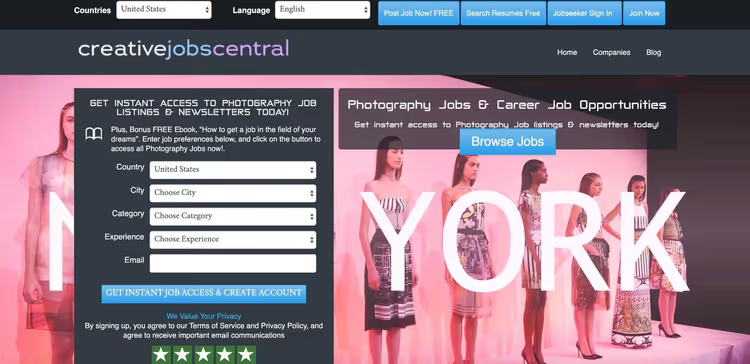
Specialized board for photographers with portfolio verification at registration, which reduces competition with amateurs. 24/7 support.
- Pros: only qualified specialists, less competition, 24/7 support
- Cons: not for beginners without portfolio, fewer vacancies than general boards
- Price: free
34. Journalism Jobs
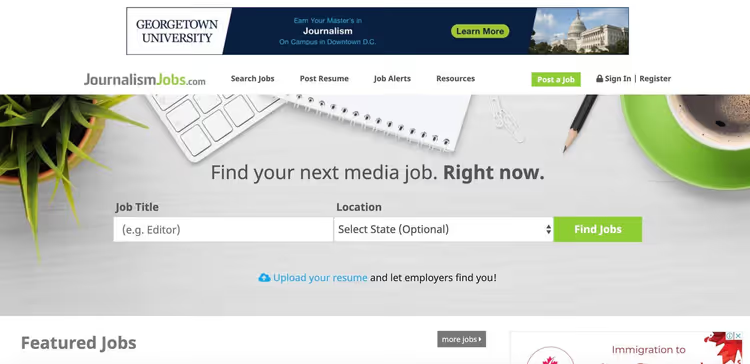
Platform with recommendations from The New York Times and The Wall Street Journal. Specializes in media vacancies: photojournalists, operators, photo editors. Among employers: ESPN, National Geographic, CNN.
- Pros: prestigious media employers, all types of media positions, resume database
- Cons: high competition, mainly American market
- Price: free for job seekers
35. Photography Job Online

This is not so much a job board as a portfolio platform with ability to sell shots. You place your best photos, set price, receive payments. Useful for photographers who want to monetize their archive.
- Pros: passive income from stock sales, market analytics on what sells, ability to maintain photo journal
- Cons: paid subscription, not for those seeking active shooting orders
- Price: monthly subscription
Virtual assistant
Virtual assistants are one of the fastest growing freelance segments. Companies increasingly hire VAs for data entry, moderation, support, and social media management.
36. Belay

Belay specializes exclusively in remote work and virtual assistants. Positions: executive assistants, web specialists, accountants. Hiring process includes several interviews and takes 4-5 weeks, output is stable contract.
- Pros: strong corporate culture, positions of different levels (from beginner to expert), stable workload
- Cons: lengthy onboarding process, contract model rather than one-off gigs
- Price: hourly payment
37. Zirtual
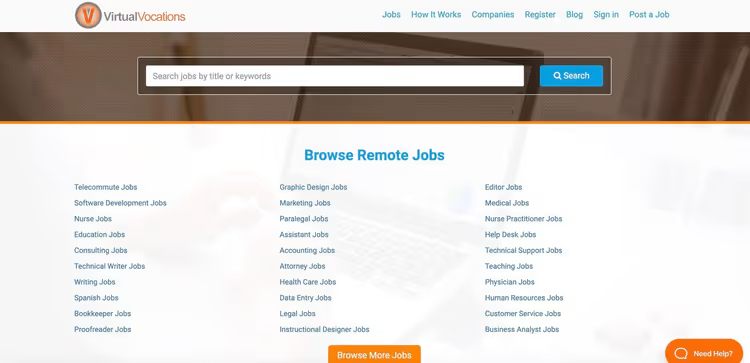
Zirtual matches assistants to specific clients for long-term cooperation. Positions: data entry, marketing, business support, website maintenance.
- Pros: long-term contracts, stability, high earning potential, professional community
- Cons: paid platform for clients, fewer orders, selection, not everyone gets accepted
- Price: free for freelancer
38. Time Etc.
On the market for over 10 years, mentioned in Forbes, Telegraph, The Guardian. Offers positions for virtual assistants with curator-manager. Free trial version for clients.
- Pros: reputation and years on market, support of dedicated manager, access to well-known clients
- Cons: selection, competition for positions, fixed rates
- Price: hourly payment
Time Etc.
39. Amazon Mechanical Turk
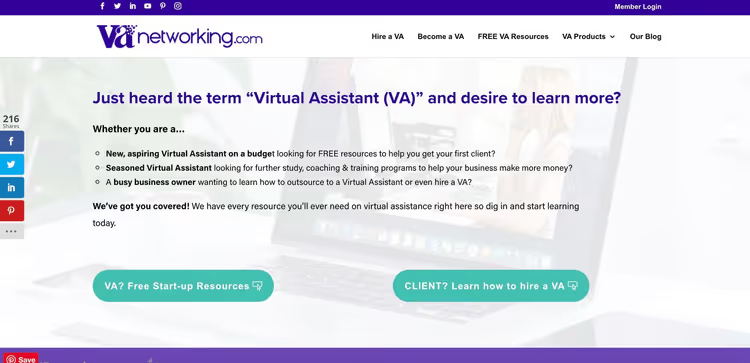
MTurk is a micro-task platform from Amazon. VA positions include: data collection, categorization, content moderation, creating descriptions, surveys. You can take tasks in batches and complete anytime.
- Pros: instant start, no selection, flexible schedule, 24/7 tasks, variety of assignments
- Cons: low payment per task unit, commission for contractors
- Price: percentage of earnings
40. VA Network

Job board plus social network for virtual assistants. Instead of tender, matching by skills and experience. More than half of positions on platform are pure VA work. Free membership.
- Pros: free membership, networking with industry experts, matching instead of bidding
- Cons: fewer vacancies than universal exchanges, VA positions only, narrow niche
- Price: hourly payment
41. Fancy Hands

Fancy Hands hires VAs for everyday business tasks: calls, meetings, data entry, bookings. There are positions with managerial slant for experienced assistants. Main requirement: fast internet and basic software proficiency.
- Pros: flexible work deadlines, variety of tasks, not just data entry, opportunity to grow to manager
- Cons: paid subscription for task access, unstable flow, depends on season
- Price: free for freelancer
Video editing and post-production
Video editors need specialized platforms where client understands difference between "quick splice" and "post-production". General exchanges lose here to niche networks.
42. Mandy
Mandy is a well-known platform for video and film professionals. Vacancies: editing, post-production, VFX, animation. Competition is high, but projects are professional.
- Pros: professional projects from studios and productions, free trial version, narrow specialization, video/film only
- Cons: high competition, thousands of profiles, paid subscription after trial period
- Price: monthly subscription
43. ProductionHub
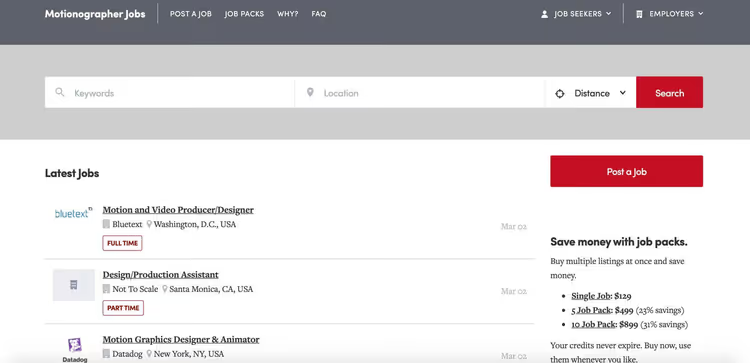
Leading platform for video production: from freelance to full-time. Many specialists find work in major TV networks and studios through ProductionHub. Suitable for both beginners (internships) and experienced specialists.
- Pros: access to TV networks and studios, internships for beginners, extensive client base
- Cons: paid subscription, high competition for top projects
- Price: monthly subscription
44. Cinecaster
Cinecaster focuses on film production, animation, and visual effects. Positions: generalist, motion designer, VFX artist.
- Pros: work with renowned animators and art directors, narrow specialization, animation/VFX, professional community
- Cons: not for classic video editing (weddings/corporate), limited number of positions
- Price: free for job seekers
45. Working Not Working
Elite creative network uniting top talent: directors, copywriters, video editors, photographers. To enter the community, you need to apply and pass selection. Talent shop for Apple, Google, Nike.
- Pros: networking with industry's best, projects from top brands, ability to choose interesting projects
- Cons: strict selection, not everyone passes, no guaranteed workload after registration
- Price: depends on project
Sales
Freelance in sales is a relatively new niche. Companies hire freelance sales specialists for specific products or segments.
46. ZipRecruiter
One of the recruiting market leaders with AI matching of resumes and vacancies. You fill out profile, system selects suitable positions and sends notifications. Free 4-day trial version.
- Pros: AI selection, system finds positions itself, notifications about new vacancies, information mailings
- Cons: paid subscription after trial period, many full-time positions, need to filter
- Price: free 4-day trial, then subscription
47. Red Hat
Red Hat is not just a Linux company but also a platform for hiring freelance sales specialists. Focus on B2B sales in tech sector. Freelancers work with well-known brands through partner network.
- Pros: career growth within partner network, flexible environment, strong brand on resume
- Cons: tech B2B sales only, selection, not all applications approved
- Price: depends on subscription package
48. Skip The Drive
Remote vacancy aggregator with advanced verification system. Sales positions divided by categories, filtered by date, relevance, and location. Combines vacancies from several boards in one interface.
- Pros: no registration needed for viewing, verified vacancies, anti-spam filter, convenient filters
- Cons: not purely freelance, many remote full-time, fewer sales vacancies than ZipRecruiter
- Price: free for job seekers
Customer support
Support is one of the most accessible niches for starting in freelance. Only empathy, literate communication, and problem-solving skills needed.
49. Working Nomads
One of the first platforms for digital nomads. Posts vacancies not requiring physical presence: support, moderation, client work. Convenient navigation and variety of positions.
- Pros: variety of support vacancies, simple interface, free access for job seekers
- Cons: fewer vacancies than Indeed/Upwork, no built-in payment protection
- Price: free for job seekers
50. Virtual Vocations

Remote work platform with more than 10,000 corporate listings. When registering, you get email notifications as soon as a vacancy matching your profile appears. Positions from entry to expert level.
- Pros: good vacancy filters, positions for all experience levels, email notifications about new vacancies
- Cons: paid subscription for job seekers, competition on popular positions
- Price: monthly subscription
⁉️🤔 Frequently asked questions
Which platform should a beginner without portfolio start with?
Fiverr is the best entry point. You list affordable gigs, complete first orders, get rating and first reviews. After that you can move to Upwork with already live portfolio. Alternative: Freelancer with free basic account, but there you need to actively negotiate for each project.
How much can you realistically earn on freelance in 2026?
Realistic range for beginner: $500-1500/month after 3-6 months of regular work. Experienced specialist in development or design on Toptal/Gun.io: $7000-12,000/month at full capacity. According to Upwork data for 2025, total earnings of platform freelancers exceeded $4 billion. Main factor is not platform but specialization and ability to sell skill.
What commission should you factor into price?
Main models: Upwork takes commission that decreases as earnings from client grow, Fiverr takes fixed commission, Freelancer has multi-tier rates, Guru is free on basic plan, Contra takes no commission. With serious turnover, commission difference is substantial. Therefore don't ignore zero-commission platforms (Contra, SolidGigs) if they fit your niche.
Is it worth paying for subscription on aggregators like SolidGigs?
If you spend many hours per week scrolling boards, it will likely pay off. Fixed subscription versus dozens of hours of manual search. If you already have regular clients and don't actively seek new projects, subscription not needed.
What to do if platform freezes payment?
First: check if you violated platform terms (commission bypass, working past escrow). Second: contact support, major exchanges (Upwork, Fiverr, Freelancer) resolve disputes and return funds when work delivery confirmed. Third: always use built-in payment system, don't switch to personal PayPal/crypto before contract completion.
Can you work on several platforms simultaneously?
You can and should, but without fanaticism. Two to three platforms for your specialization is optimal. Fill out profiles completely, collect first reviews on each, and after 2-3 months it will be clear which gives best project flow for your stack and time zone. Five or more platforms simultaneously is path to burnout and half-empty profiles.
50 platforms behind: which platforms to bookmark right now
Platform choice comes down to three variables: your experience, your niche, and your commission tolerance.
If you are just starting, register on Fiverr and Freelancer simultaneously. Fiverr will give first case, Freelancer will teach tender fighting. After 3-4 months, having portfolio and 5-10 reviews, add Upwork as main earning platform.
If you are an experienced specialist with strong portfolio, your path lies past general exchanges. Designers: Behance (showcase) + Dribbble (community) + 99designs (contests for large prizes). Developers: Codeable (WordPress), Gun.io (general stack), Gigster (enterprise apps). Writers: Contently (premium clients) + Skyword (stable flow). Marketers: Aquent (individual matching) + PeoplePerHour (tenders).
If you don't want to pay commission, Contra (zero commission) and SolidGigs (fixed subscription) solve this question. But remember: zero commission often means fewer projects. Balance between commission and volume of available orders is your main compromise.
Don't spread across 5 platforms at once. Choose 2-3 for your specialization, fill out profiles completely, collect first 5-10 reviews. Then platform starts working for you.

A professional team of writers and editors specializing in creating quality content.