🎨 Best monitors for work, gaming and design: a complete 2026 selection guide
A breakdown of IPS, VA, OLED and TN, comparison of four models and a selection matrix for specific tasks: a guide that…

Your phone can do more than you use. Half of the features are buried in settings you never get around to. And the right guide is always written for a different system version.
This section is about smartphones and mobile platforms. Android and iOS, iPhone, apps, gadgets. We show you how to squeeze out of your device what's already inside it. Without buying a new phone and without complicated workarounds.
What's inside. Hidden Android and iOS settings the box never mentions. Moving data from an old phone to a new one — without losses and without stress. Working with apps: where to find them, how to set them up, how to remove the bloat. Everyday tricks: how to store loyalty cards on your phone, how to install Chrome extensions on Android.
Data transfer between devices gets a deep dive, because that's where people most often lose what matters. Contacts, photos, chats, passwords, banking app bindings. We cover transfers within the same system and the most painful part: from Android to iPhone and back. We explain what moves automatically, what you'll have to drag over by hand, and how to check in advance that everything is in place before you wipe the old phone.
Mobile layout and responsiveness. This section is also useful for those who build websites. Responsiveness is when a page adapts itself to screen width and reads equally well on a phone and on a monitor. We break down why a layout falls apart on a small screen, how fonts and thumb-friendly buttons behave, and what breaks layout specifically on mobile.
Testing a website on a phone. Just opening the page from your computer isn't enough. We show how to check a site on a real device, how to use browser emulation mode, and what to look for: load speed, tap-friendliness, pop-ups that cover the entire screen on a phone.
Mobile browsers. Chrome, Safari, and built-in browsers all behave differently. We explore how the mobile version differs from the desktop version, how to install extensions where they're not officially available, how to clear the cache, and why a site sometimes looks different on a phone than on a computer.
Smartphone security. A topic people put off until the first disaster strikes. Which app permissions are excessive and how to revoke them. Why screen lock and two-factor protection matter (login confirmed via a second device). How to spot a fake app in the store and what to do if your phone is lost.
There are also topics for developers. For example, sending push notifications (pop-up messages on screen) via Google FCM and PHP. FCM is Google's service for delivering those notifications. We walk through the setup step by step, with working code, not documentation theory.
We also dig into little things that save time every day. How to use the ALT key in Gboard (Google's keyboard) to type symbols quickly. How to speed up a phone that has started lagging. How to set up notifications so the important stuff doesn't drown in spam.
Every term is explained right away. You see the word «firmware» (the phone's system software) and immediately read what it means. No need to Google in parallel. We explain things so that someone without a technical background can understand.
The content is written by practitioners. We've personally moved contacts between Android and iPhone, set up push on live projects, and dug into Gboard for a couple of extra characters. So we know where the guide bumps into reality. Where the menu item is named differently in the new version. Where a feature exists on one phone and is missing on another. Where advice from the internet simply doesn't work.
The structure of our guides is simple. First, the short answer: where to tap, what to enable. Then a detailed breakdown with variants for different system versions. At the end, an honest warning if the method doesn't work everywhere. Android is fragmented, and we keep that in mind.
Who this section is for. Regular users who want to tailor their phone to their needs and stop putting up with small annoyances. People switching devices who are afraid of losing data. Developers who need to add push notifications or check how a site looks on mobile.
We update content for new versions of Android and iOS. The system changed its interface, a button moved? We fix the text. A guide with a screenshot from two versions ago is useless, and we get that.
Pick a topic by task. Setup, data transfer, testing a site on a phone, or push notification code — start here. Then read the specific breakdown and do it. No unnecessary advice.
A breakdown of IPS, VA, OLED and TN, comparison of four models and a selection matrix for specific tasks: a guide that…
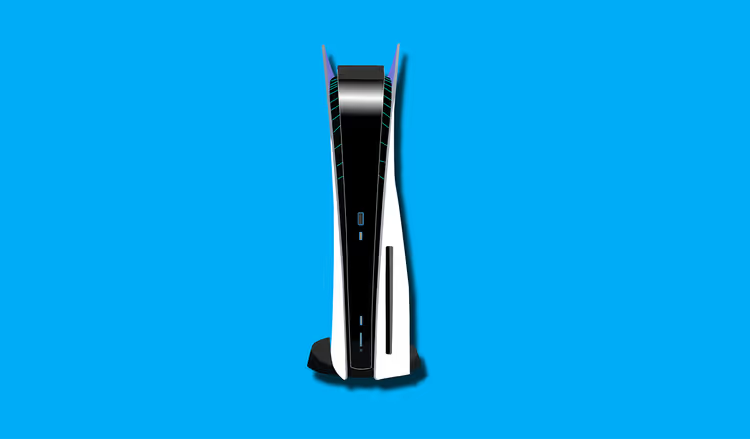
A breakdown of PS5 architecture: Zen 2 processor, ultra-fast SSD, Tempest 3D audio, and DualSense controller.…
A precision screwdriver set pays for itself with the first DIY repair. We break down bit types, key selection…
A cracked screen is not a verdict. Breakdown of display replacement prices by category: from budget phones to iPhone…
Breaking down the real cost structure of mobile development: from complexity and platform to team geography, hidden…
Choosing a tablet and don't know where to start? A breakdown of specs without marketing: display, processor, battery…
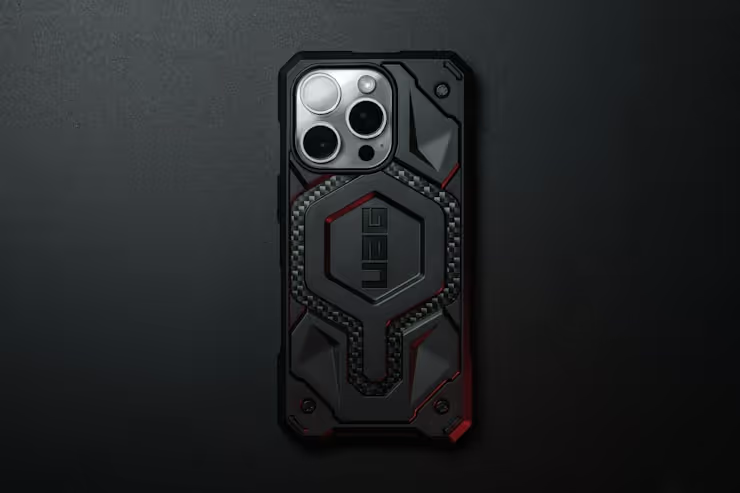
A breakdown of materials, protection levels and additional features of iPhone 14 Pro cases. Which one to get for your…
IPhone 16 Pro review in 2026: titanium body, 48 MP camera, A18 Pro with ray tracing, battery life after two years. Who…
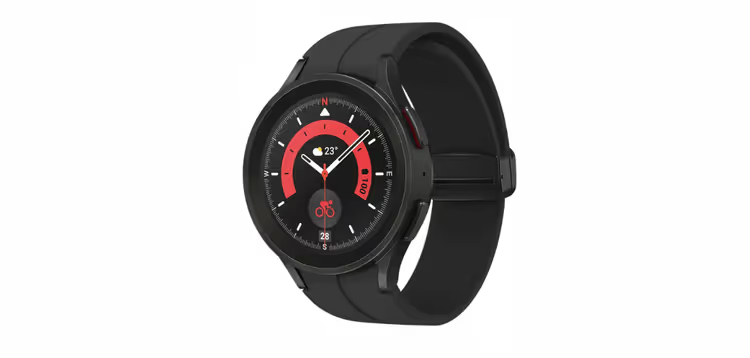
A breakdown of key modern smartwatch capabilities: health tracking, notifications, music, smart home control. How to…
Laptop adapter stopped working? How to tell a charger failure from a port problem in 3 minutes and which 4 parameters…