💡 How to reduce server load and speed up WordPress with Memcached
Setting up Memcached for WordPress: installing the daemon, building the PHP extension, connecting Batcache, and load…

The site goes down at three in the morning. Or the hosting provider suddenly doubles the price. Or you log into a VPS via SSH for the first time and have no idea what to do next. This section is about the hardware and software underneath your website: where to put it and how to manage it without losing your mind.
There are two parts inside. Part one: choosing. Domain registrars (where to buy a site address cheaply and without hidden pitfalls), hosting types, VPS versus regular shared hosting. We compare control panels: aaPanel, Plesk, cPanel, Webmin, Virtualmin. Each has its own advantages, price, and entry threshold.
Part two: administration. Setting up nginx (the web server that delivers pages to visitors), connecting Cloudflare (protection and acceleration through a global network of servers), issuing SSL/TLS certificates for HTTPS. We cover FTP (uploading files to the server), free alternatives to paid hosting, and even the Plex home media server.
Common tasks sound like this. The 8 best domain registrars: where to get one and what to look for. Webmin and Virtualmin as a free replacement for paid panels. How to get a Plesk trial license and test it without paying. How to host a site for free in 2026 if there is no budget yet.
There are also more subtle tasks that we cover too. How to link a domain to a server via DNS A and CNAME records so that the site opens by address rather than by bare IP. How to set up automatic renewal of a Let's Encrypt certificate so HTTPS does not break after three months. How to set up backup and where to store backups so you don't lose them along with a crashed server. How to close unnecessary ports with a firewall and change the default SSH port to block automated password brute-forcing. How to migrate a database and files when switching hosting providers with zero downtime.
The materials are written by practitioners. We have moved sites from one host to another at night ourselves so that nobody would notice the downtime. We have set up nginx from scratch and caught a typo in the config that broke everything. We have seen an expired certificate scare away half of the visitors in a single day.
Every guide is structured simply. First a short recipe: commands, buttons, order of actions. Then a detailed breakdown so you understand exactly what you are doing, rather than copying blindly. Blind copying on a server is a straight path to disaster.
We talk honestly about the downsides. aaPanel is free and convenient, but it loads its own services and sometimes sends telemetry. Plesk is powerful and friendly, but it is paid and not cheap. cPanel is the industry standard, but it has become much more expensive after the change of ownership. Webmin and Virtualmin are free, but their interface is rough. Cloudflare speeds up your site for free, though the free plan has its limitations.
Typical server mistakes are costly, so we point them out separately. People constantly work as root, even though a regular user is enough for everyday tasks. They open the database port to the outside and get hacked within a couple of days. They forget about backups until the first crash. They don't track the certificate expiry until the site shows a security error. They set a password instead of a key for SSH. When checking a server, we look at security first: which ports are open, whether there are fresh backups, whether the certificate is about to expire, whether the packages are up to date. Then at speed and nginx configuration.
Who this section is for. For those launching their first site and getting lost in the pricing plans. For project owners who have outgrown cheap hosting and are thinking about a VPS. For admins who need to quickly recall a command or cross-check a config file.
How to use this section. Open the material for your current task, repeat the steps on your server, and close it. Each guide is self-contained, there is no need to read everything in a row — you will find what you need by the title.
The topics are directly connected to WordPress and SEO, so we often link there. Server speed affects search rankings, and that is already SEO. Start simple. Choose a domain and hosting that match your needs without overpaying for extras. Set up HTTPS. Connect Cloudflare. And you will dive into fine-tuning nginx and panels when your project grows and genuinely requires it.
Setting up Memcached for WordPress: installing the daemon, building the PHP extension, connecting Batcache, and load…
Three ways to remove cookies from WordPress static files: subdomain via cPanel, KeyCDN with CDN Enabler, and…
Ready-made PHP scripts for MySQL backup and restore: from manual dumps to automated cron execution with compression and…
Four ways to find a website's IP address using Command Prompt and PowerShell: nslookup, ping, Resolve-DnsName and…
Replacing a WordPress domain using SQL queries in phpMyAdmin: from finding URLs to fixing styles. Backup,…
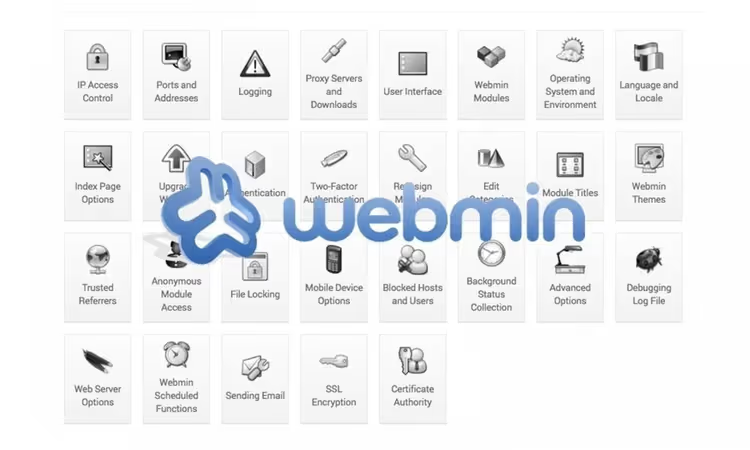
A complete review of the Webmin and Virtualmin combo: installation, interface, key modules, comparison with ISPmanager…
Google Drive discontinued website hosting in 2016. We break down 5 working free alternatives: GitHub Pages, Netlify,…
Need an older PHP version for a project, but Laragon only has the latest? We show the manual method via windows.php.net…
Step by step guide to setting up HTTPS on WordPress via Cloudflare: registration, choosing SSL mode, plugins, replacing…
Sign up for Cloudflare, change NS servers and migrate DNS records step by step. Real-world example using ukraine.com.ua…