













📝 The ThemeFuse story: rise of a niche WordPress theme shop and why it closed
How it all started: two enthusiasts and a niche idea
In 2012-2013, the WordPress theme market looked completely different. ThemeForest already dominated, but most stores chased universality, one theme "for everything." Two ThemeFuse founders went against the grain.
Their idea was simple: instead of the hundredth multipurpose combine, make themes for specific professions. Hotels, dental clinics, law firms, coffee shops, sports magazines. The buyer lands on the page and instantly sees their future site, not an abstract layout, but a ready tool for their niche.
Initially, the guys sold themes only on marketplaces like ThemeForest. Sales were going, but they wanted more creative freedom. That's how their own store appeared, ThemeFuse.com, where each theme wasn't a product on a shelf, but a finished product with its own character.
💡 Quick overview:
- How ThemeFuse built a business on niche themes against the trend toward universality
- The three best-selling themes and what united them
- Development principles: why the team didn't chase every new WordPress feature
- What went wrong and why the store closed by 2023
- Where to get quality niche WordPress themes today
A small team with a conscious approach to growth
At the peak, ThemeFuse employed 12 people. For a startup in the WordPress theme market, this is a decent team, but the founders deliberately restrained hiring. "We hire people only when the situation truly requires it," the co-founder explained in an interview with WPExplorer. "In small teams, everyone feels like part of the family."
This approach is atypical for the industry, where many stores inflate staff in pursuit of release quantity. ThemeFuse bet on quality: the portfolio grew slowly, but each theme passed through the hands of people who understood both the client's niche and the technical side.
This same principle transferred to technology choices. The store's site ran on WordPress, no exotic solutions. "WordPress is perfect for everything we need, and it's what we know best," said the founder. By 2015-2016, WP was already the most common CMS in the world, and betting on it was obvious: security, extensibility, ecosystem.
Three flagship themes that brought success
Among all ThemeFuse products, three themes consistently stayed in top sales. Each had its own niche, its own user, and its own scenario.
Welcome Inn theme for hoteliers
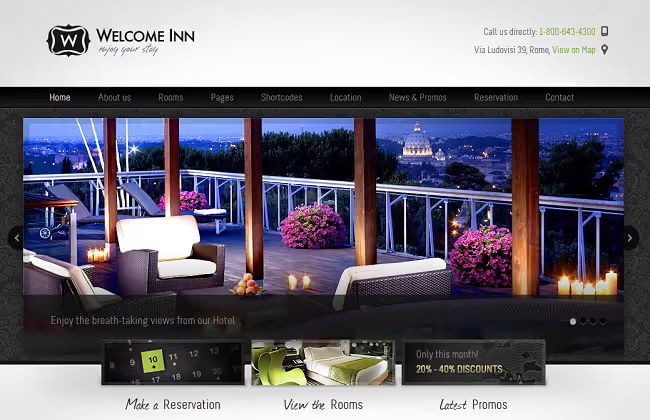
Welcome Inn was created specifically for small hospitality businesses: hotels, motels, bed-and-breakfast type mini-hotels. Instead of forcing a hotelier to adapt a general template to their needs, the theme already contained ready sections for rooms, booking, galleries, and reviews.
The key advantage: the hotel owner saw exactly their scenario on the demo site, not an abstract "business theme." Booking button, room cards with pricing, photo gallery, everything in its place from the first launch.
Medica theme for doctors and clinics

Medica covered the needs of medical professionals: doctors, dentists, private clinics. The theme had ready sections for services, appointment schedules, doctor profiles, and patient reviews.
This approach contrasted sharply with the typical clinic owner experience, who bought a universal theme and spent weeks on setup. Medica gave a ready "turnkey" site in one evening.
Envision theme for corporate clients
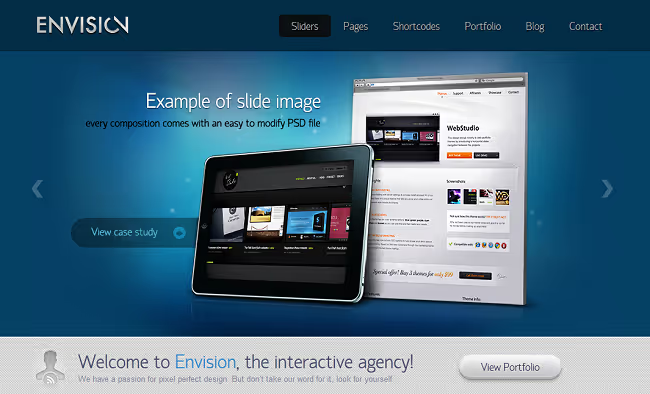
Envision was oriented toward enterprises, corporate clients, and startups. More strict design, modular sections for portfolio, team, and services. The theme suited internet companies that wanted to look professional without hiring an expensive web designer.
All three themes shared one philosophy: the buyer sees their future site already on the demo. No need to imagine anything, the template is designed for the exact needs of a specific industry.
How the team made decisions about features
New features constantly appear in WordPress: Gutenberg, Full Site Editing, API innovations. ThemeFuse didn't rush to implement each one immediately.
"We try to update themes to the latest WordPress version as quickly as possible, but with new features from the web design industry we're more cautious. First we analyze whether it really increases the theme's value."
This conservatism was both a strength and a weakness. On one hand, themes remained stable and predictable. On the other, the store risked falling behind competitors who more aggressively updated their lineup.
What was planned next: HomeQuest and membership club
At the time of the interview, ThemeFuse was preparing two major launches.
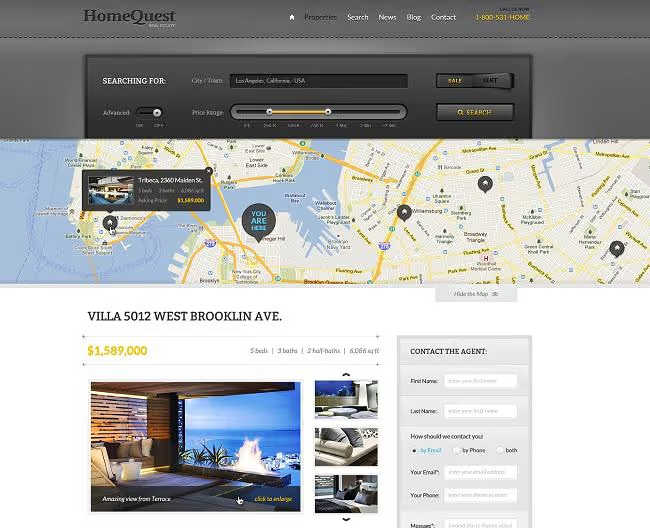
HomeQuest Real Estate, the most complex theme in the store's history. It was developed for realtors and real estate agencies, with advanced features: property catalog, parameter filters, maps, galleries. The founder called it a project "unlike anything yet in the WordPress theme industry."
In parallel, the team worked on a membership club, a subscription for several dollars per month for full access to the theme library. An "all-inclusive" model instead of buying individual licenses. At that time, this was a fresh approach for a niche store.
Both projects never saw the light of day in full. HomeQuest remained at the preliminary announcement stage, and the subscription was not launched.
Why the niche approach is a double-edged sword
The main thing that distinguished ThemeFuse from competitors was original design for a specific niche. While most stores churned out universal multipurpose themes with dozens of demos, ThemeFuse made narrow products for hoteliers, doctors, lawyers, and coffee shop owners.
The problem with universal themes: the buyer doesn't see their future site in them. They have to imagine: "Can I make a dental clinic site from this?" With a niche theme, there's no question.
But the strategy has a flip side: narrow audience. A theme for hotels sells only to hoteliers, for lawyers, only to lawyers. Each product has a tiny market. For the business to be sustainable, you need either many niche themes or a high price tag. ThemeFuse chose to build up the portfolio, but by the late 2010s competition became overwhelming, and niche themes ceased to be a unique advantage.
The founder's advice and why it proved prophetic
To the question "What would you advise those who want to open their own theme store?" the founder answered with one word: "Don't." And then added: "This industry is very quickly becoming overcrowded, and if you don't have the enthusiasm and knowledge to create something that leaves competitors in the dust, it's not worth it."
By 2023, this forecast came true for ThemeFuse itself. The Unyson plugin (the framework on which all store themes ran) was closed on WordPress.org in October 2023 with a "Security Issue" note. The official themefuse.com site stopped opening, ERR_CONNECTION_REFUSED. The Unyson repository on GitHub received its last commit in 2022 and hasn't been updated since.
The store that built its business on original design and niche positioning couldn't withstand market pressure. Small team, limited resources, and growing competition did their work.
Where to get niche WordPress themes today
The ThemeFuse story doesn't mean niche themes died as a class. Here's where to look for them in 2026:
- ThemeForest (themeforest.net), the largest marketplace with thousands of niche themes and category filtering.
- TemplateMonster (templatemonster.com), market veteran with an extensive catalog of highly specialized solutions.
- Elegant Themes (elegantthemes.com), creators of Divi. Universal builder, but the ecosystem includes hundreds of niche layouts.
- Astra (wpastra.com), lightweight framework theme with dozens of ready starter templates for different niches.
- OceanWP (oceanwp.org), similar approach: base theme + library of niche demos.
The modern trend is not "niche theme as a boxed product," but lightweight framework theme + niche starter template. The site is assembled from ready blocks for a specific industry, but the base remains universal and updatable.
Video: how to choose a WordPress theme for your niche
Short but useful video in English, breaking down how to find, install, and configure a theme for a specific niche. The approach ThemeFuse used (ready theme for industry) and the modern one (framework + template):
⁉️🤔 Frequently asked questions
Why did ThemeFuse close?
There were no official statements from the founders, but the picture is clear from indirect signs. The Unyson plugin, the technical foundation of all store themes, was removed from the WordPress.org catalog in October 2023 due to a vulnerability. The themefuse.com site stopped responding. The Unyson repository on GitHub hasn't been updated since 2022. Most likely, several factors played a role: a small team (12 people) couldn't handle supporting a growing number of themes, revenue didn't cover development and security costs, and competition from ThemeForest and page builders made niche themes less in demand. A small store without external investment proved unviable in an overheated market.
Can ThemeFuse themes still be used?
Technically yes, if you have the theme ZIP archive and are ready to patch vulnerabilities yourself. But this is risky: themes depended on the Unyson framework, which is no longer updated and is marked as unsafe. For a live site on a ThemeFuse theme, it's wiser to plan a migration. Astra, OceanWP, or GeneratePress with a suitable starter template will cover the same niche but will receive security updates.
Niche theme or universal, what to choose in 2026?
Depends on the task and budget. A boxed niche theme (ready "turnkey" design) saves time and money at the start, you can launch it in one evening. Downside: you're tied to its structure and the developer's updates. Universal theme + page builder (Divi, Elementor, Gutenberg blocks) requires more setup but gives full control. If the budget allows hiring a specialist, this is a more reliable long-term path. For a DIY project, a niche theme is still a good option, just choose actively updated ones with good reviews.
Who was ThemeFuse's main competitor?
Direct competitors: niche theme stores like TeslaThemes, ThemeIsle, Dessign, AncoraThemes. Indirect: giants ThemeForest and Elegant Themes (Divi), which due to scale could afford both niche demos and low prices. It was the indirect competition that probably proved decisive: when a hotel owner can buy a universal theme with a page builder on an annual subscription and assemble a site from ready blocks, buying a separate niche theme for a comparable sum looks less attractive.
What does the ThemeFuse story teach?
The main lesson for WordPress theme developers: original design and niche positioning alone aren't enough. You need either a financial cushion to support dozens of products, or a subscription model (like Elegant Themes), or focus on 2-3 themes with deep refinement. The second side: technical debt. The Unyson framework was a competitive advantage while it developed. Once support stopped, it became an anchor that dragged all themes to the bottom. Dependence on your own framework without resources for its long-term support is a deadly risk.
Bottom line: a story that will repeat?
ThemeFuse is a classic example of a niche player who found an audience and made a quality product but couldn't withstand market pressure. Their design approach, "the buyer sees their future site on the demo," is relevant today: major stores and theme frameworks implement the same idea through starter templates.
If you're looking for a niche WordPress theme today, look at actively updated products with good reputation. Avoid themes on abandoned frameworks and check the last update date.
And if you're thinking about your own theme store, reread the ThemeFuse founder's advice and make sure you have what hundreds of competitors don't.

A professional team of writers and editors specializing in creating quality content.